
Before You Buy an RV: 5 Questions to Ask Yourself
Before you shop for an RV, ask yourself five questions to clarify your needs, narrow your options, and choose with confidence.

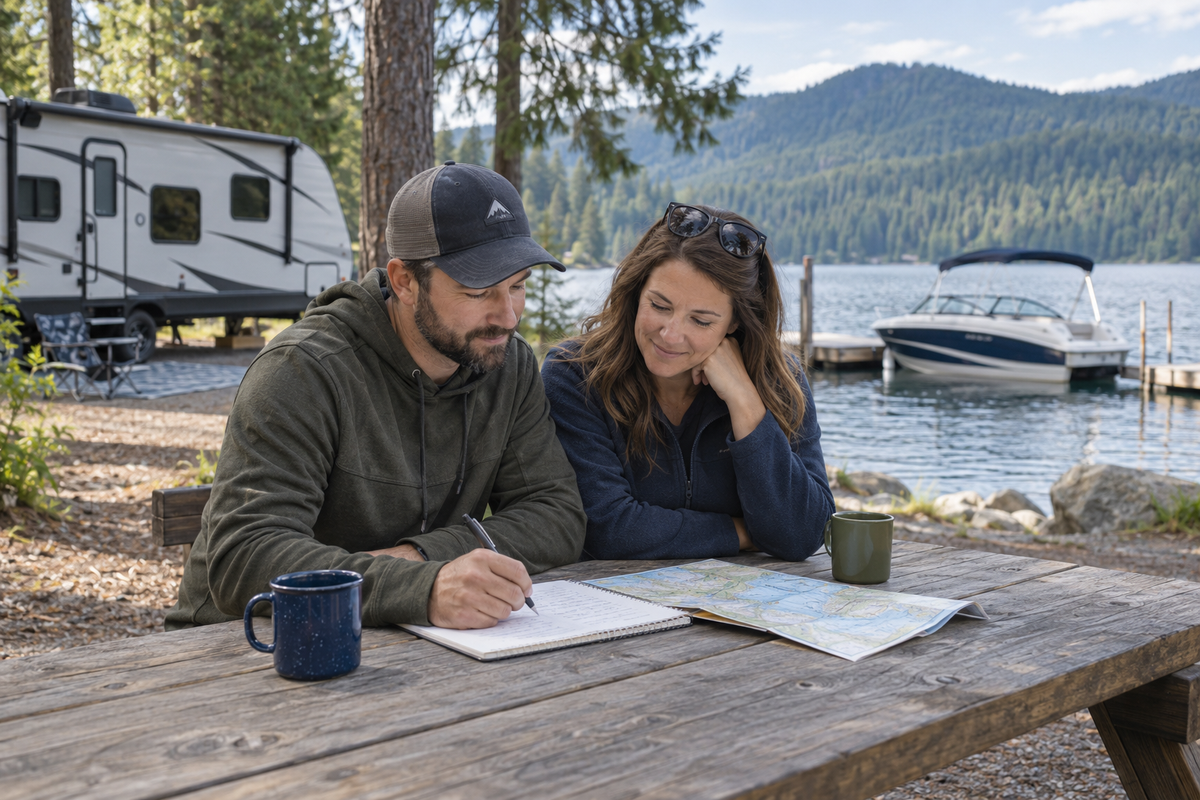
Shopping for an RV often starts with something that catches your eye. A comfortable living area. A clever floorplan. A bunkroom you can already picture your kids enjoying.
Then the questions start. How much space do you need? Which features matter? What will you actually use?
Before comparing models, take a little time to think about the trips you want to take. A clear picture of your needs makes shopping easier and helps you recognize a good fit when you find one.
Here are five questions worth answering before your first walkthrough.
1. How will we actually use it?
Picture a typical trip, from packing at home to putting everything away when you return.
Are you planning weekend campground stays, longer road trips, or extended visits with family? Will you move frequently or settle into one location? Do you prefer campgrounds with hookups, or hope to spend time somewhere with fewer amenities?
Think about the trips you can realistically take most often. An RV that works beautifully for a two-week vacation might feel like too much preparation for the short weekends you have available throughout the year.
You do not need to plan every future adventure. Start with the kind of trip you are most likely to take.
Write this down: “Most of the time, we’ll use our RV for ______.”
That sentence gives you a useful reference point when an impressive feature starts pulling your attention away from your priorities.

2. Who will usually come along?
Think about the people who will join you regularly, including children, friends, and pets.
As a father of five, I know how quickly a space can feel different once everyone and their belongings are inside.
Look beyond where everyone will sleep. Where will you eat together? Where will shoes, jackets, and bags go? If rain keeps everyone indoors for an afternoon, will the layout still work?
Consider the daily routines, too. Will someone need to fold away a bed every morning? Can you reach the bathroom while someone is cooking? Is there a comfortable place to sit after the kids go to sleep?
During a walkthrough, take your time. Sit down, open storage compartments, and imagine your family using the space. When possible, bring the people who will travel with you.
Write this down: “Our usual group is ______, and everyone needs ______.”
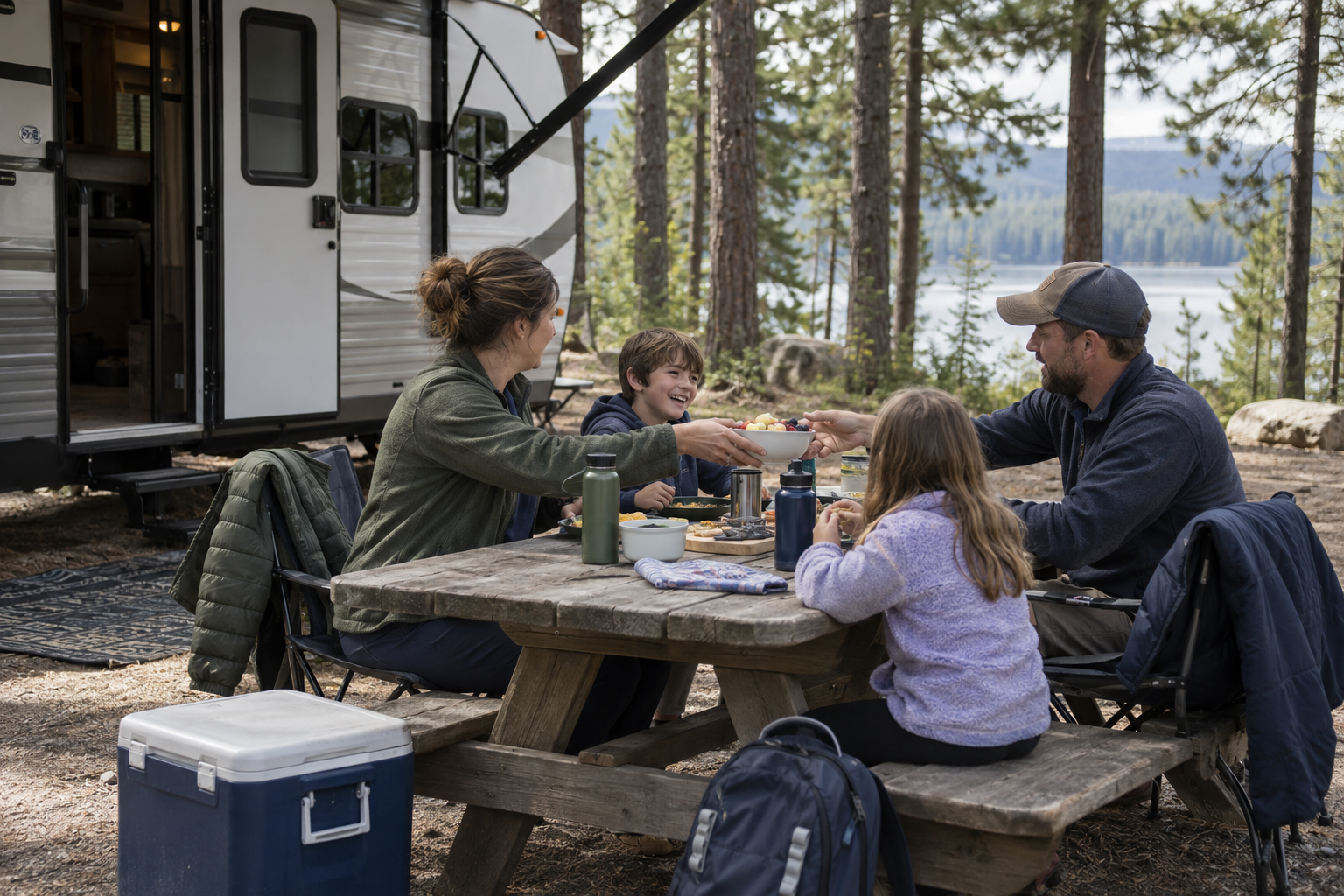
3. What needs to work at home and on the way?
RV ownership begins before you reach the campground.
Think through where you will store it, how you will travel with it, and what it takes to get ready for a trip.
Consider questions such as:
- Where will the RV stay between trips?
- What space and access are available at home or in storage?
- Who will handle driving, towing, parking, and campsite setup?
- Will its size work for the places you want to visit?
- How much packing, preparation, and cleanup will an ordinary trip involve?
If you are considering a towable RV, bring your tow vehicle’s details into the conversation early. Have the specific vehicle, proposed trailer, and hitch setup evaluated before committing to a purchase.
If you are considering a motorhome, think through how everyone will travel and how you will get around after setting up camp.
These details may feel less exciting than a floorplan, but they shape how easily an RV fits into your life.
Write this down: “Before choosing a model, we need to confirm ______.”

4. What total budget feels comfortable?
Start with a purchase budget, then consider the expenses that come with using and caring for your RV.
Depending on your plans, those may include insurance, storage, maintenance, fuel, equipment, and campground fees. You may also need to account for taxes, registration, and initial setup costs.
Ask for an itemized purchase estimate and gather ownership-cost estimates for the RVs you are seriously considering. If you plan to finance, review the full terms alongside the monthly payment.
Leave room in your budget to enjoy the purchase. You want to feel comfortable booking the campsite, taking the trip, and handling the upkeep that comes with ownership.
A useful budget reflects both the RV you want and the way you plan to use it.
Write this down: “Our comfortable purchase budget is ______, with room for ______ in ongoing expenses.”
5. What are our three must-haves?
Every RV involves choices. More living space may mean more size to manage. A larger bathroom might leave less room for storage. A layout that works well for a couple may feel very different with children aboard.
Choose three priorities that will make the biggest difference to your experience.
Those might include:
- A sleeping arrangement that works for your family.
- A bathroom everyone can use comfortably.
- Storage for the gear you bring on every trip.
- A practical place to eat or spend time indoors.
- Access to the refrigerator or bathroom during travel stops.
Keep a separate list of features you would enjoy but could live without.
As you compare RVs, use the same priorities each time. If a favorite falls short on something essential, pause and ask whether you are comfortable with that compromise.
Your must-have list should help narrow the options that already meet your travel, compatibility, and budget requirements.
Write this down: “Our three must-haves are ______, ______, and ______.”
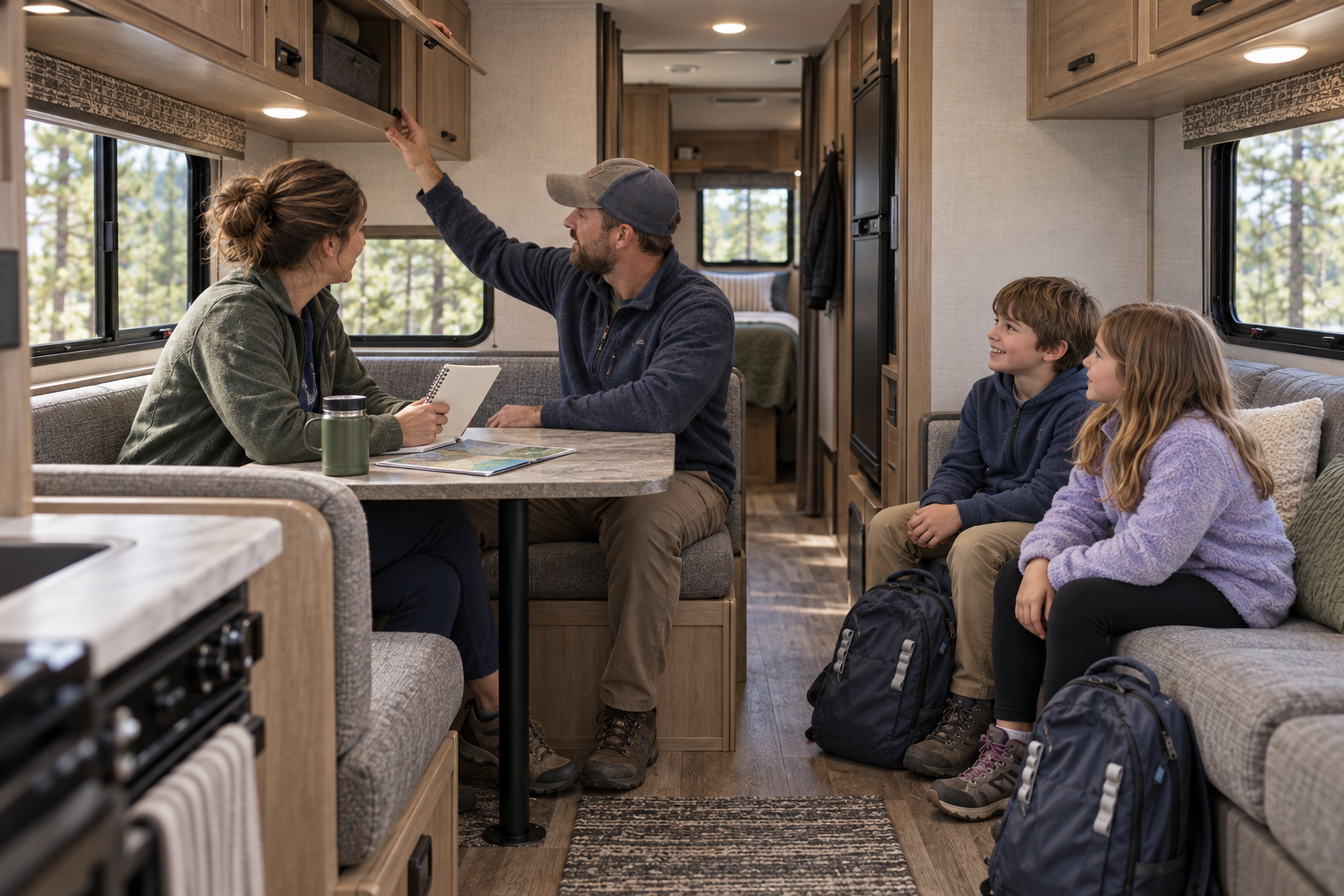
Bring your answers with you
Save your notes on your phone and revisit them during each walkthrough.
One question can help bring the decision back into focus:
“How would this work on one of our normal trips?”
You do not need every answer before you begin shopping. Knowing what matters to your family gives you a stronger starting point and helps the salesperson assisting you offer more useful guidance.
Get the free First-Time RV Buyer’s Guide
These five questions are a starting point. The First-Time RV Buyer’s Guide helps you turn your answers into a practical plan for comparing RVs.
Inside, you’ll find explanations of RV types, worksheets for your travel plans and budget, a walkthrough scorecard, and questions to help you prepare for delivery. There are also first-time buyer FAQs and a plain-English glossary.
Use the form below to request your free digital copy. Keep it with you as you research, tour RVs, and build your shortlist.

Want to talk through your options?
I’m Si, founder of RV Boat Guide and an RV & Boat Outfitter. I help RV and Boat buyers throughout the Pacific Northwest and can also help connect buyers elsewhere with a trusted outfitter in their area.
If you are beginning your search or comparing a few possibilities, I’d welcome the opportunity to help.
Message me using the form below. Tell me who will be traveling with you, how you hope to use your RV, and which questions you are still working through. You do not need to have a model picked out to start the conversation.