
Bunkhouse vs. Couples Coach: Which RV Layout Fits Your Trips?
Compare bunkhouse and couples coach RV layouts for sleeping, seating, privacy, storage, and daily routines. Find what works for your usual travelers and occasional guests.


Compare dedicated beds, living space, privacy, and everyday routines before choosing a floorplan.
The bunkhouse looks perfect for bringing everyone along.
There’s a bed for each child, space for their belongings, and the possibility of leaving the dining table set up overnight.
Then you walk into a couples coach.
The living room feels inviting. There may be more kitchen counter space, a larger bathroom, or comfortable seating exactly where you want it.
Now the question becomes: do you need those extra beds often enough to dedicate space to them?
The best layout should work well for the people who will use it most—and realistically accommodate the guests who will join you.
What’s the difference?
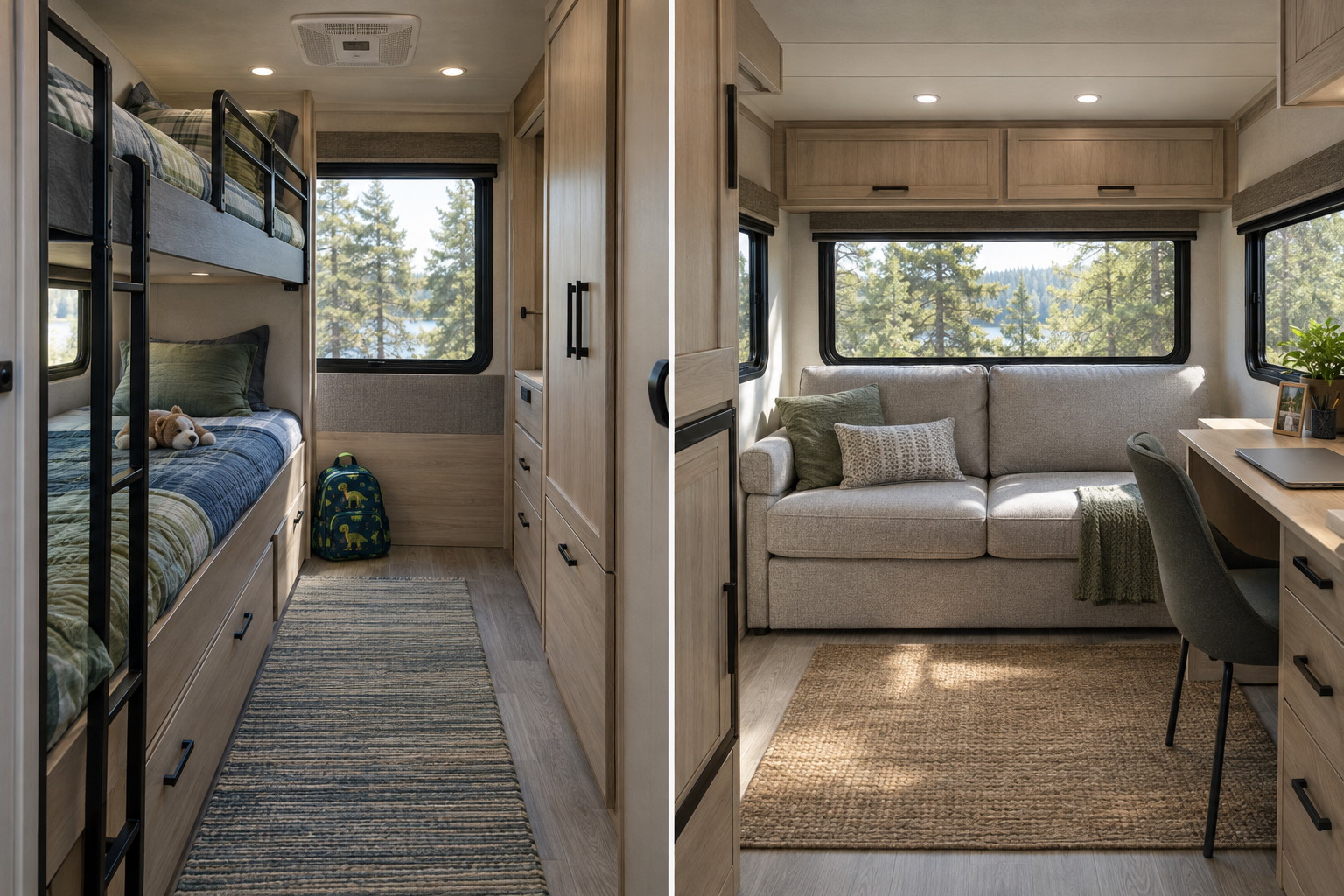
A bunkhouse floorplan includes dedicated bunk beds. That might mean bunks tucked into a corner or a separate bunkroom with its own door.
A couples coach generally prioritizes the needs of one or two primary travelers, with space devoted to their bedroom and everyday living areas. It may still offer guest sleeping on a convertible sofa or dinette.
These terms describe floorplan priorities, not separate RV classes. You’ll find layouts for couples across travel trailers, fifth wheels, and motorhomes. Go RVing’s overview of RVs for couples.
| Consideration | Bunkhouse | Couples coach |
|---|---|---|
| Sleeping priority | Dedicated beds for additional travelers | Main bed for primary travelers; guest beds may require conversion |
| Living space | Some floor space is committed to bunks or a bunkroom | Space may be allocated to seating, kitchen, bathroom, or storage |
| Bedtime routine | Bunks may stay ready for use | Guests may need the sofa or dinette converted |
| Privacy | Depends on whether bunks have a door, curtain, or open layout | Main bedroom privacy varies; guests may sleep in shared space |
| Main question | Will the dedicated beds be used regularly? | Will occasional guest arrangements work when needed? |
Neither label guarantees a particular feature. Study the actual layout and equipment list. Examples of manufacturer floorplan variety.
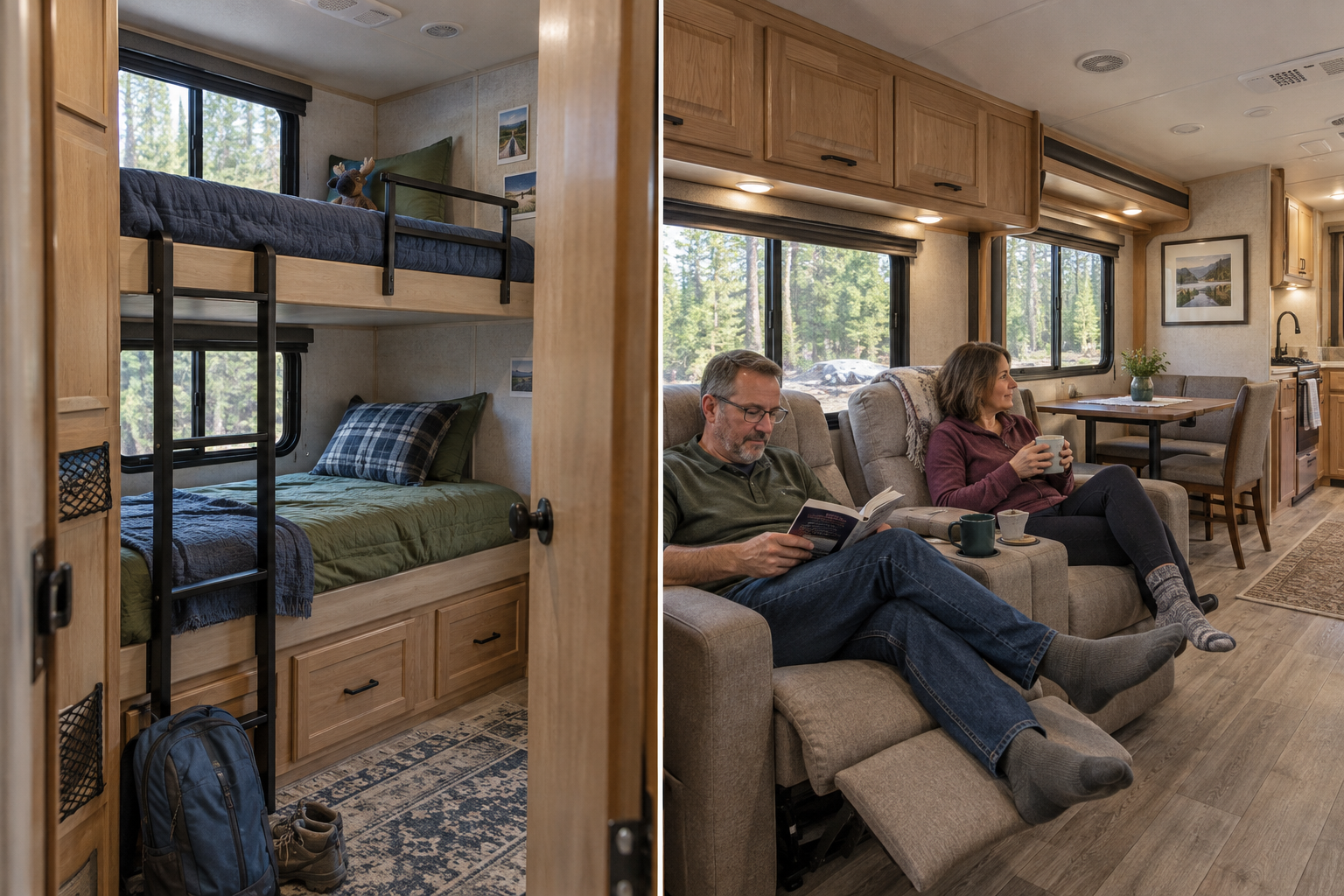
1. Start with your usual traveling group
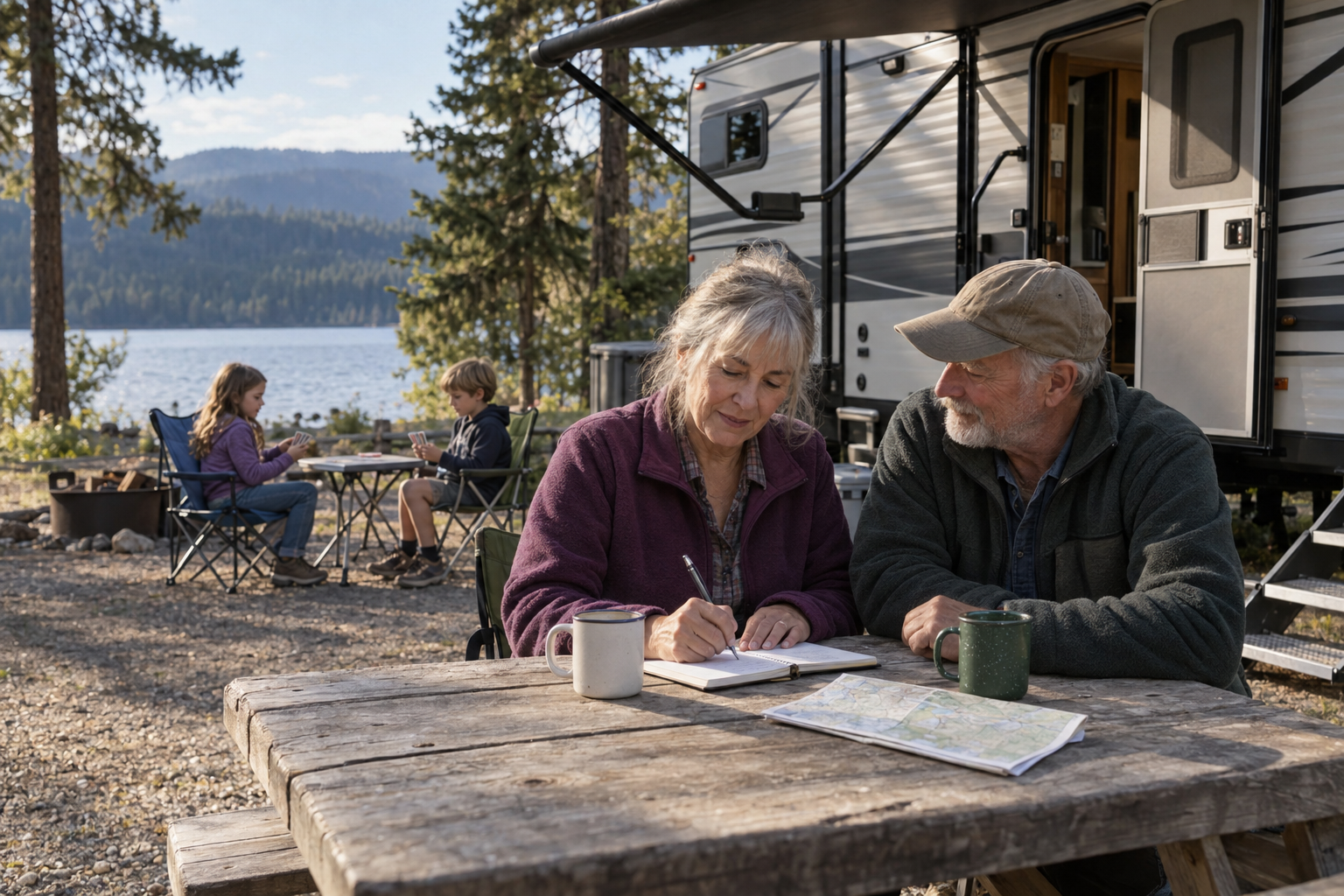
Write down who will join you on most trips.
Then make a separate list of occasional guests.
Those lists may lead to different decisions.
If your children come on nearly every trip, dedicated beds could make mornings and evenings considerably easier.
If you mainly travel as a couple and grandchildren join you for one weekend each summer, you may prefer a layout that serves your daily needs while offering a workable guest arrangement.
But frequency is only part of the question. Even an occasional guest may need a proper bed, easier access, or more privacy than a convertible dinette provides.
Plan around realistic use, including any guest needs you aren’t comfortable compromising on.
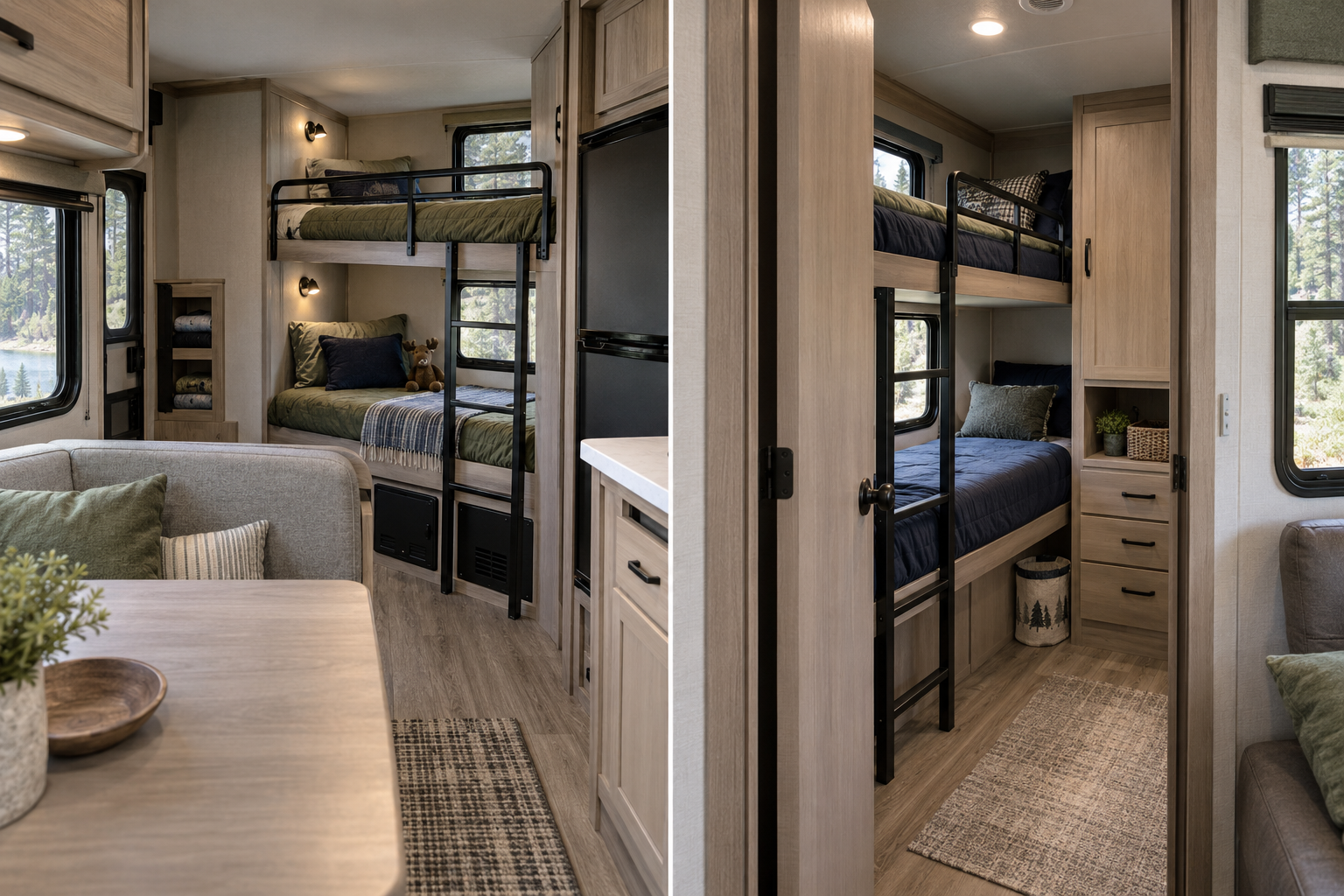
2. Understand what “bunkhouse” actually means
Don’t assume every bunkhouse has a separate room.
Corner bunks open to the main living area function differently from a bunkroom behind a door.
During a walkthrough, check:
- Whether there is a door, curtain, or no separation
- The dimensions and headroom of each bed
- How someone reaches the upper bunk
- Where each traveler will keep clothing and personal items
- How the bunk area connects to the bathroom and main walkway
A private room may help separate bedtimes and activities. An open bunk area may keep children closer to the main living space.
Think about the people using it rather than treating either arrangement as automatically better.
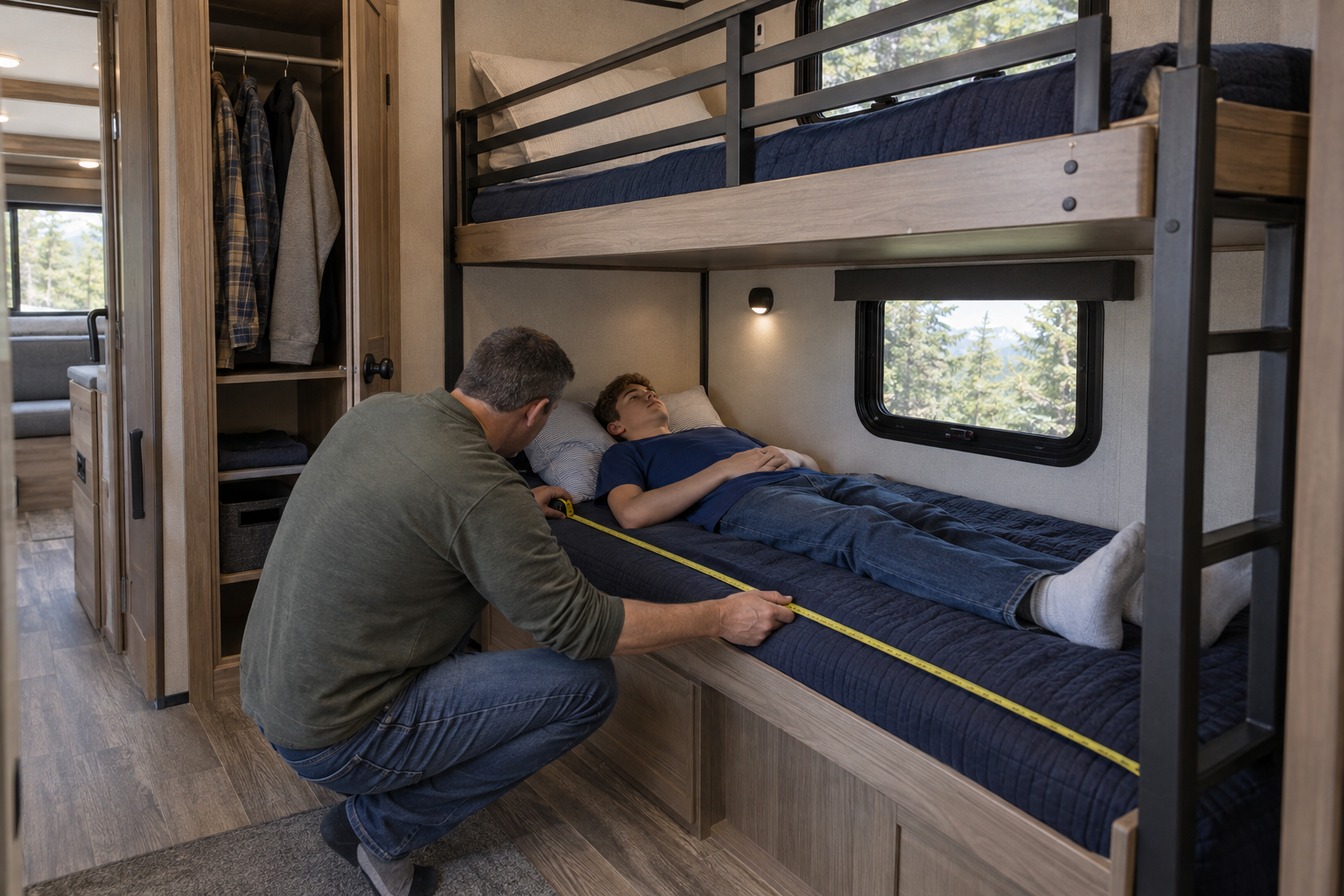
3. Try the beds; not just the floorplan drawing
A rectangle on a brochure doesn’t tell you how comfortable a bed will feel.
Have the intended sleeper try it when practical. Check the manufacturer’s weight limits and usage instructions, along with access and guard provisions.
For taller travelers, measure usable mattress length. Consider the space above the mattress, too.
As a father of five, I know how quickly a sleeping arrangement can stop fitting. A bed that works for a small child may feel very different for a teenager.
You don’t need to predict every future change. But if you hope to keep the RV for several years, think beyond the next camping weekend.
4. Walk through bedtime and breakfast
Dedicated beds can reduce the need to rearrange the main living area.
That may matter when one person goes to bed early and someone else wants to sit at the table.
In a couples coach with guests, ask to see the sofa or dinette converted into its sleeping configuration.
Then picture the morning.
Can the primary travelers make coffee without disturbing their guests? Is the bathroom accessible? Where does the bedding go once everyone is awake?
Conversion may be perfectly reasonable for an occasional visit. Repeating it every day could feel different.
Ask to see the layout in both daytime and nighttime use before deciding.
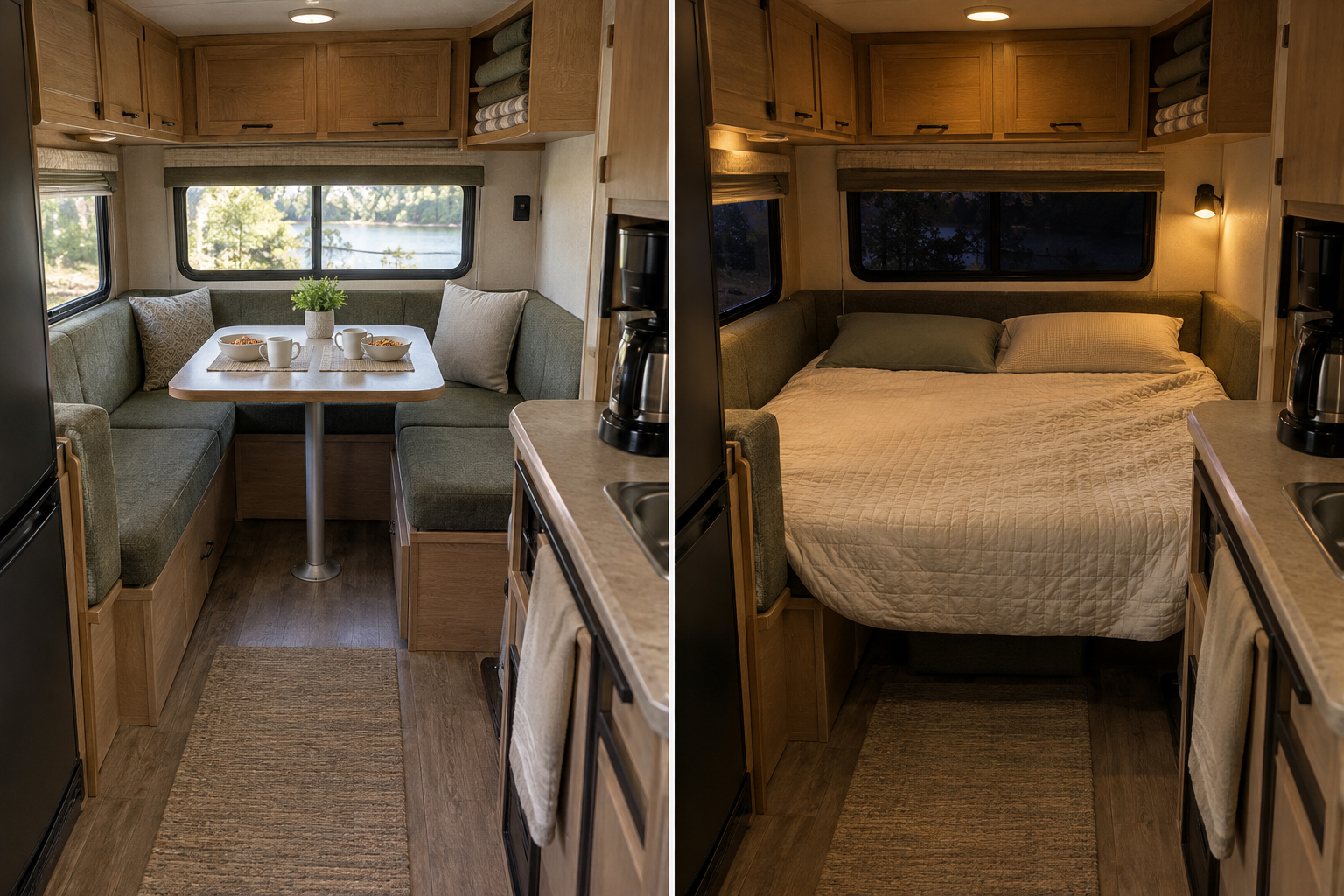
5. Count comfortable seats as well as beds
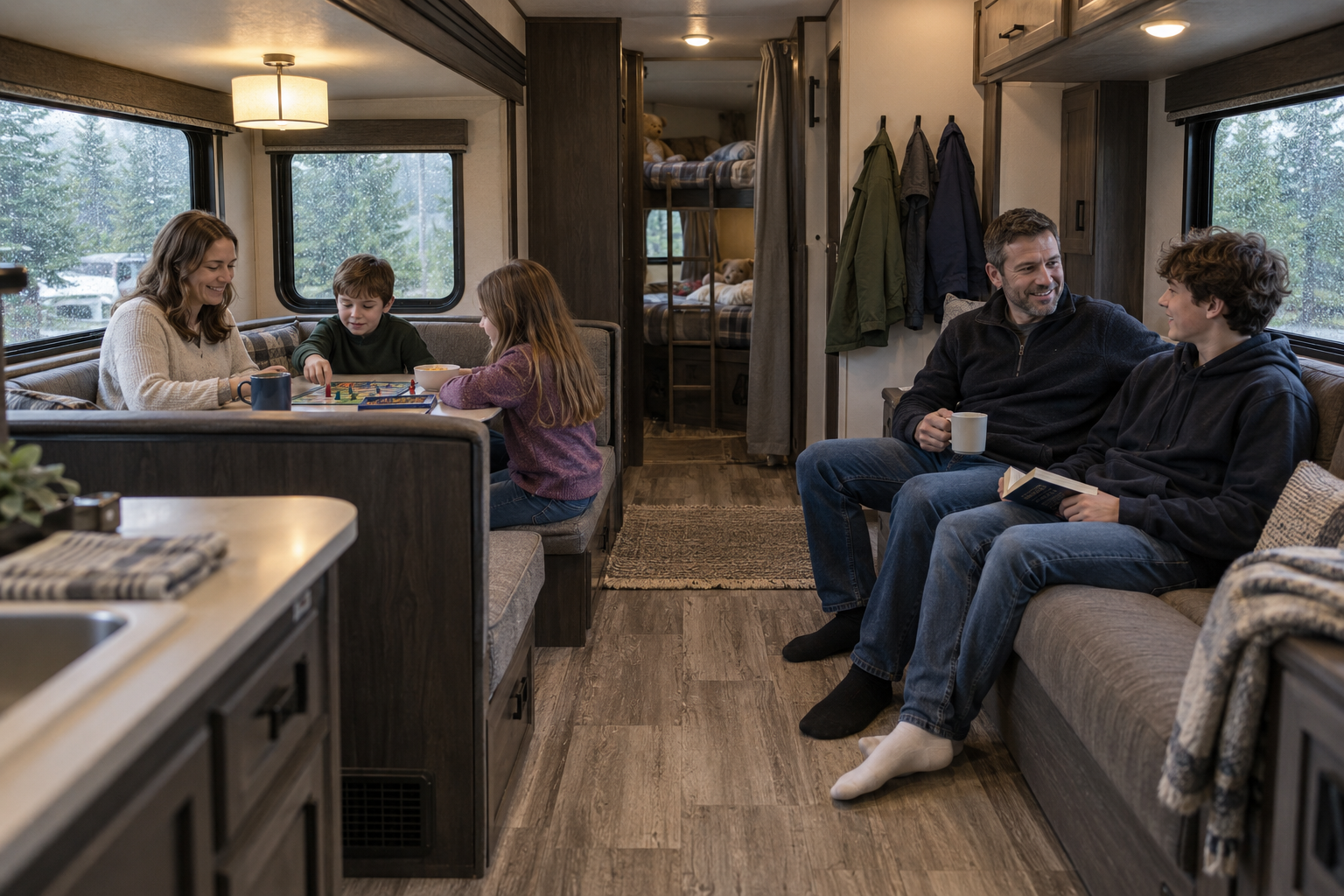
An RV can provide enough sleeping places while leaving you wondering where everyone will sit during dinner or a rainy afternoon.
Try gathering your usual group in the living area.
Can everyone eat comfortably? Does someone have to sit on a bed? Can people move through the room while others are seated?
In a couples coach, check whether the seating works for both primary travelers. Two attractive chairs aren’t much help if one person finds them uncomfortable or the television requires an awkward viewing angle.
In a bunkhouse, look beyond the excitement of extra beds and evaluate the shared room just as carefully.
Floorplan selection is about daily routines as well as capacity. Go RVing’s floorplan guidance.
6. Decide what the space needs to do
Within a given footprint, floorplan choices compete for room.
One model may dedicate its rear area to bunks. Another may use that area for a bathroom, kitchen, or living room.
Rather than assuming one has “more space,” ask which use of the space matters most to you.
Would you use a larger shower every day? Would permanent children’s beds save frustration every night? Does either layout provide a practical place to work?
Compare models within a similar size and budget when possible. Otherwise, you may be reacting to a larger RV rather than the difference between a bunkhouse and a couples layout.
7. Give everyone a place for their belongings
More travelers bring more than a need for beds.
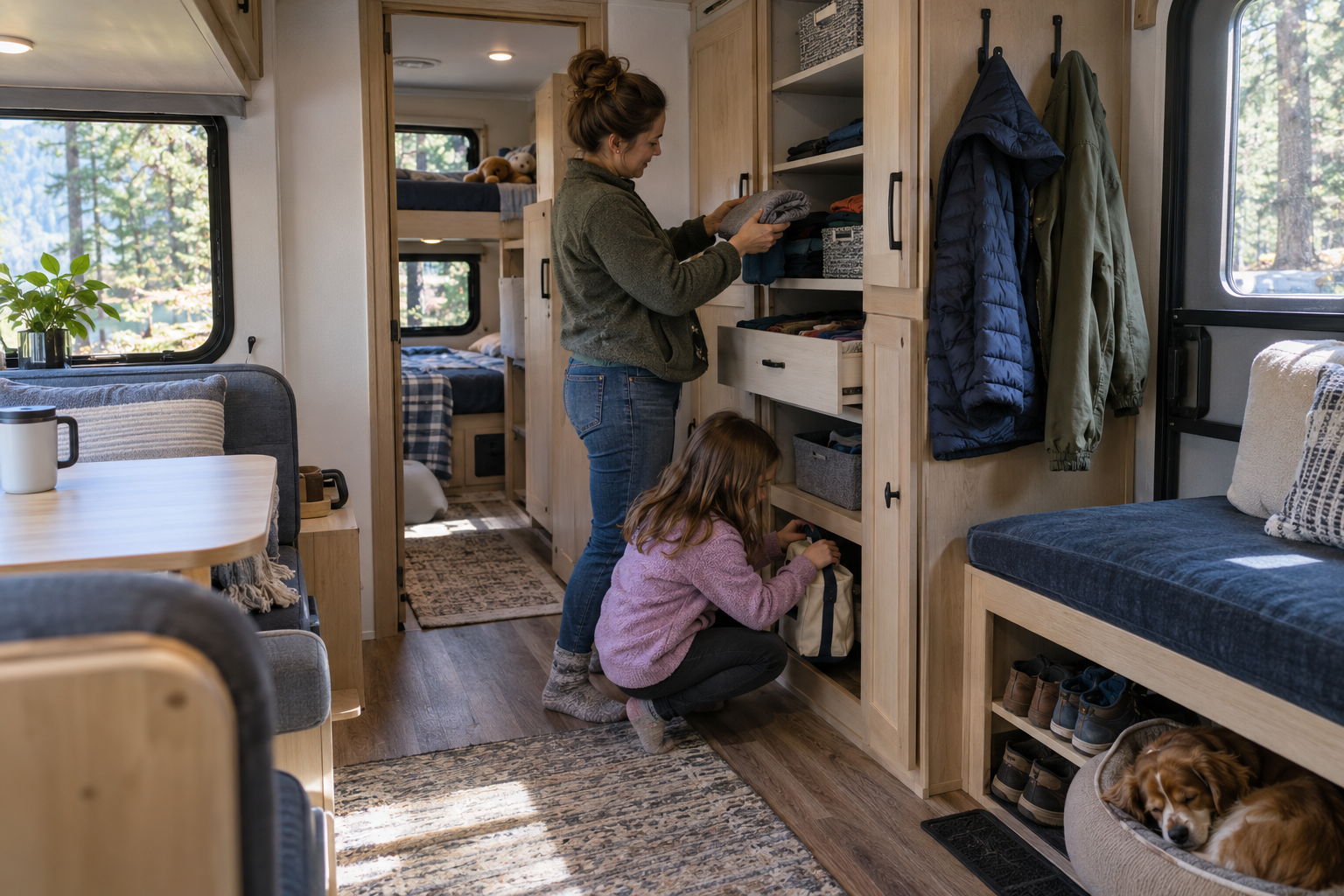
They bring shoes, jackets, toiletries, charging cords, games, and clothing.
Open the storage compartments and assign them imaginary owners.
Where does each person’s bag go? Can children reach their belongings? Will someone’s bedding occupy the only convenient cabinet?
If you travel with pets, consider where their bed, food, and supplies will go without blocking a walkway.
A useful storage arrangement gives belongings a home without making the living area difficult to use.
8. Check access with the slide-outs closed
Ask to see the RV prepared for travel.
Can you reach the bathroom during a stop? Can you load the refrigerator at home? Are the beds or wardrobes accessible?
Check doors and walkways in both configurations.
These answers depend on the specific floorplan, so don’t assume all bunkhouses or all couples coaches work the same way.
Also consider your storage location. Will you have enough room to open the slides when preparing for a trip?
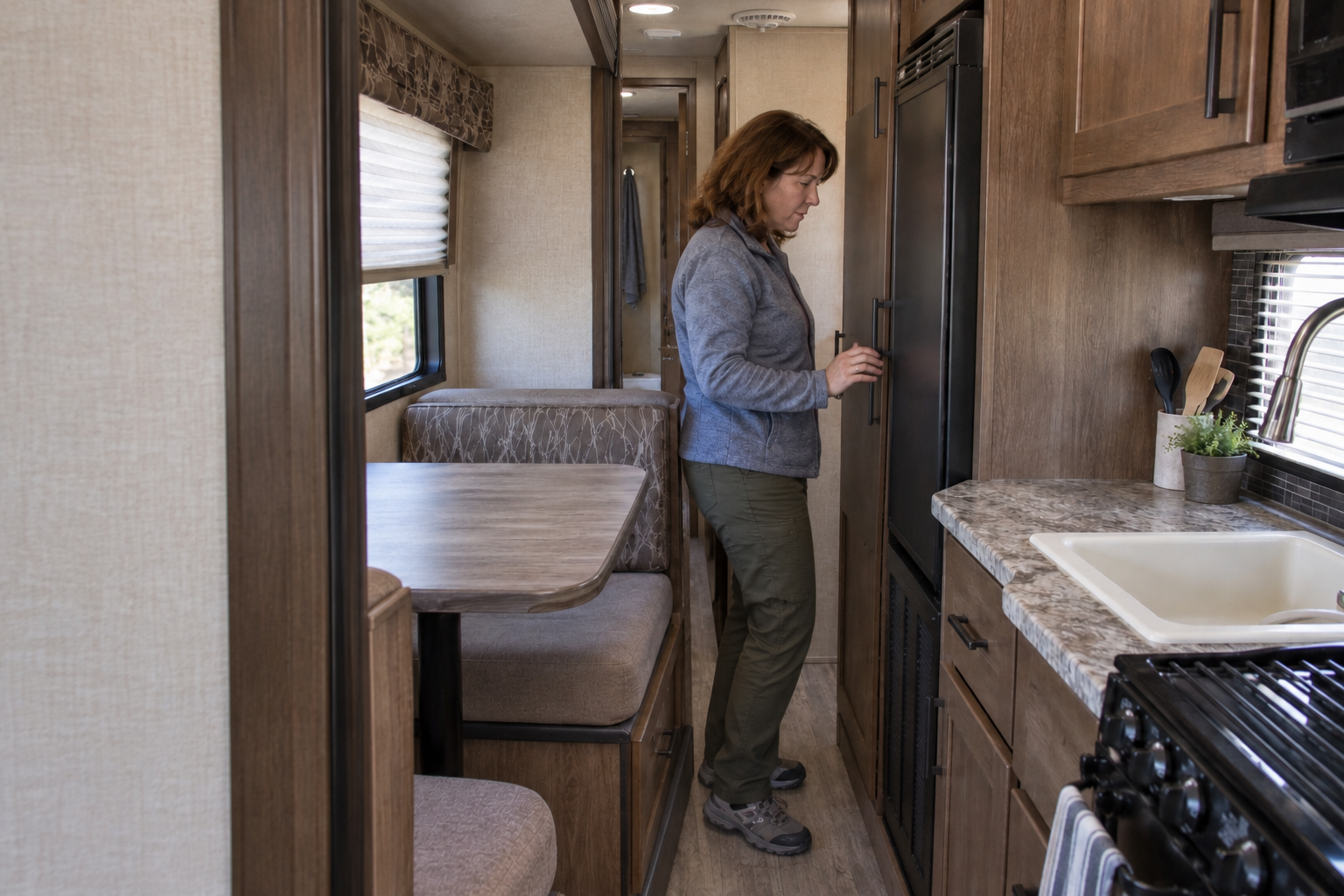
9. Keep size and vehicle compatibility in the decision
A bunkhouse isn’t automatically a large RV, and a couples coach isn’t automatically small. Manufacturers offer different sleeping arrangements across a range of lengths and weights. Examples from one manufacturer’s floorplan lineup.
Check the actual dimensions, carrying capacity, and vehicle compatibility of each candidate.
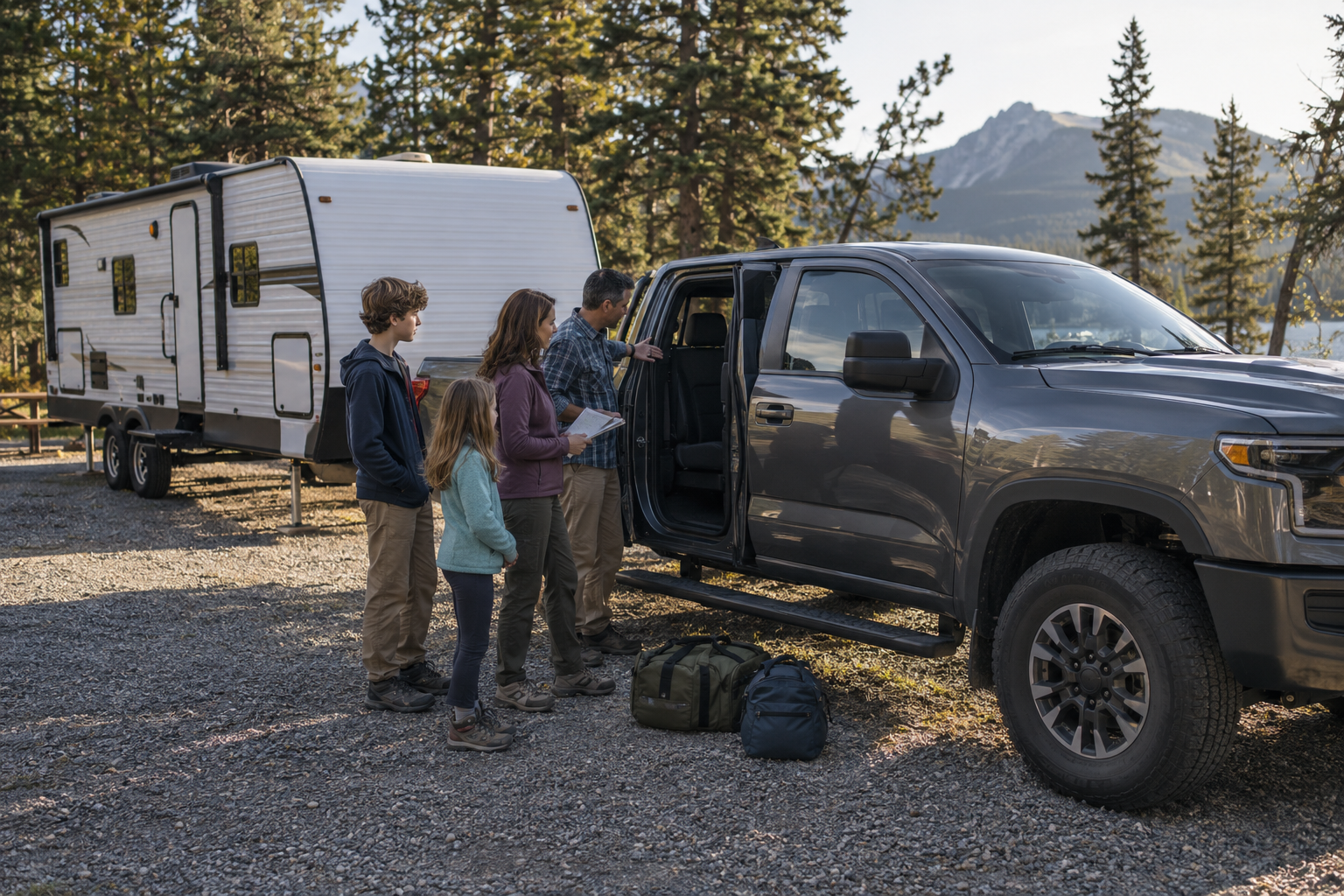
For a motorhome, suitable travel seating is a separate requirement from sleeping space. For a towable, make sure the tow vehicle accommodates your traveling group and the loaded combination.
Don’t let a perfect bedroom arrangement distract from whether the complete setup works.
What if the bunks won’t always be used?
Ask how the space functions between guest visits.
Some layouts include manufacturer-designed folding bunks or flexible furnishings. If that appeals to you, have the dealer demonstrate the intended configurations.
Avoid buying on the assumption that you can remove bunks later and easily create an office or different room. Confirm any proposed changes with the manufacturer before making them part of your plan.
An unused bunkroom may be acceptable if it serves an important purpose when guests arrive. The question is whether that allocation of space feels worthwhile to you.
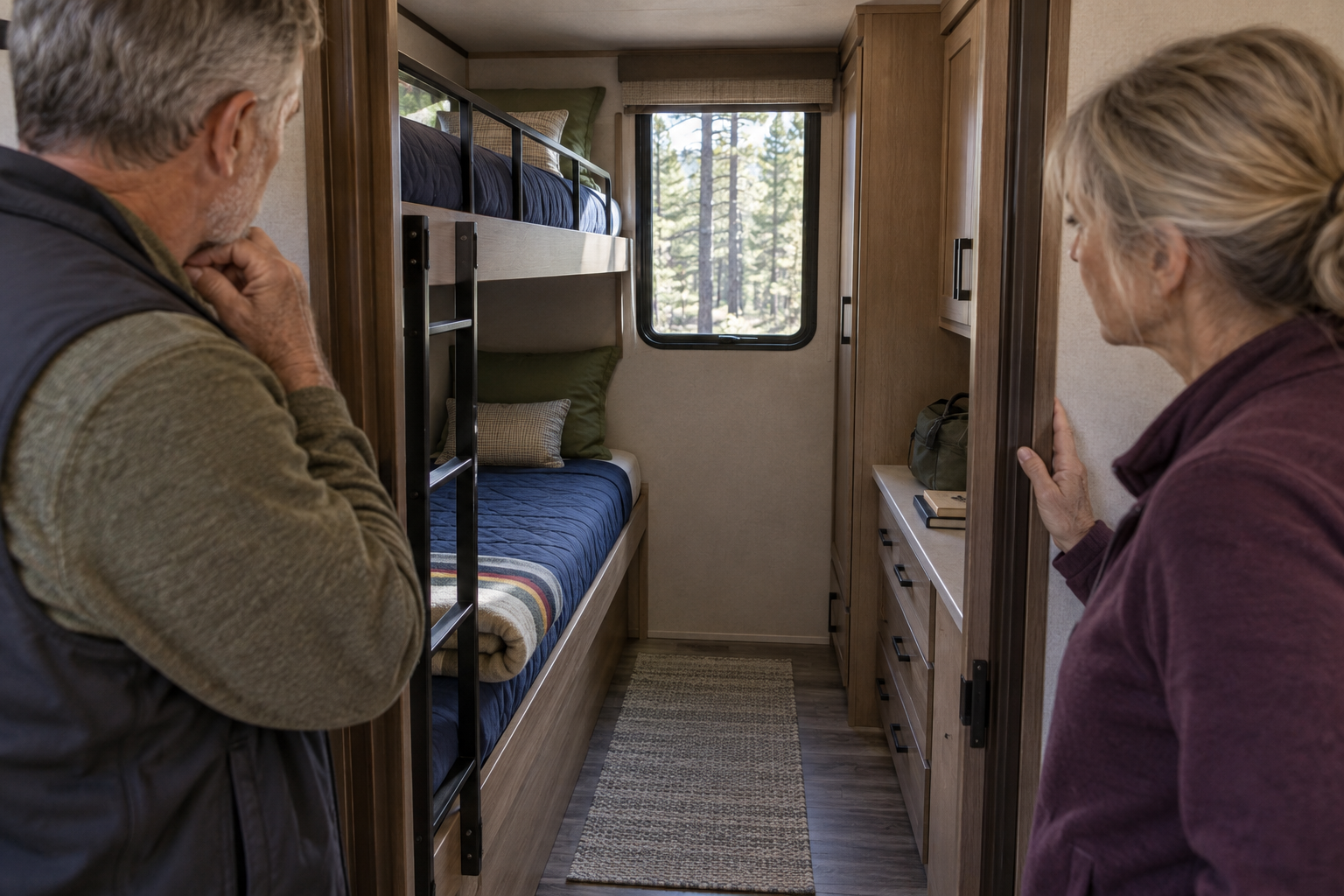
A bunkhouse may be a good starting point if…
- Children or other guests join you regularly.
- You want dedicated beds ready each evening.
- You prefer to preserve the dinette or sofa for daytime use.
- Separate sleeping space would help with different routines.
- The bunks fit the intended sleepers and their needs.
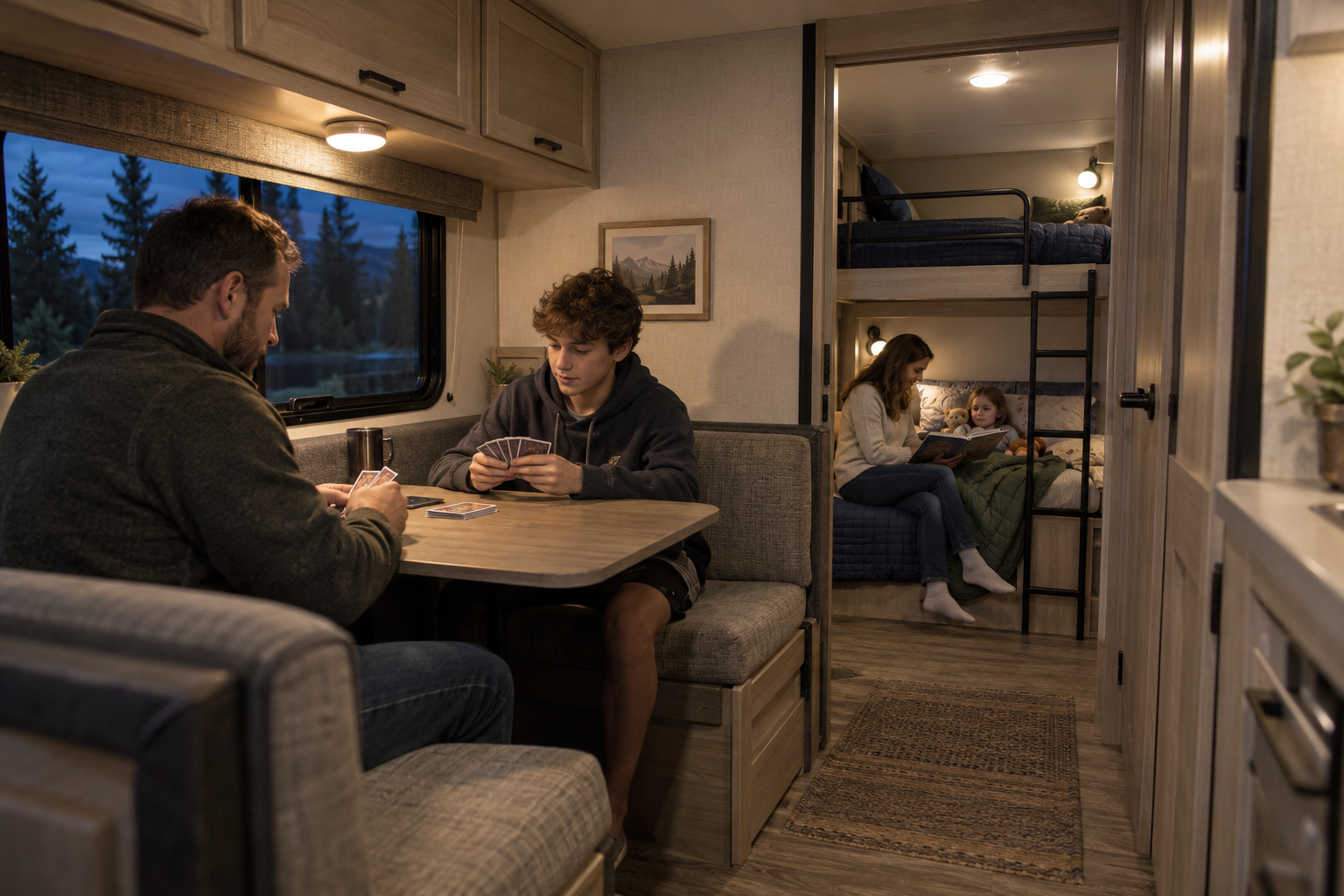
A couples coach may be a good starting point if…
- One or two people use the RV on most trips.
- You want to prioritize the main living area, kitchen, or bathroom.
- Extra overnight guests are occasional.
- The available guest bed works comfortably when needed.
- You prefer how the floorplan functions during an ordinary day.
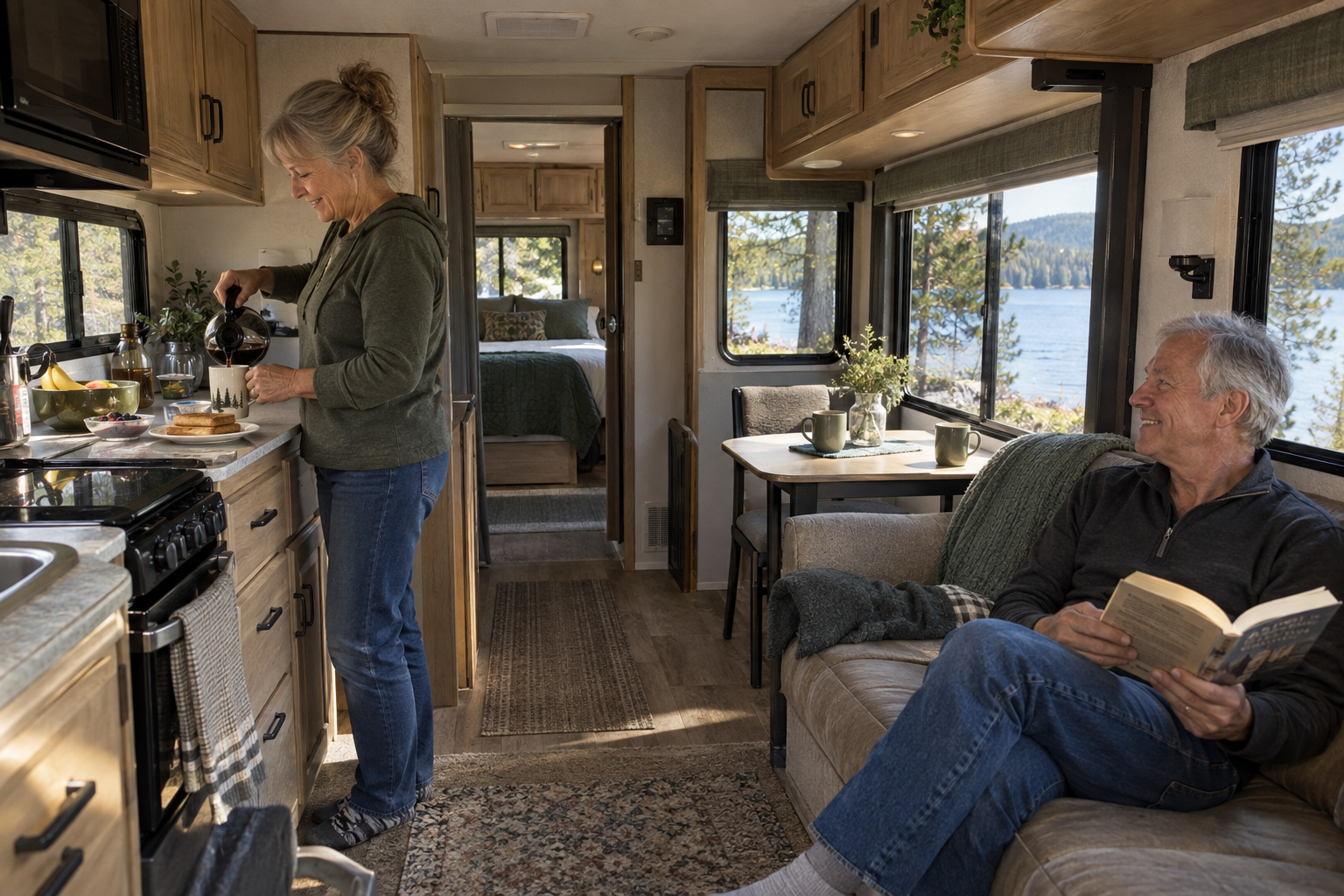
A solo traveler may enjoy a couples coach. A couple may find a bunkhouse useful. The name doesn’t decide who should buy it.
Before choosing, picture two trips
First, imagine the trip you take most often.
Then imagine a trip with your full guest list.
Walk through sleeping, meals, bathroom use, storage, and time indoors for both situations.
If one layout handles your regular trips beautifully and guest visits reasonably well, it deserves serious consideration.
If accommodating guests would require compromises you already know won’t work, keep looking.
Choose the layout that makes your actual camping life more comfortable—not simply the one with the highest sleeping number.
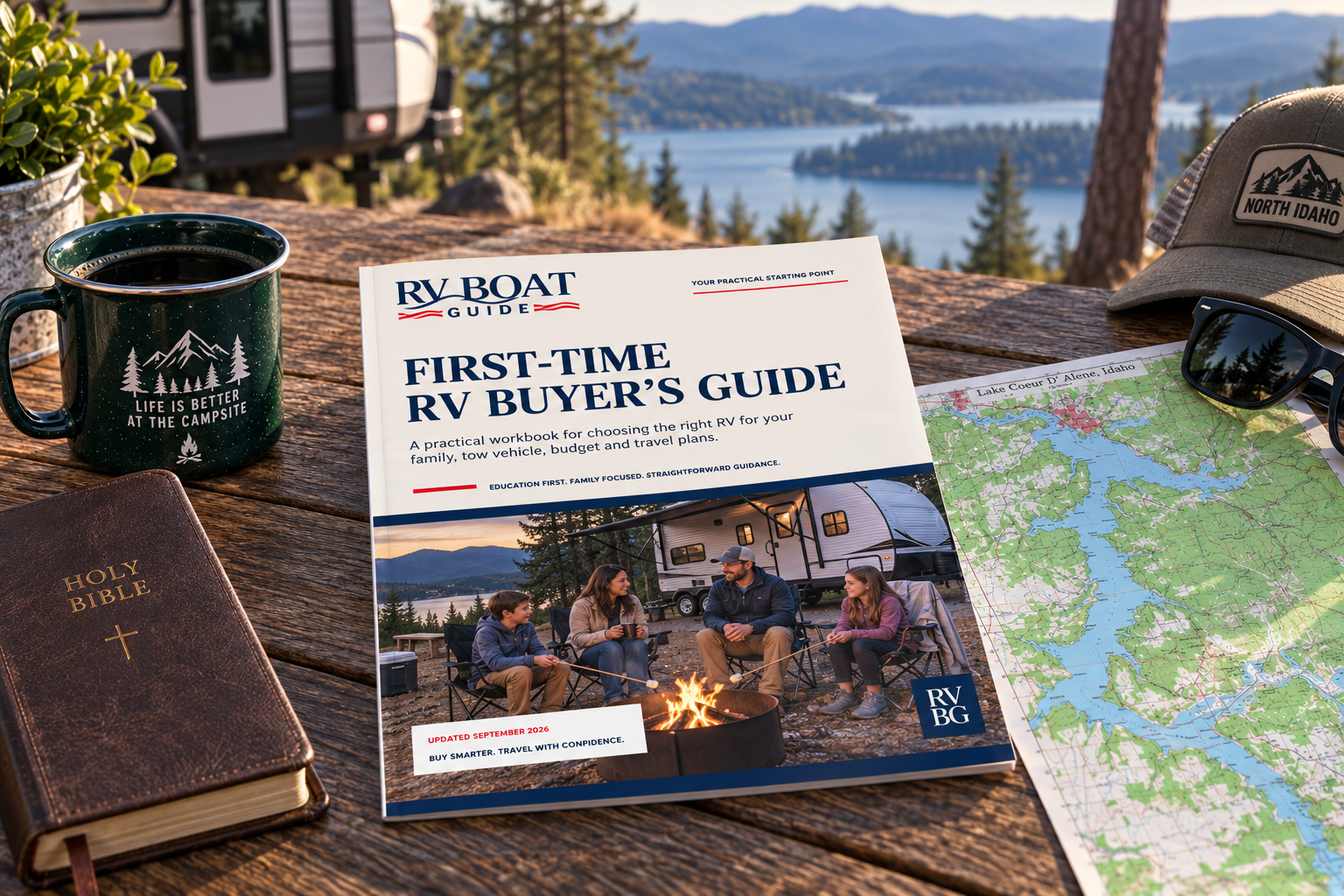
Get the free First-Time RV Buyer’s Guide
Comparing a bunkhouse and a couples coach is a starting point. The First-Time RV Buyer’s Guide helps you turn your family’s routines and priorities into a practical plan for comparing RVs.
Inside, you’ll find explanations of RV types, worksheets for your travel plans and budget, a walkthrough scorecard, and questions to help you prepare for delivery. There are also first-time buyer FAQs and a plain-English glossary.
Use the form below to request your free digital copy. Keep it with you as you try sleeping arrangements, compare living spaces, tour RVs, and build your shortlist.
Want to talk through your options?
I’m Si, founder of RV Boat Guide and an RV & Boat Outfitter. I help RV and boat buyers throughout the Pacific Northwest and can also help connect buyers elsewhere with a trusted outfitter in their area.
If you’re deciding whether dedicated bunks are worth the space—or looking for a couples layout that can accommodate occasional guests—I’d welcome the opportunity to help.
Message me using the form below. Tell me who usually travels with you, how often guests join you, and which sleeping or living-space questions you’re working through.
You don’t need to have a floorplan or model picked out to start the conversation.