
Choosing the Right RV Length
Choose an RV length that fits your trips, campsites, and storage space. Learn what to measure and how to compare access, driving comfort, and usable living space.

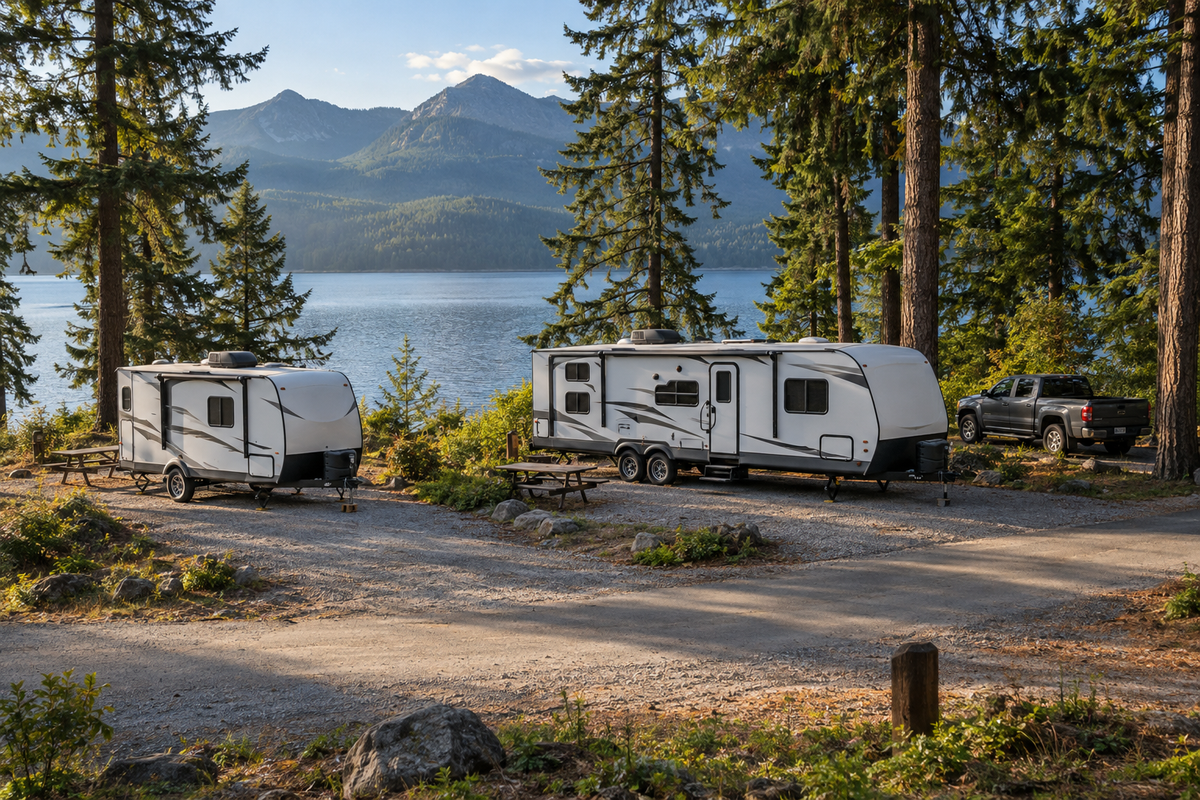
Find the balance between comfortable living space and an RV that fits the places you want to go.
A few extra feet can look appealing during a walkthrough.
They might give you a separate bedroom, more kitchen counter space, or somewhere for everyone to sit on a rainy afternoon.
Those same feet come with you through the campground entrance, around the fuel station, and into your driveway.
Choosing an RV length means considering both sides of ownership: how it feels when you’re parked and what it takes to get there.
The right length gives you the space you need while fitting your destinations, storage plans, and comfort behind the wheel.
Start with your trips, not a target number
It’s tempting to begin shopping with a rule like “We need to stay under 30 feet.”
That may be a useful limit if it comes from your driveway or favorite campground. But without that context, it’s just a number.
Start by picturing your usual trips.
Will you move every few days? Return to the same lakeside campground? Spend several weeks at a developed RV park? Explore smaller public campgrounds?
A shorter RV can provide more flexibility when looking for suitable sites. A longer layout may offer space you’ll appreciate during extended stays. Neither advantage matters much if it doesn’t support how you actually travel. Go RVing’s first-time buying guidance.
Write this down: “Most of our trips will involve ______, and the places we most want to visit are ______.”
1. Know which length you’re comparing
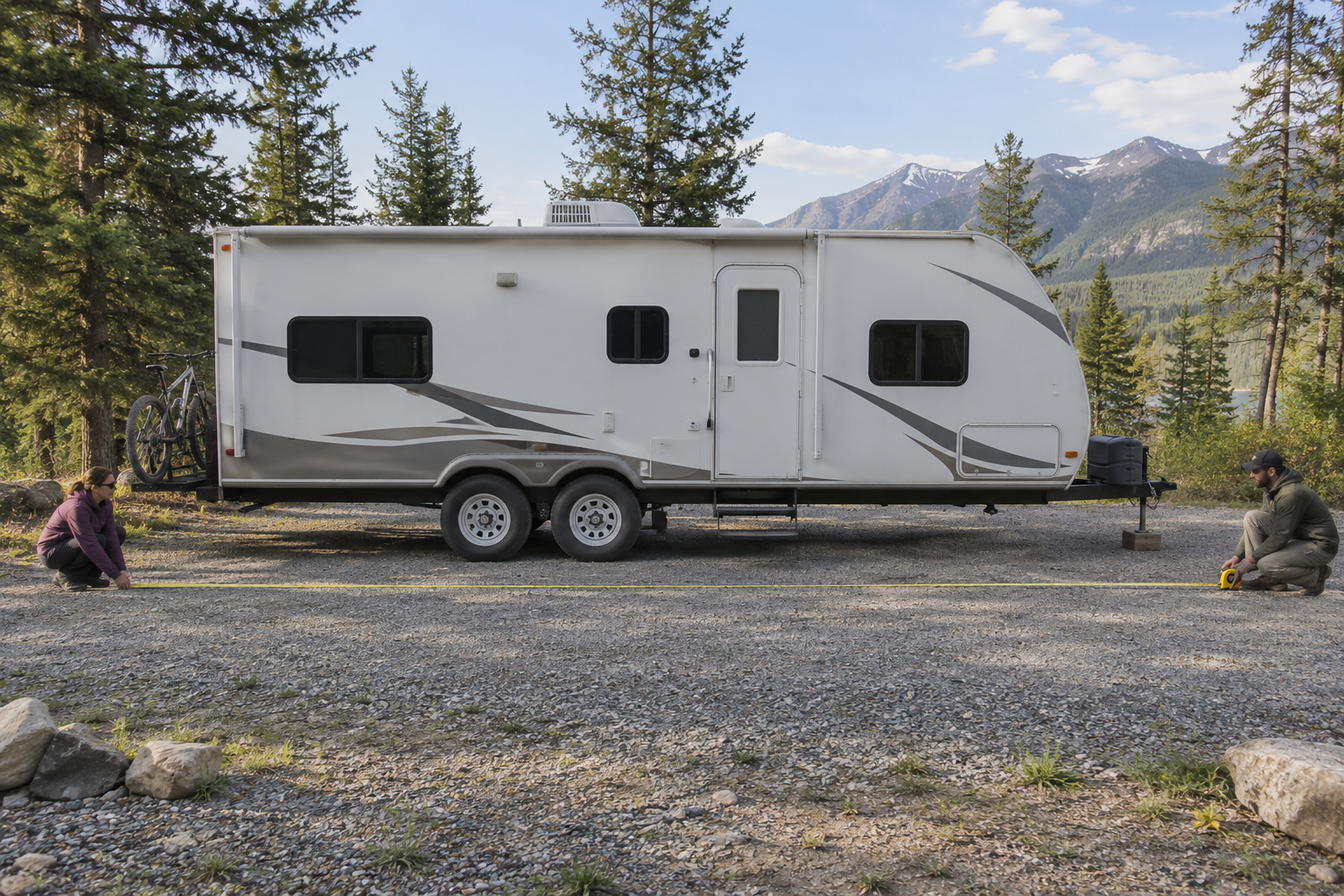
Before comparing RVs, make sure the measurements describe the same thing.
| Measurement | Why it matters |
|---|---|
| RV overall length | Helps you evaluate the individual RV’s physical footprint |
| Living-body length | May describe only part of a trailer rather than its complete exterior length |
| Connected combination length | Includes the tow vehicle and trailer, or motorhome and towed vehicle, as connected for travel |
| Usable campsite or storage length | Describes the space available, which still needs suitable access and clearance |
Don’t treat the model number as a tape measure. Look up the manufacturer’s exterior-length specification and confirm what it includes.
For a travel trailer, account for the tongue and rear equipment. For any RV, check whether a bike rack, cargo carrier, or other accessory extends beyond the published measurement.
Campground definitions also matter. California State Parks, for example, specifies trailer length from the bumper to the tip of the trailer hitch. Other reservation systems may ask for different information. California State Parks’ measurement guidance.
Ask what the number includes before using it to make a reservation.
2. Research the campgrounds you want to use
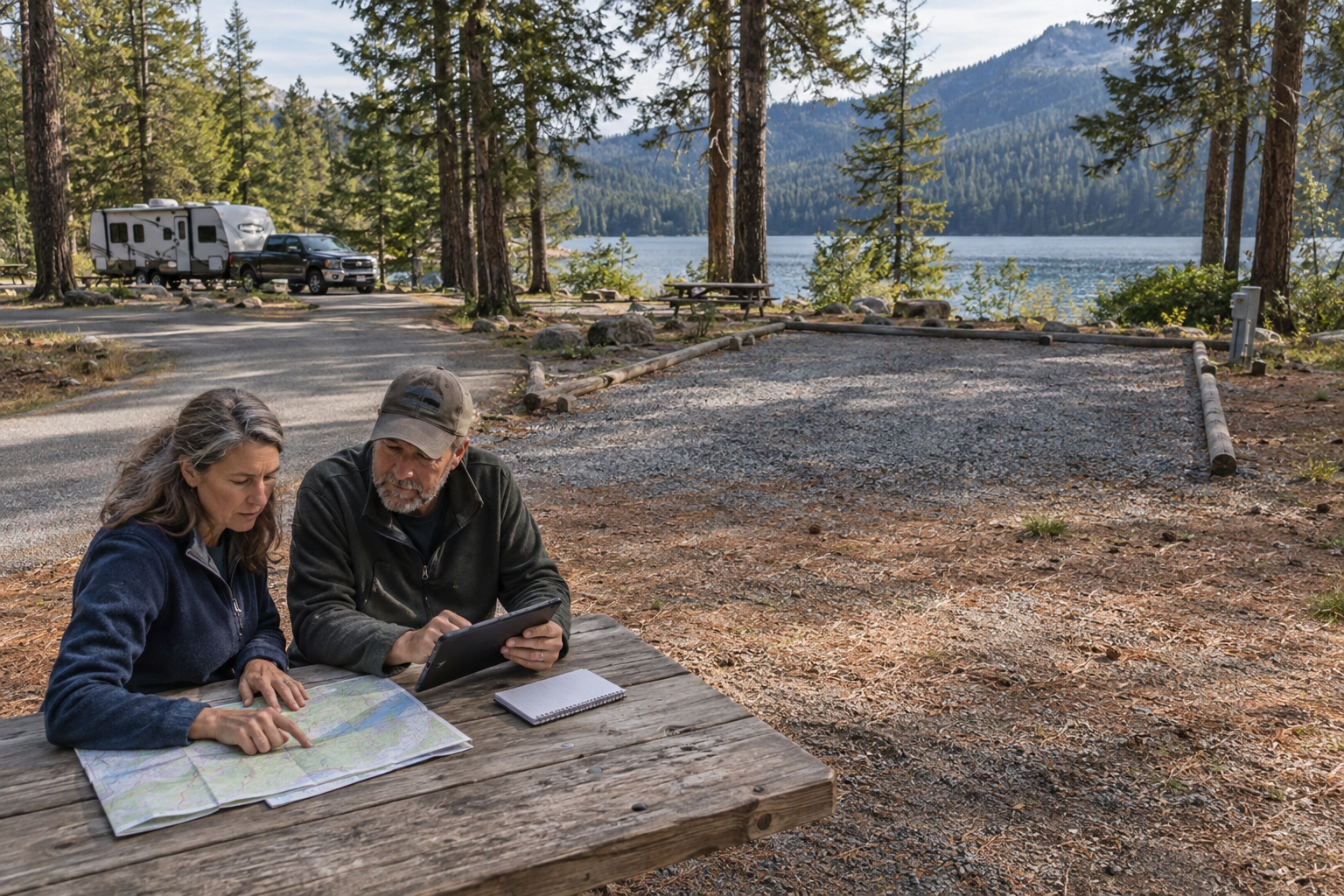
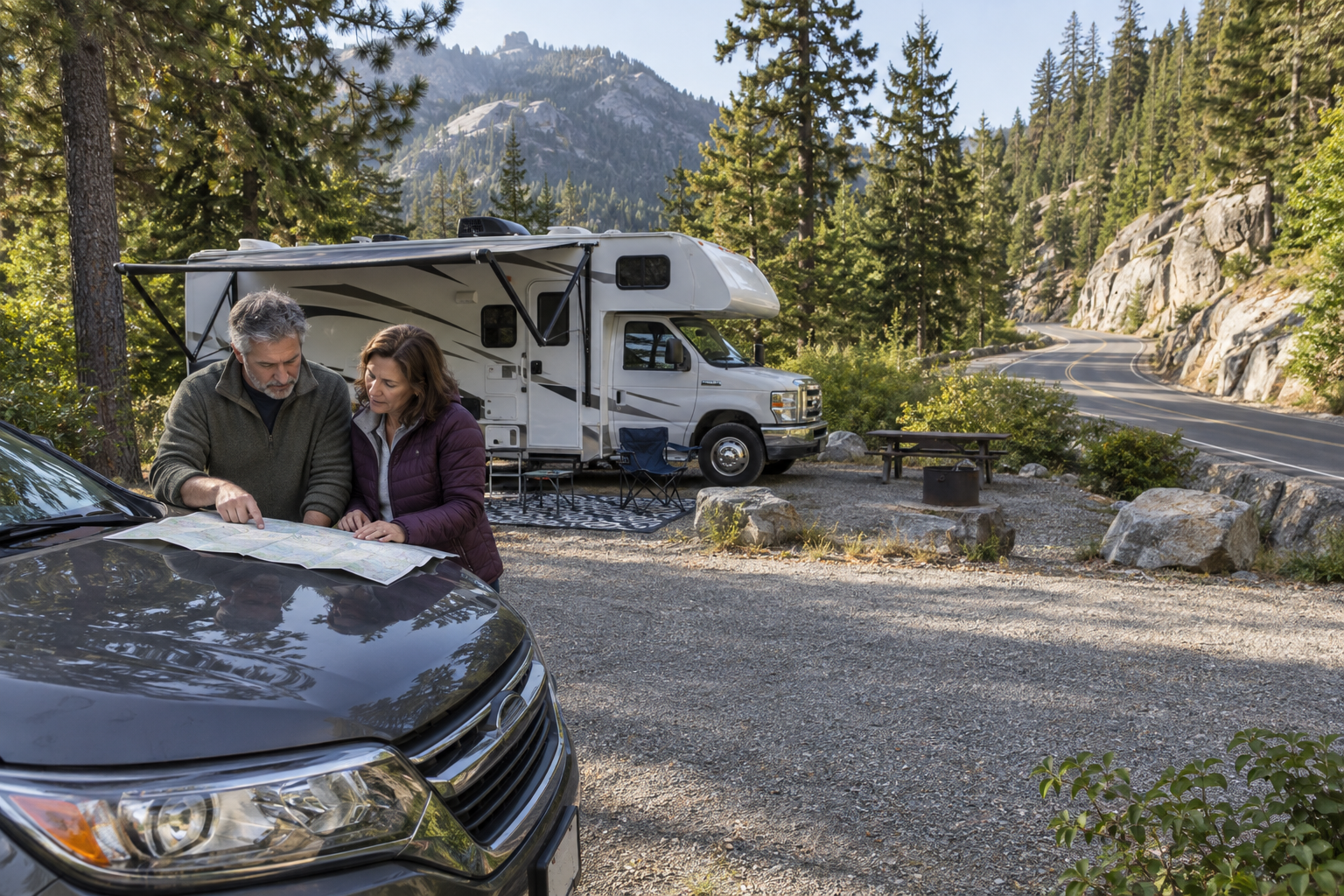
Make a short list of places you genuinely expect to visit.
For buyers here in the Pacific Northwest, that might include a favorite lake campground, a state park, a mountain destination, and a developed RV park for longer stays.
Then check the details for the individual sites you would reserve.
Look for:
- Maximum RV or trailer length
- Whether the limit includes the tow vehicle
- Parking-pad dimensions
- Back-in or pull-through access
- Restrictions on additional vehicles
- Room for slide-outs and awnings
A campground that accepts large RVs may have only a few sites that accommodate them.
Yosemite’s campground information illustrates this distinction: its largest allowable RV sizes fit a limited number of sites, while smaller equipment has more site options. Yosemite campground information.
“The campground allows it” and “a suitable site is available” are different questions.
3. Don’t rely on a universal national-park rule
You may hear that a particular RV length will fit “all the national parks.”
There is no single number that settles campground access, road restrictions, and parking throughout the park system.
Even within one park, those requirements can differ. Yosemite publishes separate information about campground accommodation and road restrictions. Visiting Yosemite with an RV.
Check the current official information for your destination and the specific campsite.
If a listing is unclear, call and explain your equipment accurately. Don’t round down or assume a little overhang will be acceptable.
4. Check the route as well as the site
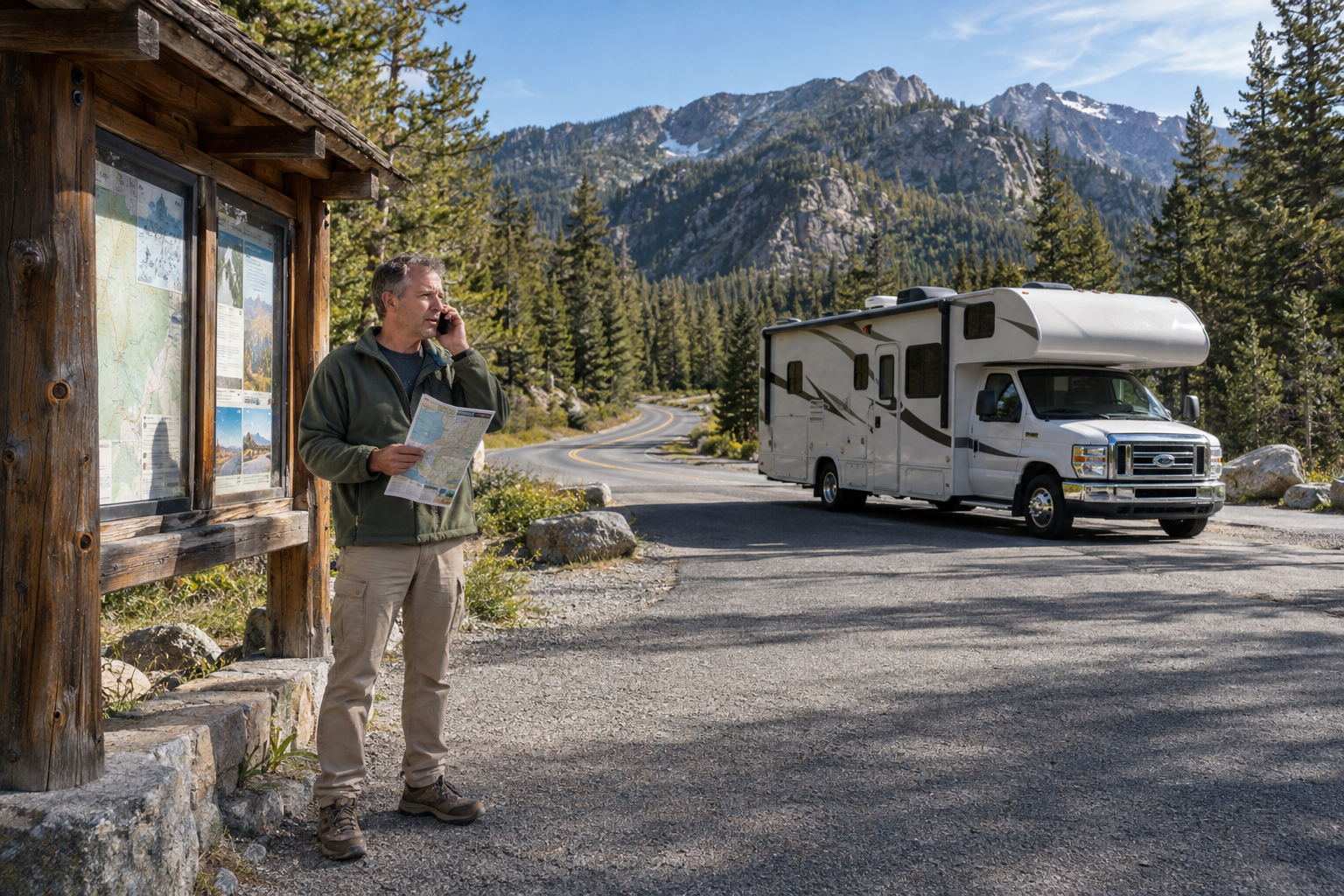
A parking pad can be long enough while the approach is unsuitable.
Consider narrow roads, tight turns, overhead clearance, grades, and the space needed to maneuver at the destination.
Glacier National Park is a useful example. Sections of Going-to-the-Sun Road have vehicle and combination-length restrictions, along with width restrictions and height-clearance concerns. Being able to camp in the park does not mean you can drive your RV along every road. Glacier’s official road guidance.
Before buying around a particular travel plan, check how you would reach the places on your list.
That may also help you decide whether you want a separate vehicle available for exploring after arrival.
5. Measure your storage space before shopping
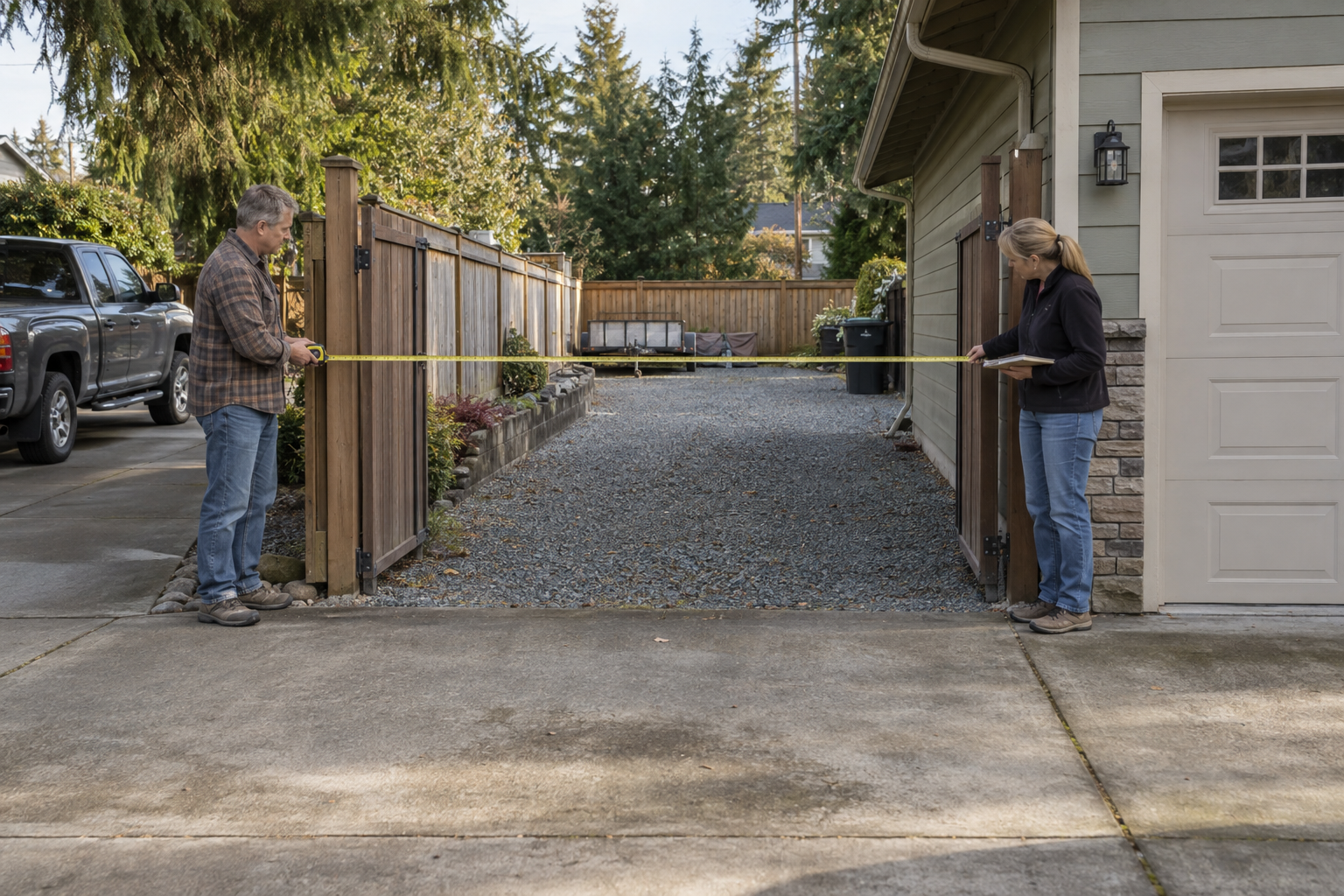
Your RV needs a home between trips.
Measure the usable parking area, then look beyond its length.
Can you get through the gate? Is there room to turn from the street? Will the entrance steps open? Can you walk around the RV for inspection and maintenance?
Check overhead branches, roof overhangs, and any covered-storage opening. Consider whether slides need to open while you load or clean the RV.
For a towable, think through hitching and unhitching. Where will the truck sit during that process?
If you plan to rent storage, confirm the facility’s measurements and access arrangements for the actual RV.
A space that barely contains the RV may still be inconvenient to use.
6. Consider the whole combination
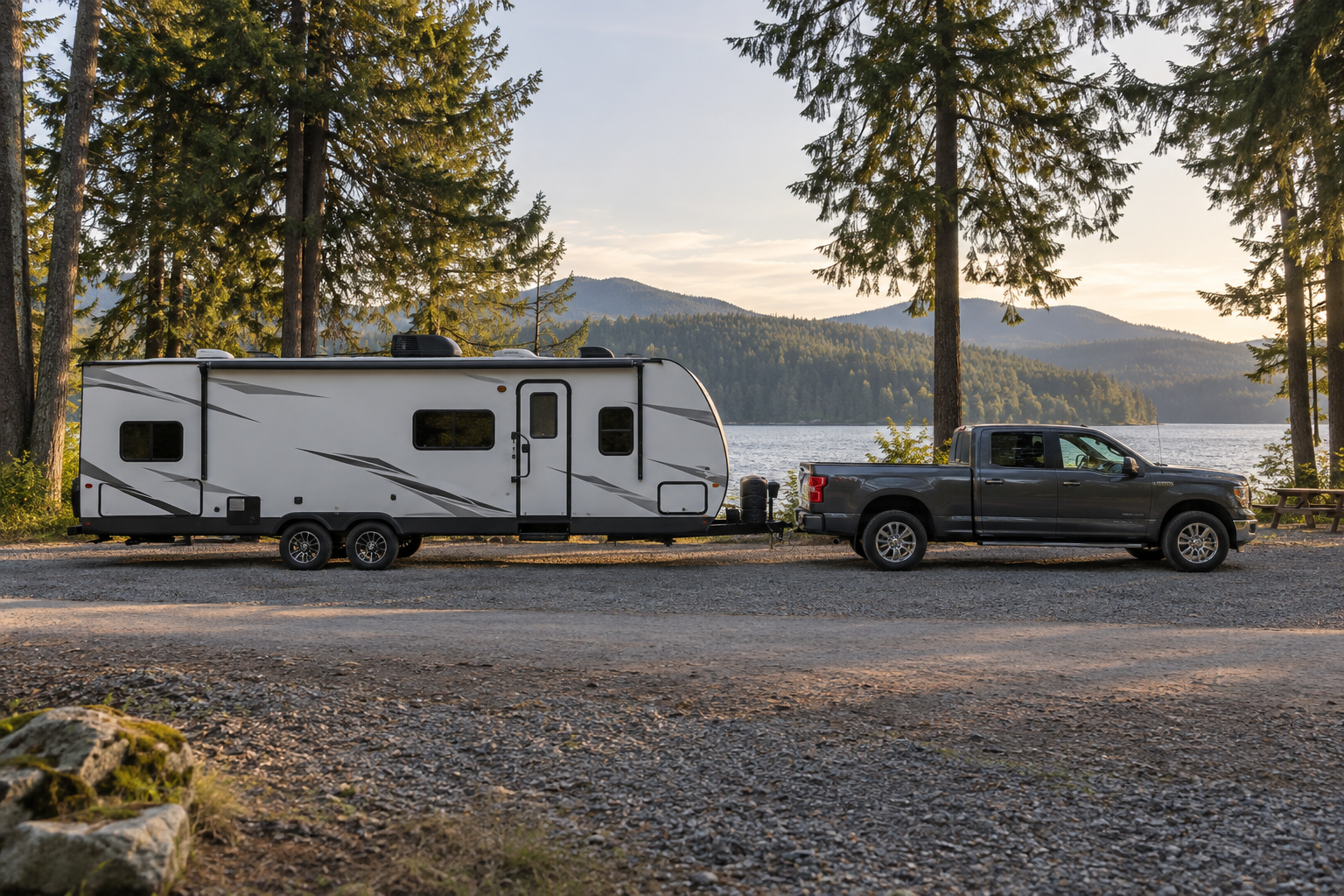
A trailer’s length doesn’t tell you the length of the setup you’ll drive.
With a travel trailer, the truck or SUV and hitch arrangement add to the road footprint.
A fifth wheel overlaps the pickup bed, so simply adding the truck’s published length to the trailer’s published length won’t give you the connected measurement.
A motorhome towing a car also needs to be evaluated as a combination.
Record the actual connected length when you have the equipment available. Until then, have the proposed configuration assessed rather than relying on a guess.
Also ask where the tow vehicle or towed car will park at camp. Don’t assume overflow parking is available or that vehicles can sit outside the designated pad. Example of campground parking requirements.
7. Compare what the extra feet actually provide
Length is useful only if the layout uses it in a way that matters to you.
One longer RV may add a bunkroom. Another may provide a larger bathroom, more seating, or additional kitchen space.
During the walkthrough, identify what you gain by moving up in size.
Then ask whether you would use that benefit regularly.
As a father of five, I understand the appeal of another bed or a little more room indoors. But I would still want to know exactly how that space improves our trips.
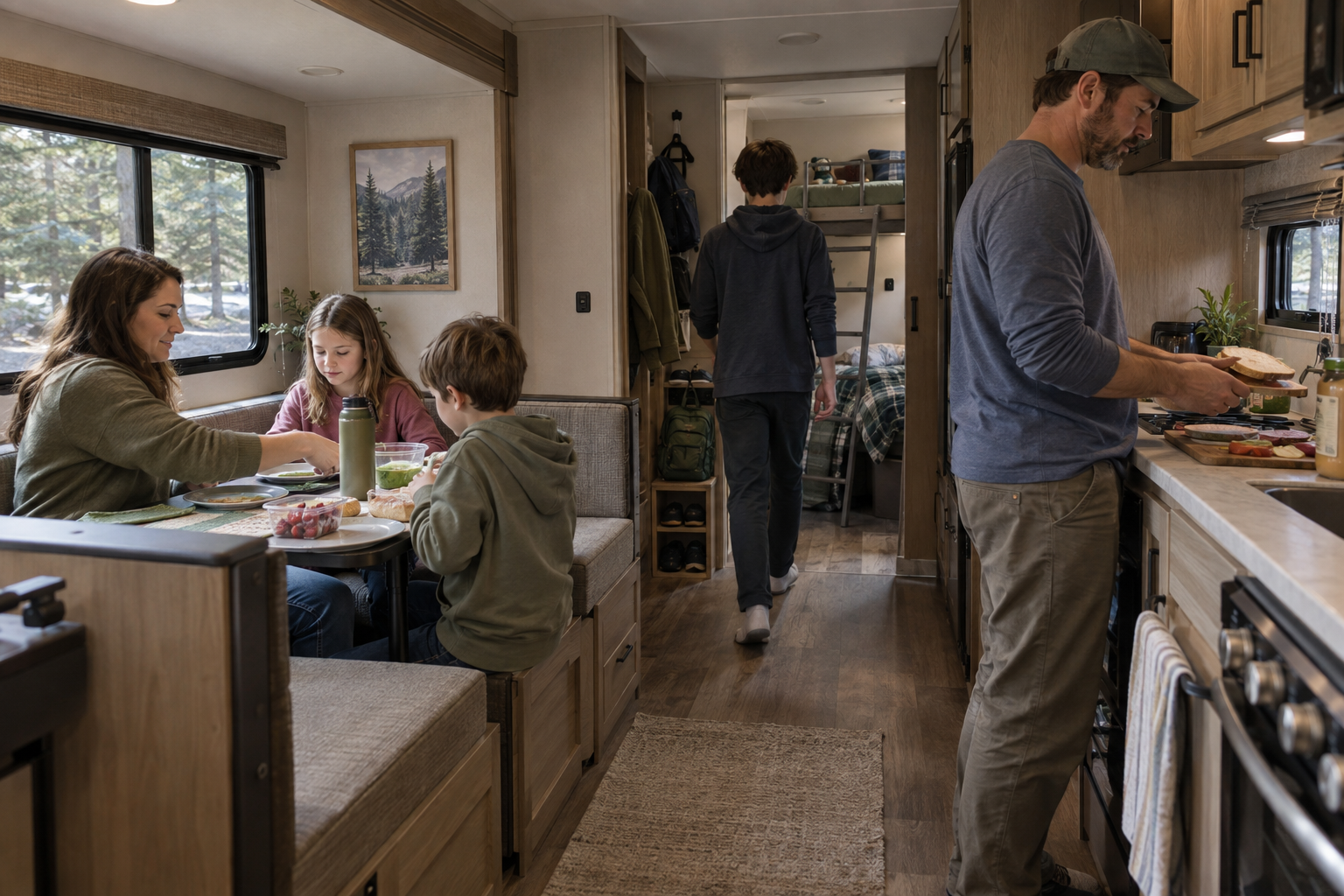
Try ordinary activities:
- Sit down together for a meal.
- Walk past someone standing at the kitchen counter.
- Imagine everyone getting ready for bed.
- Find places for shoes, bags, and jackets.
- Check whether the bathroom works comfortably.
Compare how the layouts function, not just how open they feel when empty.
8. Think about driving and backing realistically
A shorter RV may fit more places, but length alone doesn’t determine handling.
Wheelbase, hitch position, rear overhang, width, and the tow vehicle all influence how a setup behaves.
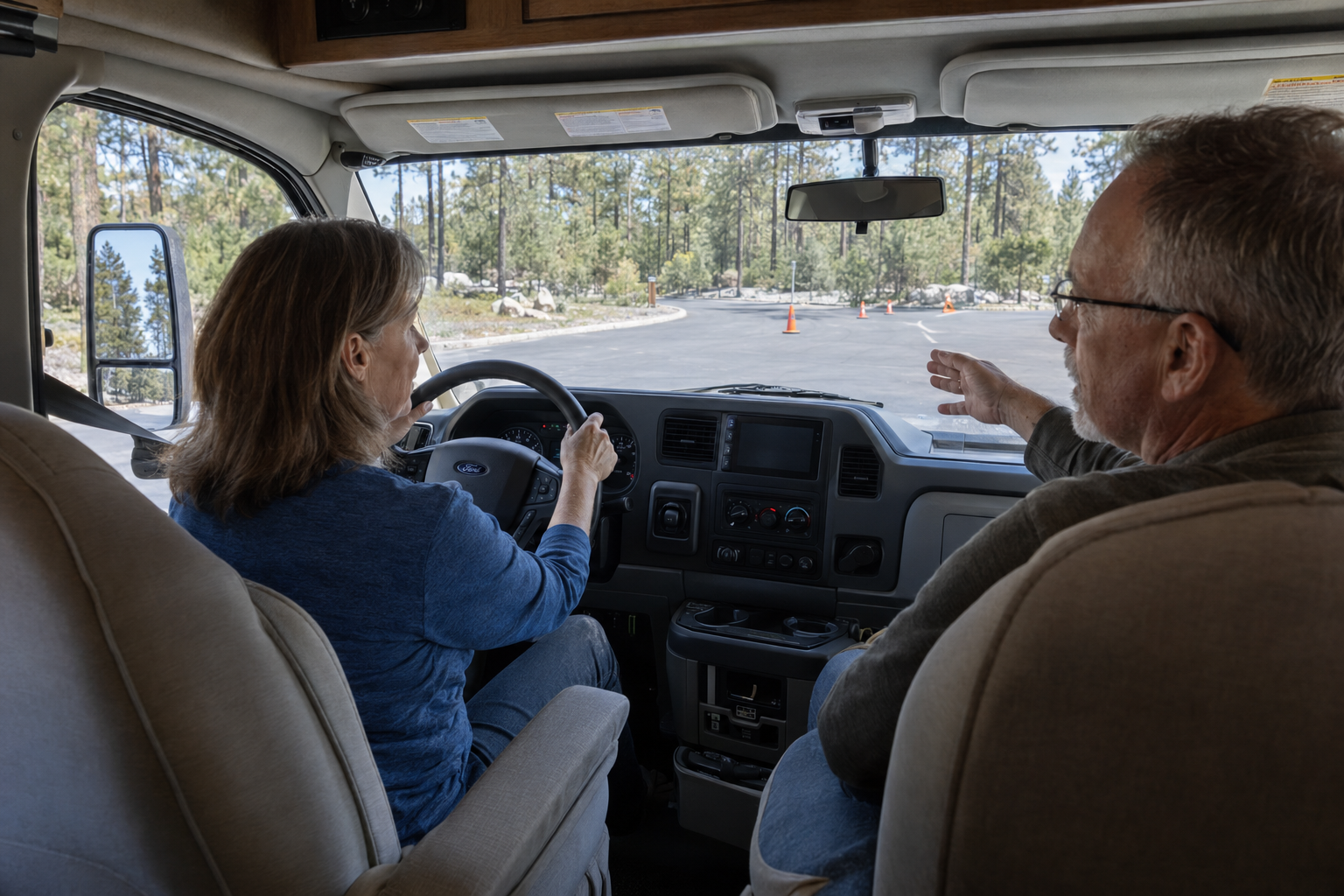
Ask for a test drive where appropriate and an explanation of the specific vehicle or combination. Arrange instruction and practice before a major trip.
Consider everyday stops, too.
Where will you fuel? Can you enter and leave the parking area without an awkward maneuver? Will your usual travel partner also feel comfortable driving?
Confidence can grow with experience. Give yourself a setup and a learning plan that make that growth practical.
9. Keep weight separate from length
Two RVs of similar length can have different weights and carrying capacities.
A shorter trailer is not automatically compatible with your vehicle. A longer motorhome does not automatically have more capacity for people and belongings.
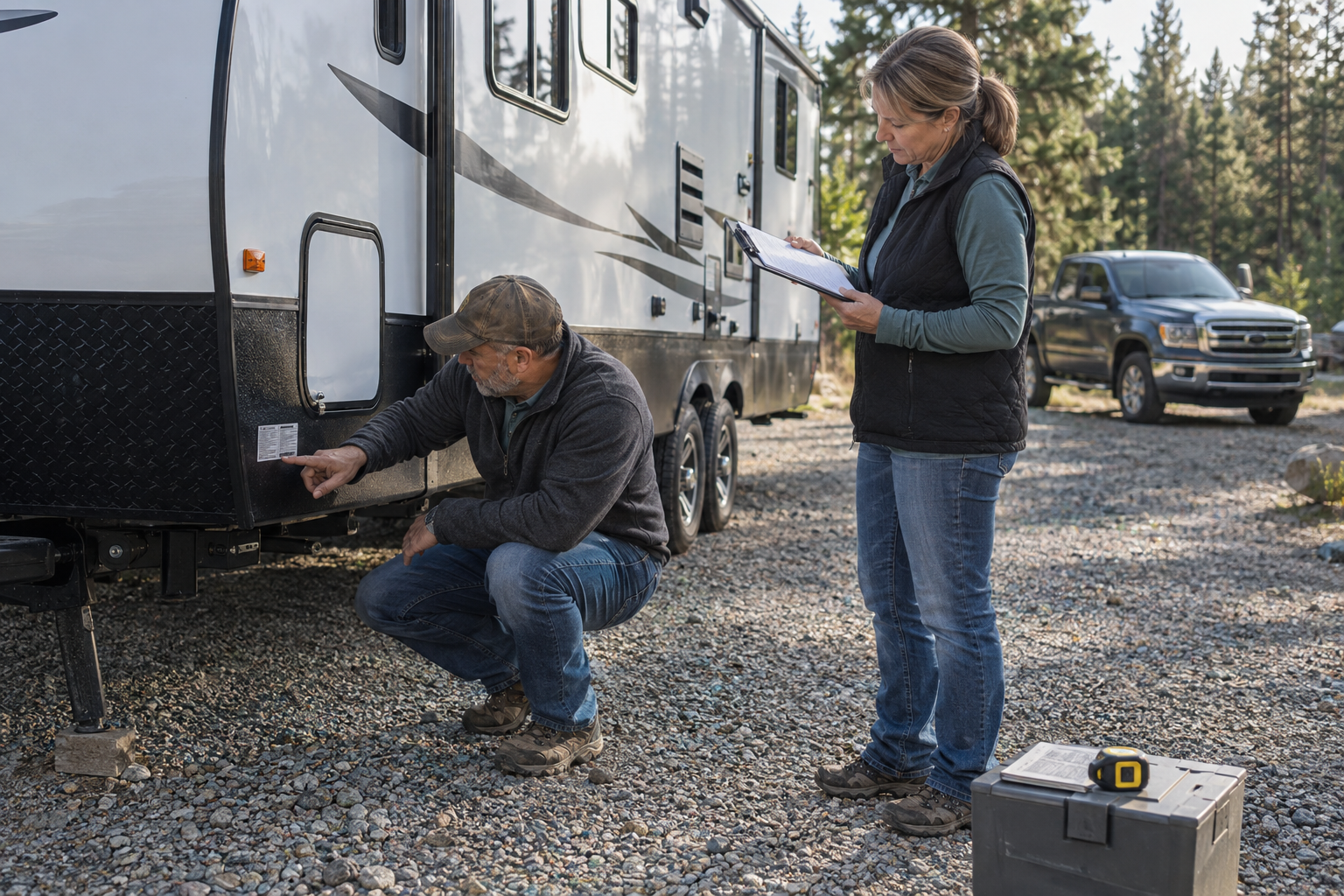
Evaluate the specific RV’s ratings and your actual travel load alongside its dimensions.
Length helps answer where it fits. Weight ratings help answer whether the loaded equipment is an appropriate match.
Both need to work before a favorite floorplan becomes a serious purchase candidate.
A practical way to narrow your search
Instead of choosing an arbitrary cutoff, establish three things:
- Your firm limits: Storage dimensions, required campground restrictions, and equipment compatibility.
- Your essential living needs: Suitable beds, seating, bathroom access, and room for the usual traveling group.
- Your preferences: Features you would enjoy if they fit within the first two.
Then compare a few RVs near the smaller and larger ends of that realistic range.
If the shorter option meets your needs comfortably, ask what you would gain by going longer.
If it requires daily compromises you already dislike, investigate whether a longer option still fits your destinations and ownership plans.
Questions to bring to the walkthrough
- What is this RV’s actual overall length, and what does that measurement include?
- Will accessories change its travel or storage footprint?
- What will the connected combination measure?
- Can it fit the specific sites we want to reserve?
- Can we reach those sites using suitable roads?
- Will it fit at home or in our planned storage space?
- What useful feature are we gaining compared with the shorter option?
- Are we comfortable driving and maneuvering this setup?
You don’t need the shortest RV available. You also don’t need to use every foot your storage space allows.
Choose enough room to enjoy your trips, with a footprint that lets you take them comfortably.
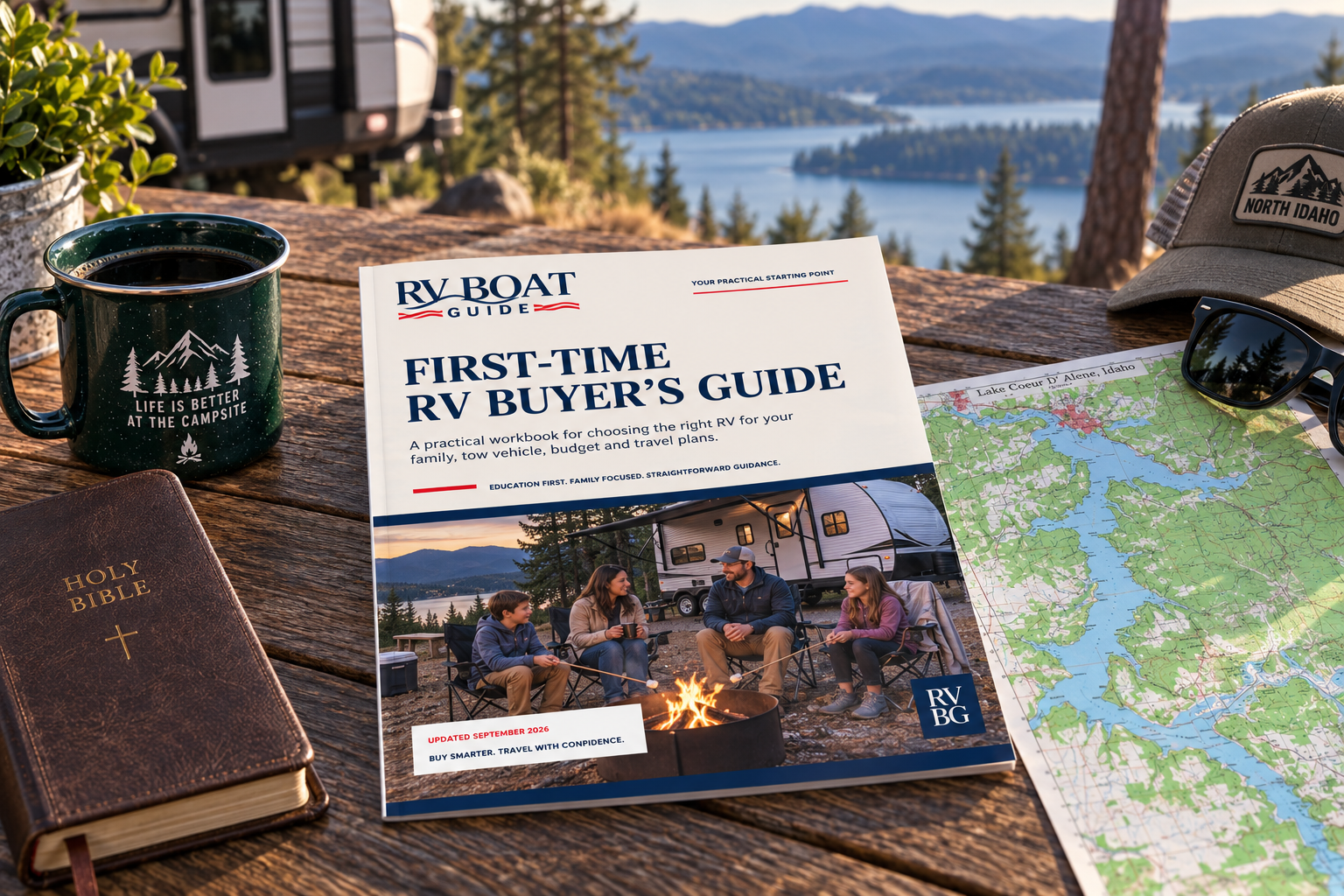
Get the free First-Time RV Buyer’s Guide
Choosing the right RV length is a starting point. The First-Time RV Buyer’s Guide helps you turn your destination plans, space requirements, and budget into a practical way to compare RVs.
Inside, you’ll find explanations of RV types, worksheets for your travel plans and budget, a walkthrough scorecard, and questions to help you prepare for delivery. There are also first-time buyer FAQs and a plain-English glossary.
Use the form below to request your free digital copy. Keep it with you as you check dimensions, research campsites, tour RVs, and build your shortlist.
Want to talk through your options?
I’m Si, founder of RV Boat Guide and an RV & Boat Outfitter. I help RV and boat buyers throughout the Pacific Northwest and can also help connect buyers elsewhere with a trusted outfitter in their area.
If you’re trying to balance comfortable living space with campground access, storage, and driving confidence, I’d welcome the opportunity to help.
Message me using the form below. Tell me who will be traveling with you, where you hope to camp, and where you plan to store your RV. Include any vehicle details or size restrictions you already know.
You don’t need to have a length or model picked out to start the conversation.