
Class B vs. Class C: Camper Van Mobility or More Living Space?
Compare Class B camper vans and Class C motorhomes for daily travel, living space, bathrooms, storage, and cost. Learn where B+ and Super C fit into the decision.


Compare everyday travel, sleeping arrangements, bathrooms, storage, and ownership; and understand where Super C motorhomes fit.
A camper van makes a certain kind of trip easy to imagine.
Pack your bags, choose a direction, and stop somewhere interesting along the way. Your kitchen, bed, and belongings travel with you in a relatively compact vehicle.
Then you step into a Class C motorhome.
There’s more room to move around. The bathroom may feel more comfortable. You can picture eating breakfast inside without first putting away the bed.
Both ideas are appealing. But they can lead to different camping experiences.
The question is how much space you need to enjoy the trip; and how much vehicle you’re comfortable bringing along.
What’s the basic difference?
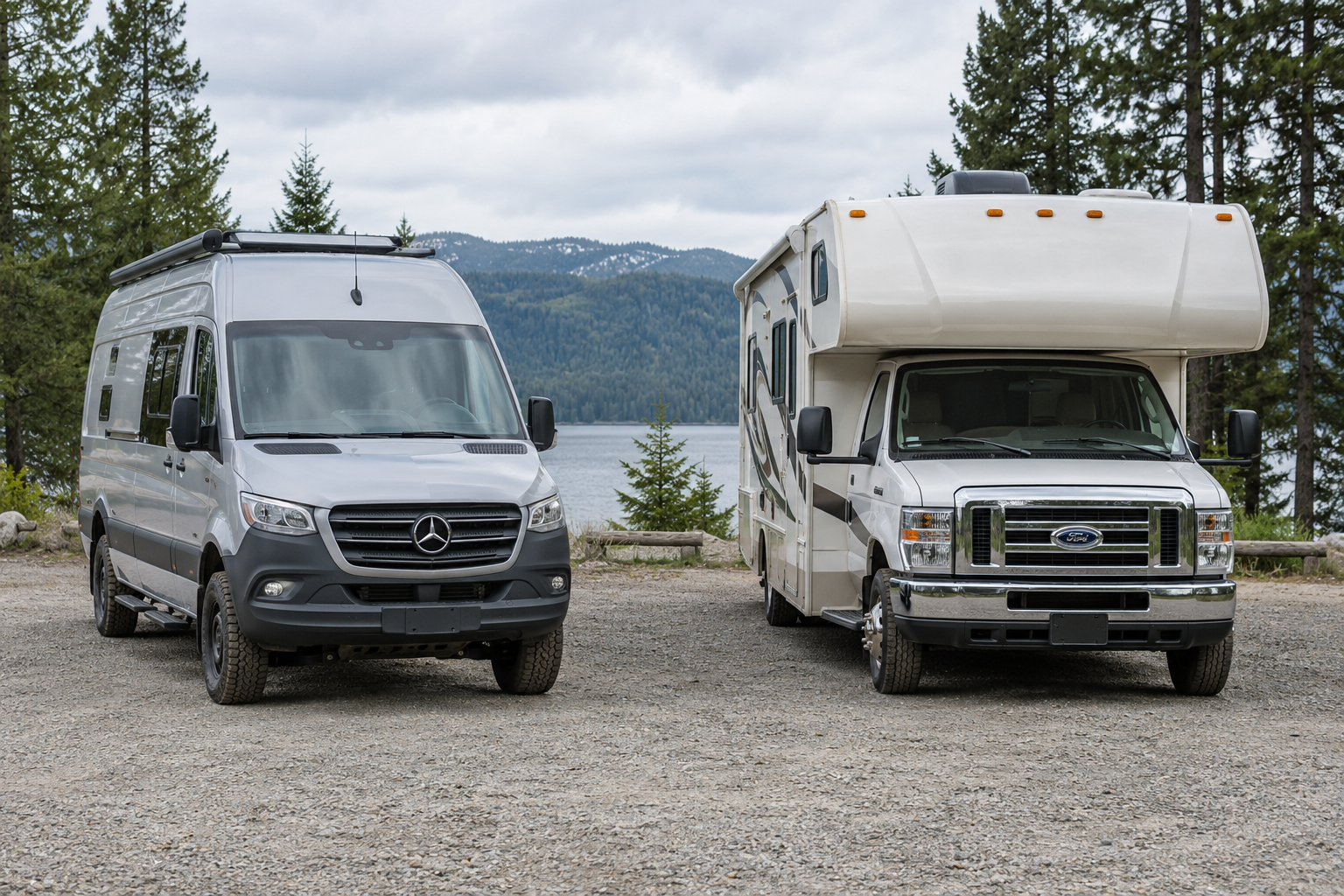
A Class B motorhome, commonly called a camper van, fits its living accommodations into a van body.
A Class C motorhome retains a recognizable vehicle cab, with a separate RV body built behind it. Many have an extension over the cab that provides sleeping space or storage.
The Class C’s body typically provides more width and room for distinct living areas. A Class B generally keeps the narrower shape of the underlying van. Go RVing’s camper-van overview, Class C overview.
| Consideration | Class B | Class C |
|---|---|---|
| Construction | Living space within a van body | RV body built behind a vehicle cab |
| Interior space | Compact, with areas often serving multiple purposes | Generally more room for separate activities |
| Sleeping | Fixed or convertible beds; some offer additional sleeping arrangements | Often includes a rear bed, cab-over bunk, or convertible seating |
| Bathroom | Configuration varies; compact wet baths are common | Separate showers are common, but layouts vary |
| Storage | Requires careful packing and organization | Often offers more interior and exterior storage |
| Main tradeoff | Less living space in exchange for a smaller footprint | More living space with more vehicle to manage |
These are starting points. Dimensions and features overlap, so compare individual models.
1. Think about the stops between campsites
How do you picture spending your days?
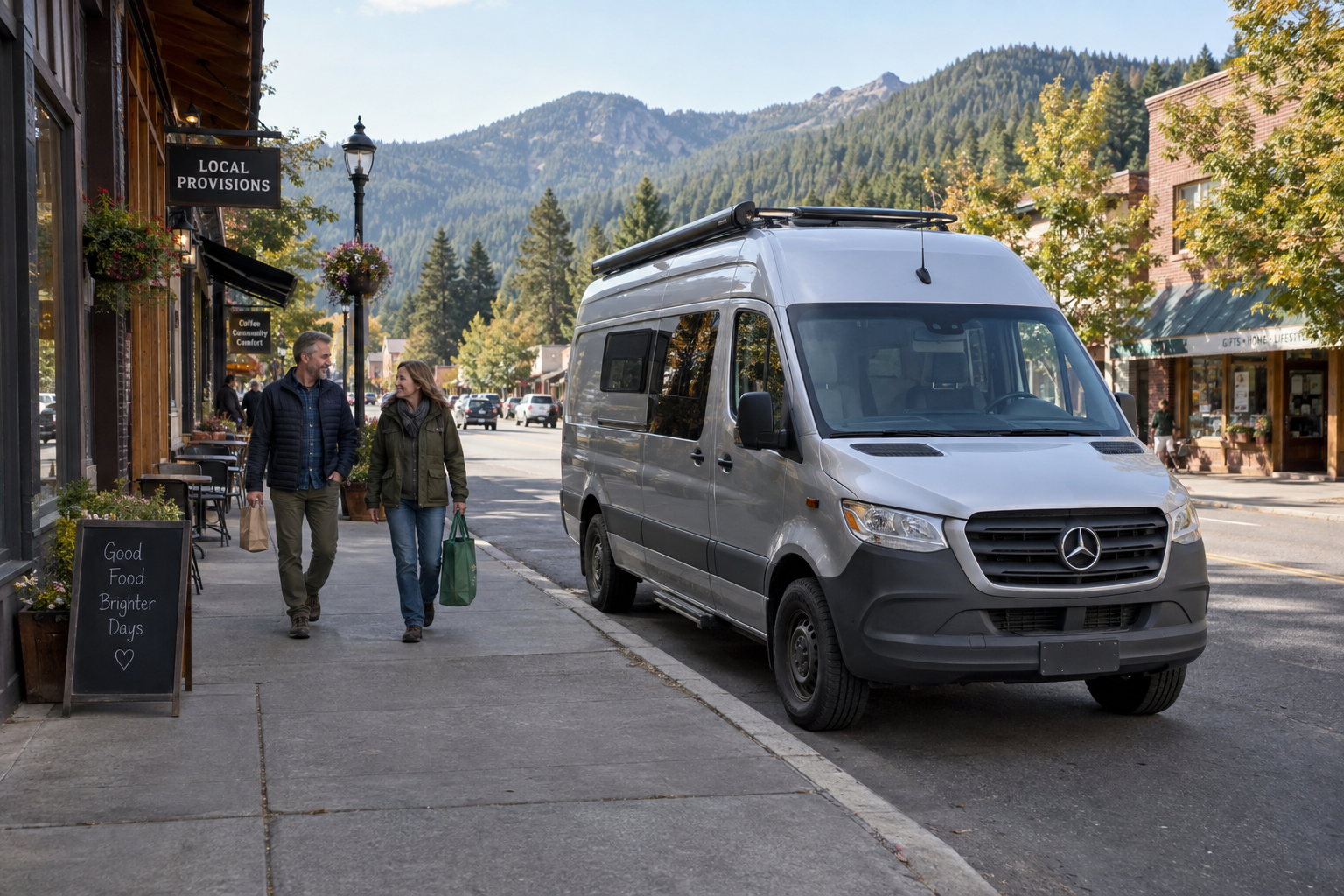
Will you leave camp each morning to explore? Stop at restaurants, scenic overlooks, and small towns? Or settle into one campsite and spend more time there?
A Class B’s narrower footprint may make some everyday stops easier to accommodate. But a camper van is still a tall, potentially long vehicle. Check actual dimensions before assuming it will fit a parking space, garage, or trailhead.
A Class C’s additional living space can be welcome at the destination, while requiring more planning along the way.
Imagine your ordinary travel day, including the grocery stop and the parking lot; not only the campsite.
2. Try the layout with the bed ready to use
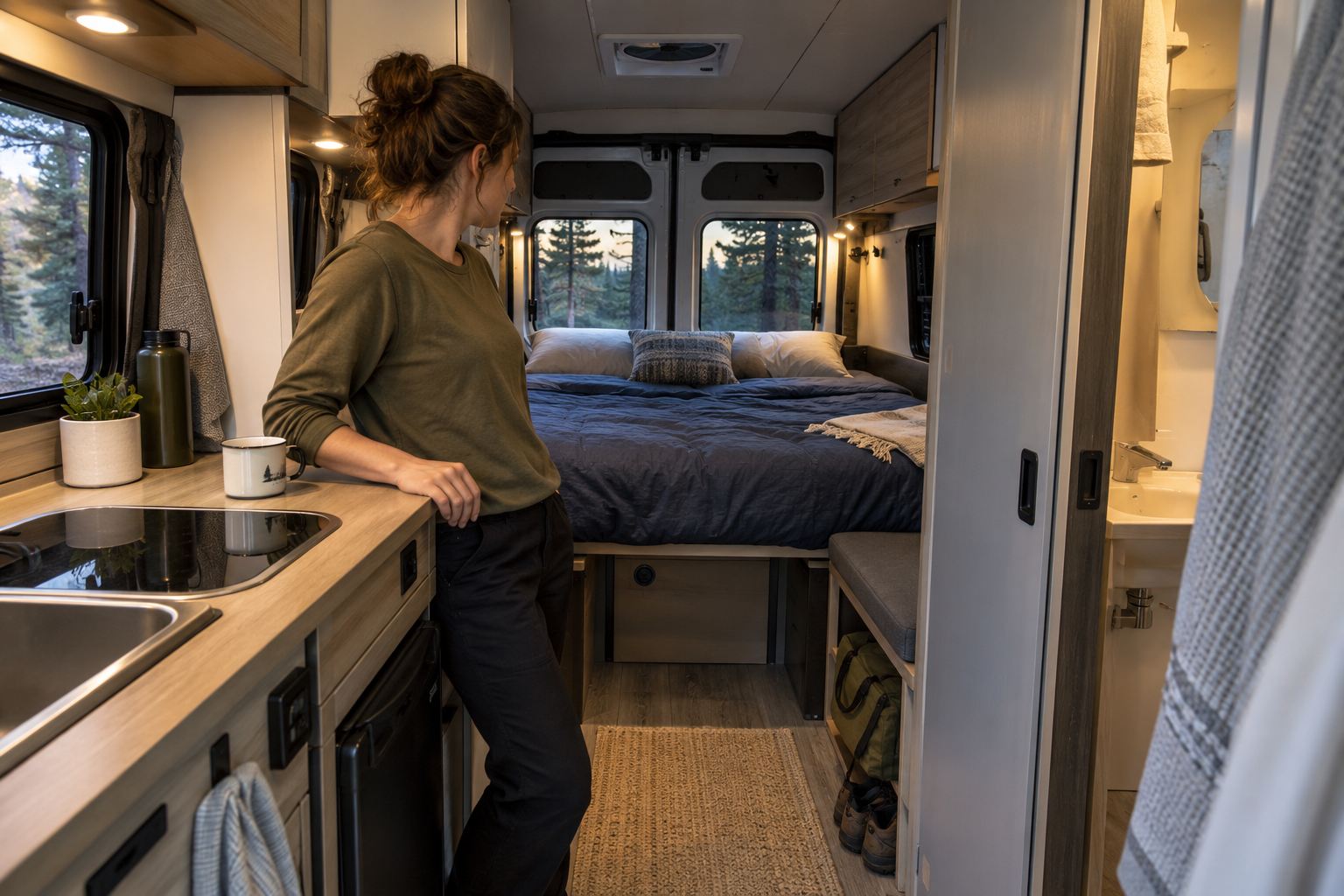
Compact RVs make creative use of space. That can work beautifully when the arrangement fits your routine.
In some Class B models, seating converts into a bed. Others have dedicated beds or different arrangements that reduce daily conversion. Bathroom equipment also varies between models. Go RVing’s camper-van FAQs.
During a walkthrough, ask to see the nighttime setup.
Can someone get up without climbing over another person? Can you reach the bathroom? Where will shoes and bags go? Is the kitchen still usable?
Then look at the morning routine. How much needs to be rearranged before breakfast?
A Class C may provide more separation between sleeping and living areas, but check whether its advertised sleeping capacity also depends on converting the dinette or sofa.
Choose a routine you’ll be comfortable repeating.
3. Give the bathroom a proper walkthrough
Bathroom space is easy to underestimate until you use it.
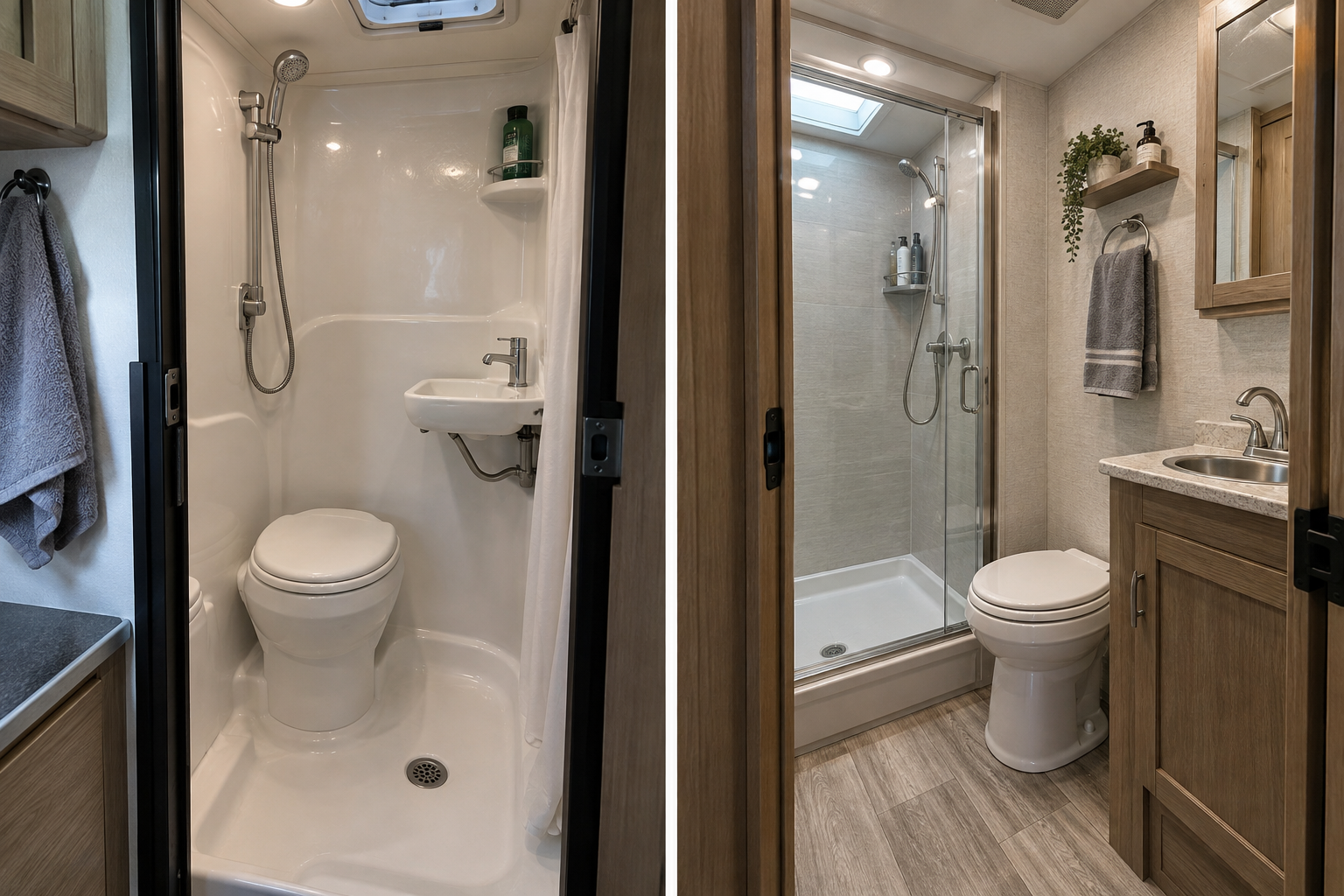
Many camper vans have a wet bath, where the shower shares an enclosed space with the toilet and sometimes the sink. A dry bath keeps the shower separate from the other bathroom fixtures. Class B configurations vary, so inspect the actual model. A manufacturer’s explanation of Class B bathrooms.
Stand inside. Close the door. Check elbow room, headroom, and where towels and toiletries will go.
Ask yourself how you expect to use it.
If you’re comfortable using campground showers regularly, a compact bathroom may work well. If you want to shower inside your RV every day, that space deserves more attention.
Apply the same test to a Class C. More square footage doesn’t guarantee that a particular bathroom fits you comfortably.
4. Consider how much time you’ll spend inside
A sunny walkthrough can make almost any layout feel inviting.
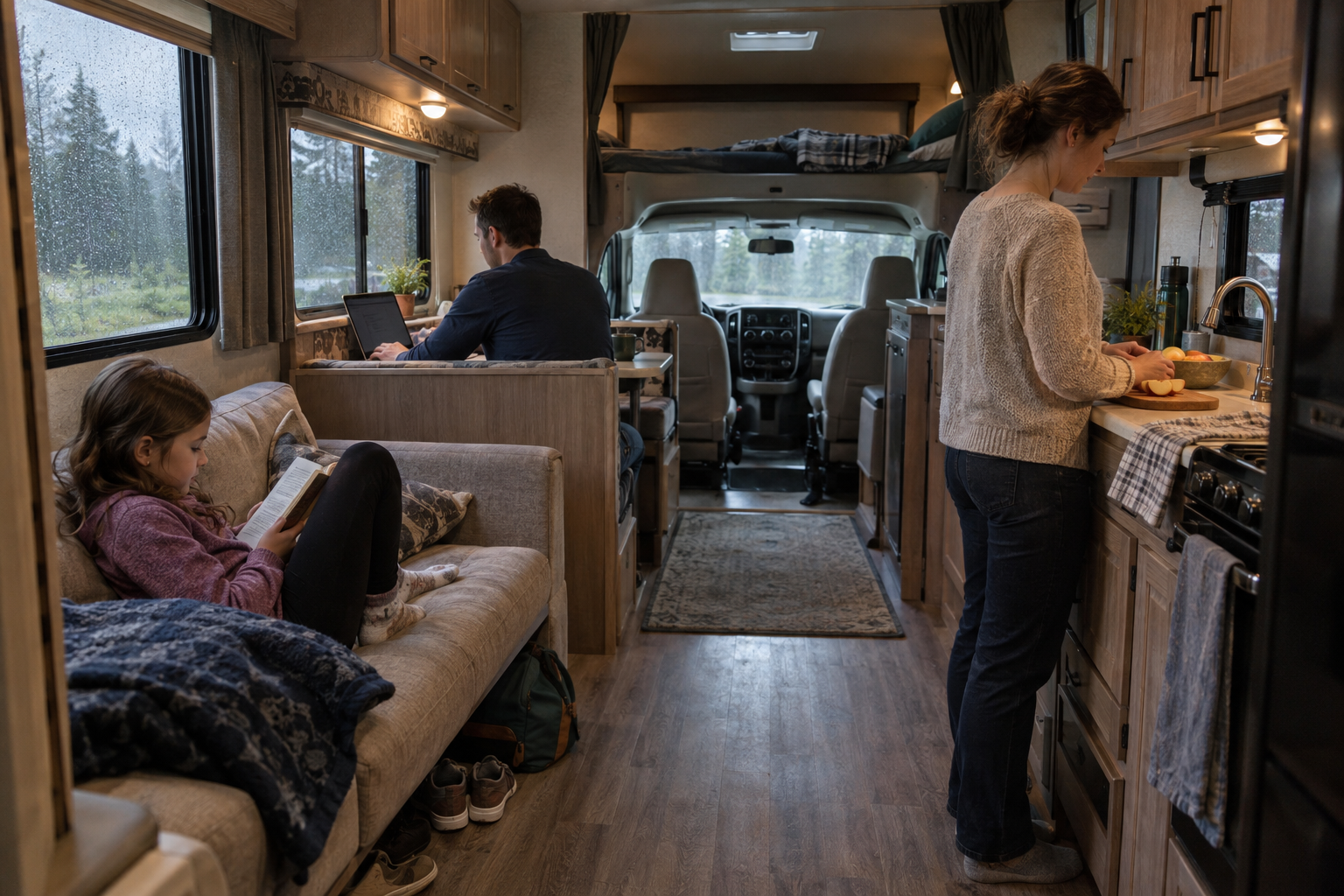
Now picture cold weather or a rainy afternoon.
Can both travelers relax without moving belongings? Is there a comfortable place to read? Can someone cook while another person works at the table?
For family travel, consider different bedtimes and quiet time.
As a father of five, I know that “we’ll mostly be outside” doesn’t answer every space question. Weather changes. Someone gets tired. Sometimes everyone needs to come inside at once.
A Class B can be a good fit for travelers comfortable sharing a compact space. A Class C is worth exploring when separate activities and additional room are priorities.
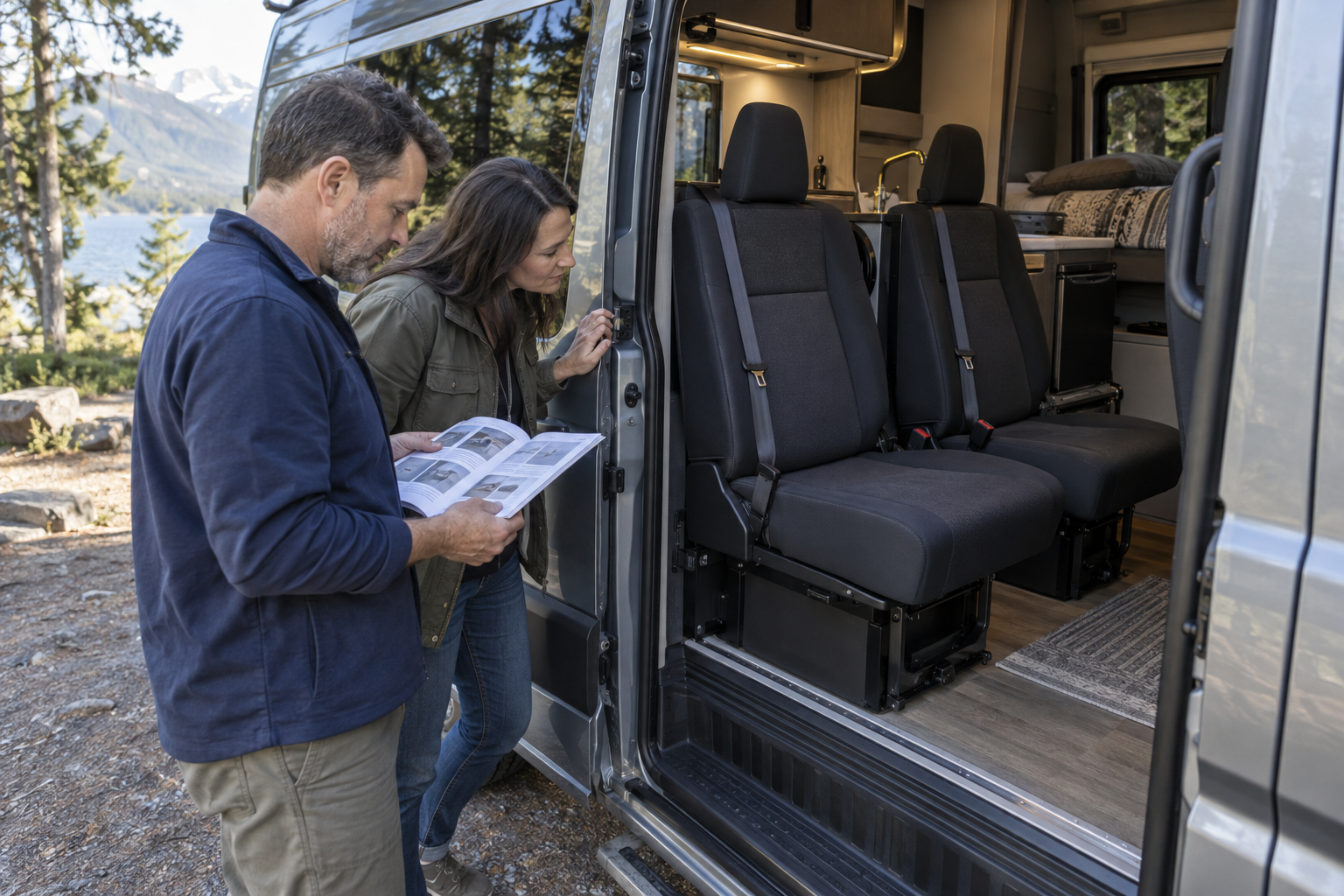
5. Check travel seating before counting beds
Sleeping capacity and suitable travel seating are separate questions.
Identify the manufacturer-designated travel seats, their seat belts, and any child-restraint provisions on the specific motorhome.
If children will travel with you, confirm compatibility using both the motorhome and child-restraint manufacturers’ instructions. Don’t assume a lounge seat or dinette provides the right arrangement.
Make this an early check. A floorplan that cannot accommodate your traveling group appropriately should not remain on the shortlist because you like the kitchen.
6. Pack for your actual hobbies
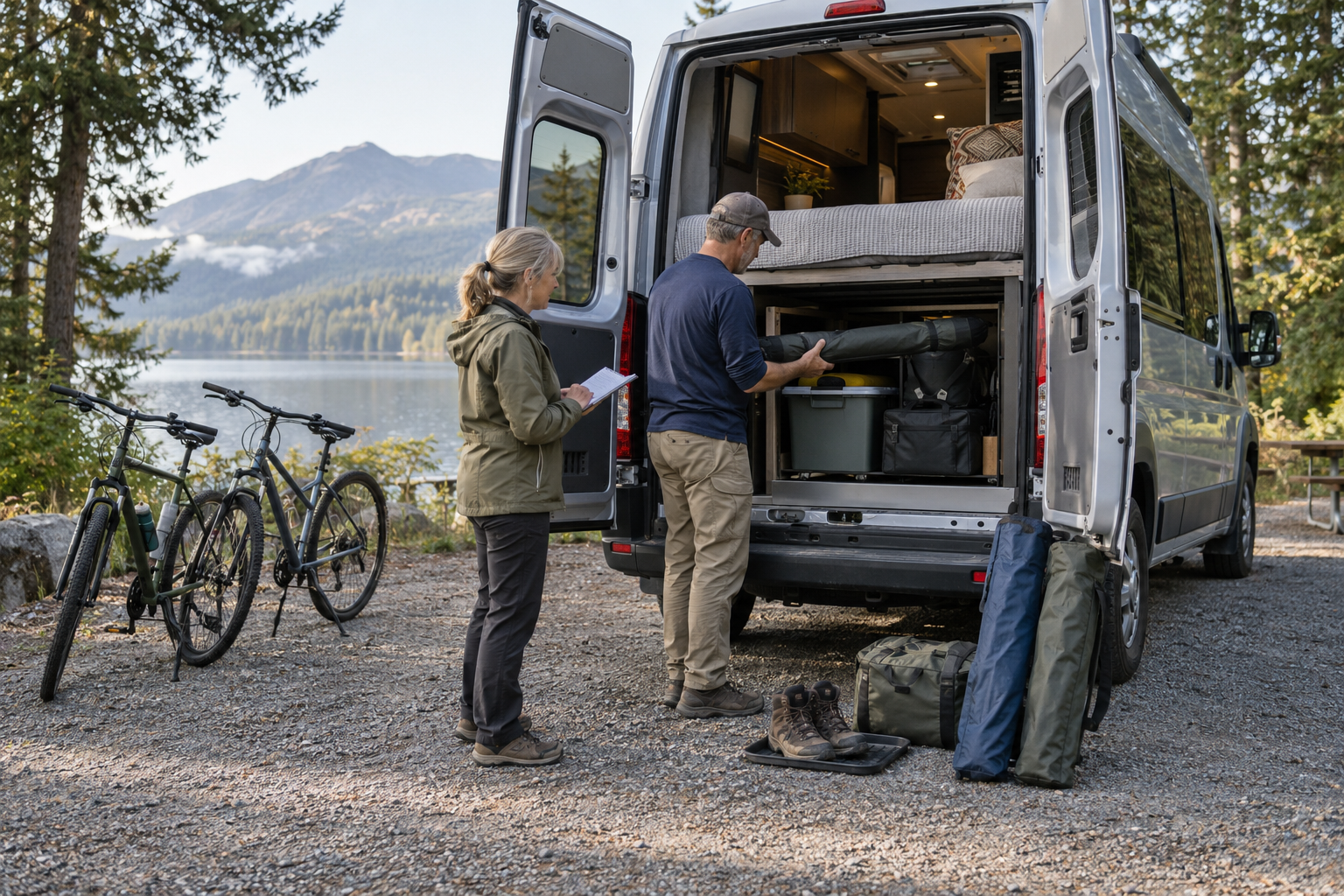
Bring a realistic equipment list to the walkthrough.
Think about chairs, bedding, clothing, cooking supplies, tools, and the items that make your trips enjoyable.
Then add the awkward things: bicycles, fishing rods, a stroller, or wet outdoor gear.
Where will each item travel? Does using an exterior carrier change your clearance or access? Can you reach regularly used equipment without unloading everything else?
Check carrying capacity as well as space. The motorhome’s Occupant and Cargo Carrying Capacity, or OCCC, accounts for occupants and cargo together. Onboard potable water is cargo, and added equipment uses available capacity. Federal motorhome load-label requirements.
A larger storage compartment does not automatically mean a larger weight allowance.
7. Don’t assume the smaller RV costs less
A compact motorhome can include expensive equipment and considerable work fitting systems into a small space.
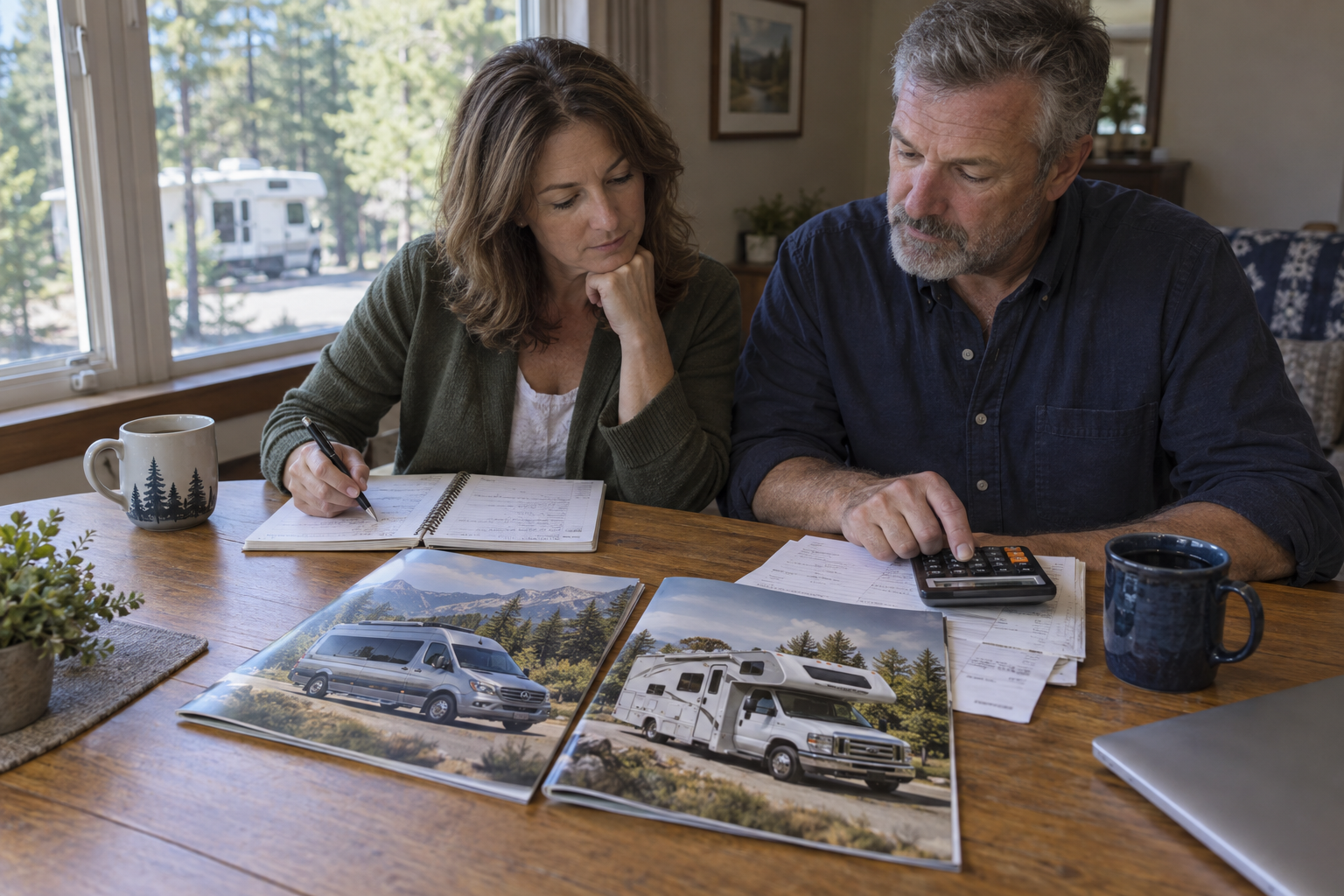
Compare actual prices and features rather than expecting Class B and Class C pricing to follow their dimensions.
Build an ownership budget that includes insurance, storage, maintenance, tires, fuel, and any initial equipment.
Ask who can service the chassis and who will handle the RV systems. Confirm that those facilities can accommodate the completed motorhome.
Fuel economy is another question to investigate for the specific models and travel conditions. A category-wide estimate is not a promise about your trips.
What about Class B+?
You may encounter motorhomes marketed as Class B+.
Despite the name, these commonly use a cutaway cab or chassis with a wider RV body added behind it, rather than keeping the original van body. They often omit the prominent sleeping bunk over the cab.
That makes them worth considering if you like a camper van’s smaller feel but want additional living space. Thor Motor Coach’s explanation of Class B and B+ construction.
Look beyond the label. Compare actual width, height, length, storage, and how the space functions.
A compact Class C or B+ may be a useful middle ground for your shortlist.
Where does Super C fit?
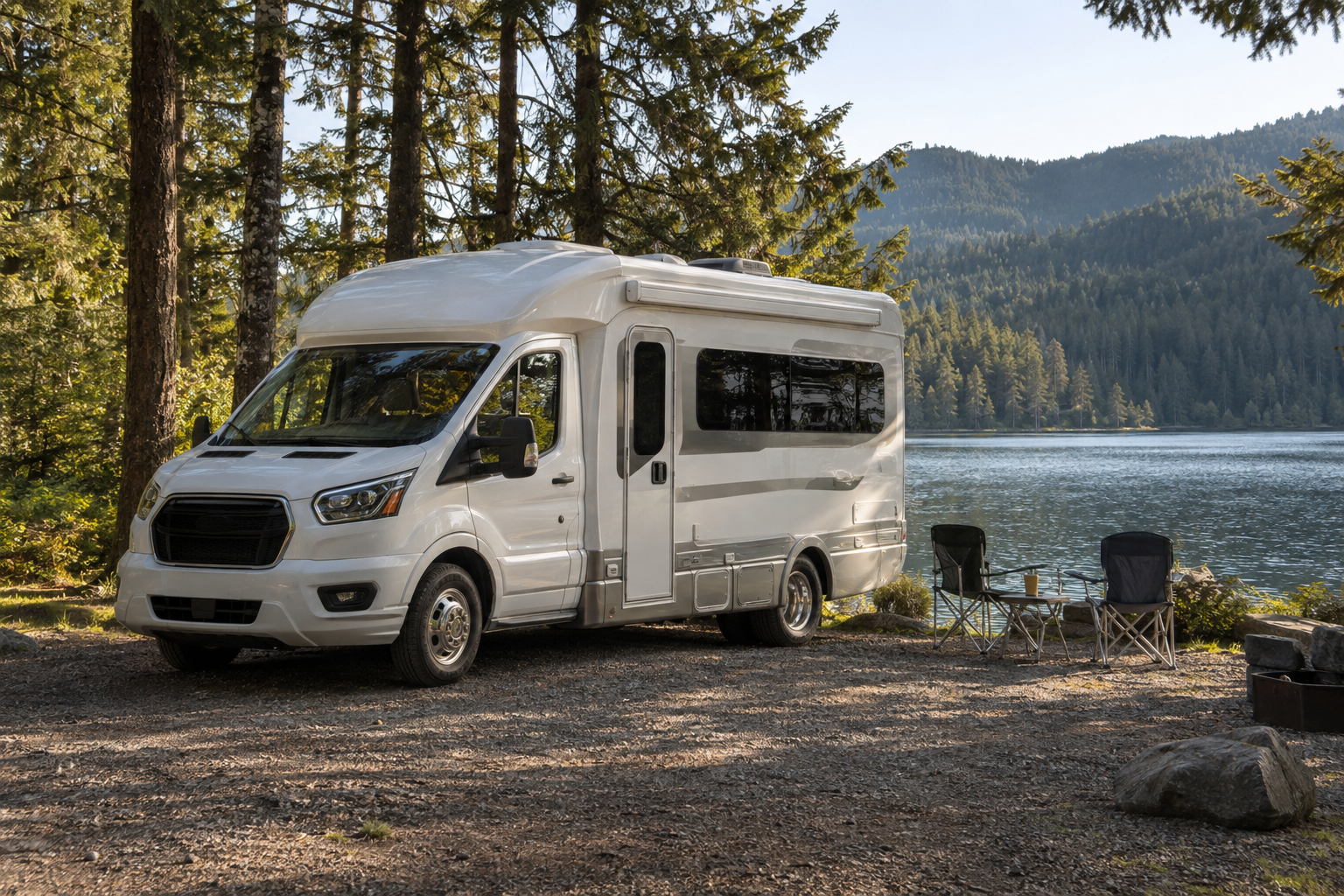
A Super C uses a heavier-duty truck platform while retaining the recognizable cab-and-coach arrangement associated with Class C motorhomes.
The underlying chassis is the important distinction. Super C is more than a description of a spacious or luxurious interior.
Some models use heavy-duty pickup-based platforms. Others use larger commercial truck chassis. Diesel power is common, but a diesel engine alone does not make an RV a Super C. Ford-based Super C example, Renegade’s Class C and Super C explanation.
Depending on the model, the platform may support greater towing capability, different suspension and braking equipment, and a larger coach body.
Those capabilities still need to be checked against the specific motorhome’s ratings and loaded configuration.
Is Super C too far from Class B to compare?
For many first-time buyers, yes; it belongs in a separate comparison.
If your priorities are a narrow footprint, simpler parking, and traveling comfortably with limited belongings, a large Super C moves away from those priorities.
It may offer more space and capability, but those benefits come with a different vehicle to drive, store, service, and pay for.
A Super C becomes relevant when your requirements point toward it; for example, when you need to investigate greater towing capability or want a truck-based motorhome with substantially more living space.
At that point, comparing specific Super C models with larger Class C or Class A motorhomes may be more useful.
You don’t need to tour every category. You need to identify which categories can realistically serve your plans.
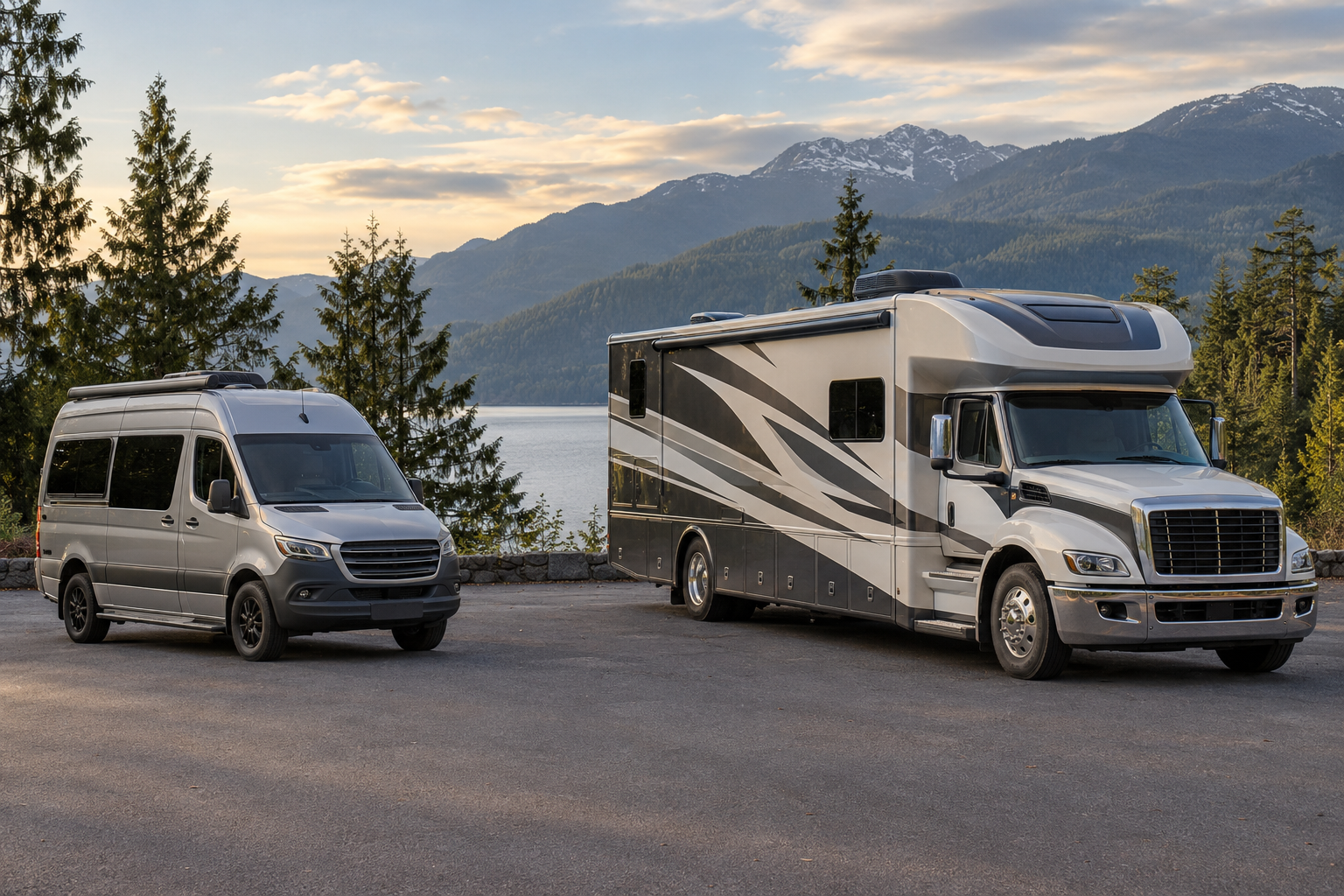
A Class B may be a good starting point if…
- You value a narrower vehicle footprint.
- You expect to explore frequently between overnight stops.
- You’re comfortable packing selectively.
- You like a compact space and can accept its daily routines.
- The specific model provides suitable travel seats and sleeping arrangements for your group.
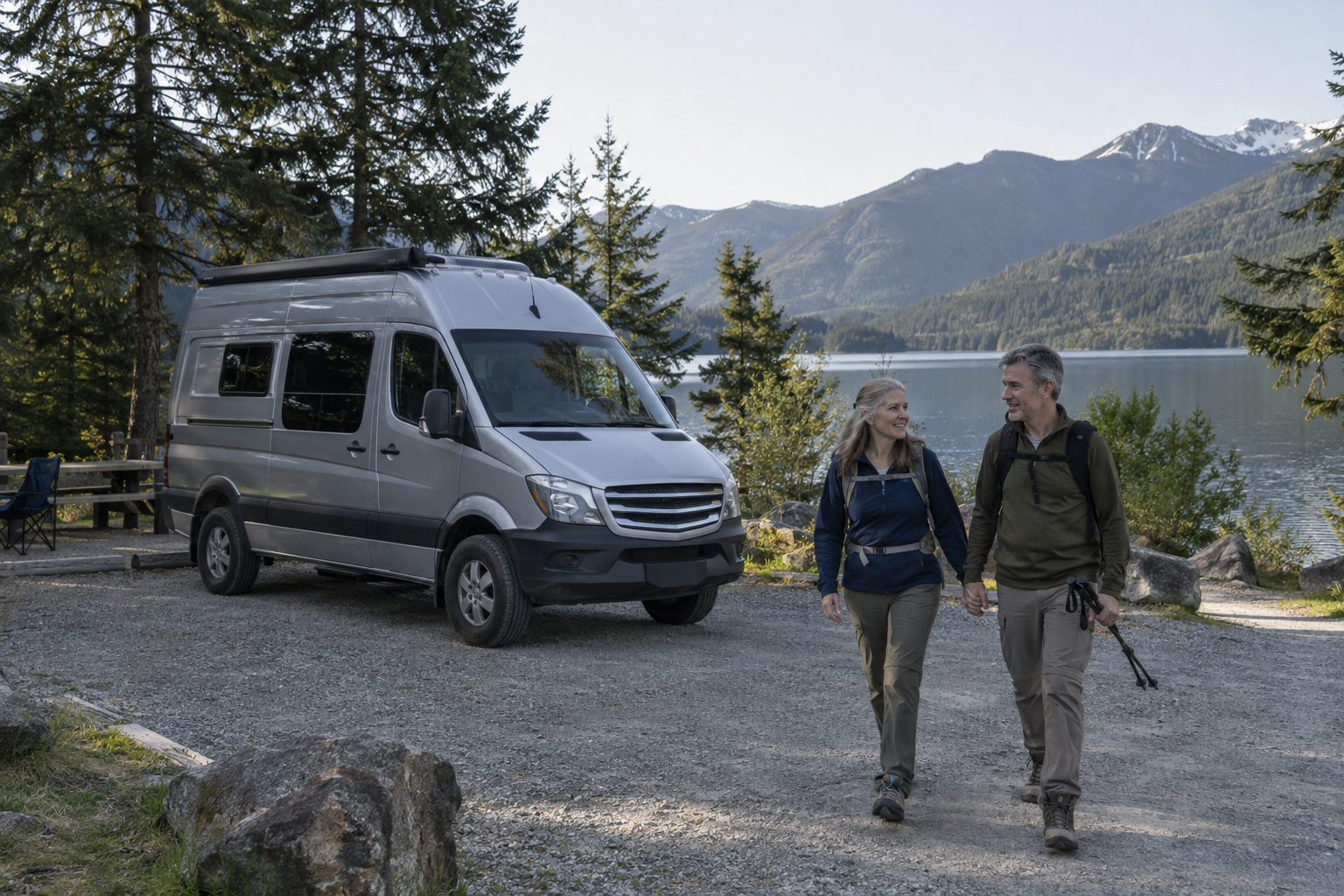
A Class C may be a good starting point if…
- You want more room to move around indoors.
- Separate sleeping and living areas matter to you.
- You prefer to explore layouts with a larger bathroom.
- You need more options for belongings and equipment.
- You’re comfortable planning around the vehicle’s additional dimensions.
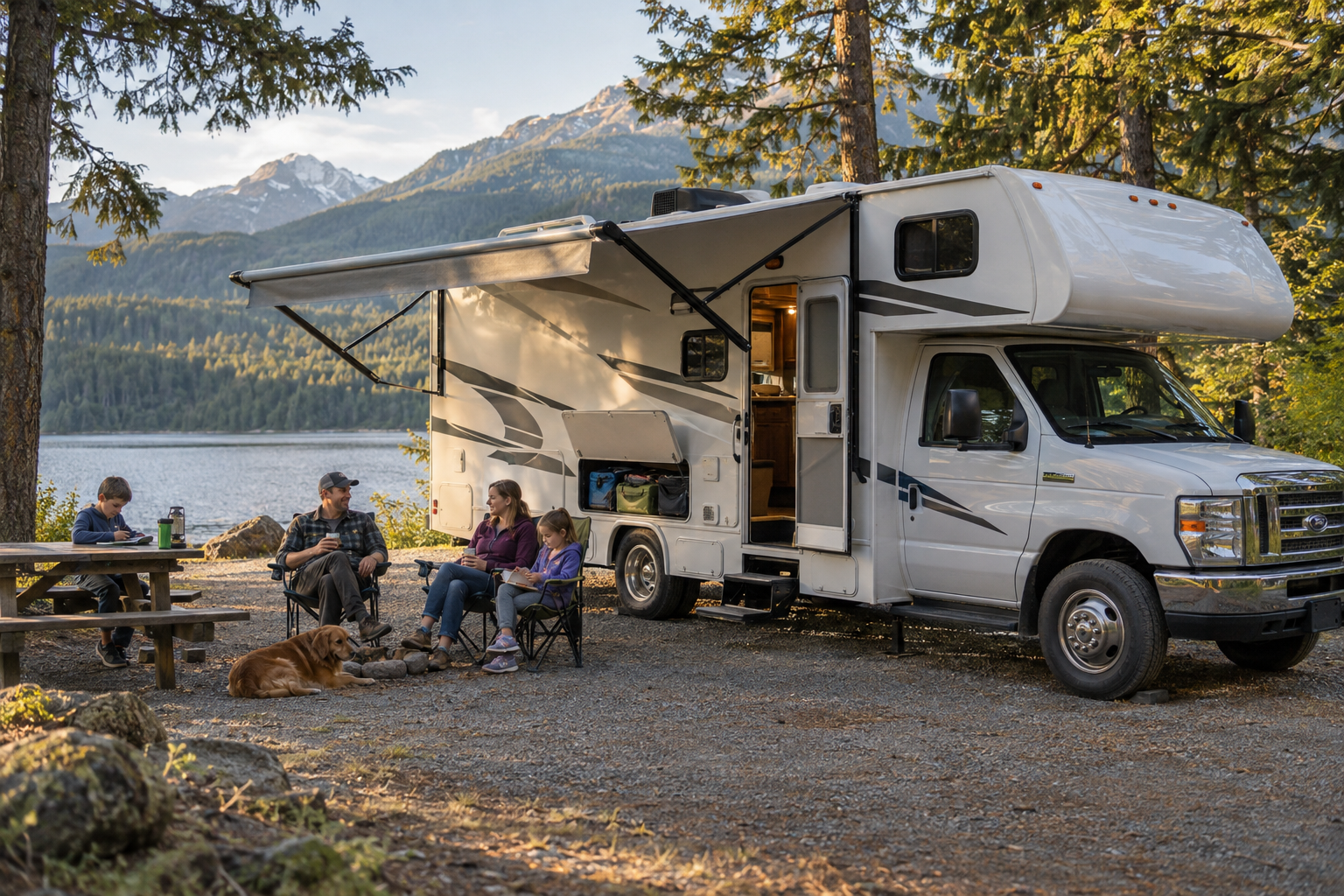
Neither list replaces a walkthrough or a test drive. Use them to decide where to begin.
Try an ordinary day before choosing
In each RV, walk through the same imaginary day.
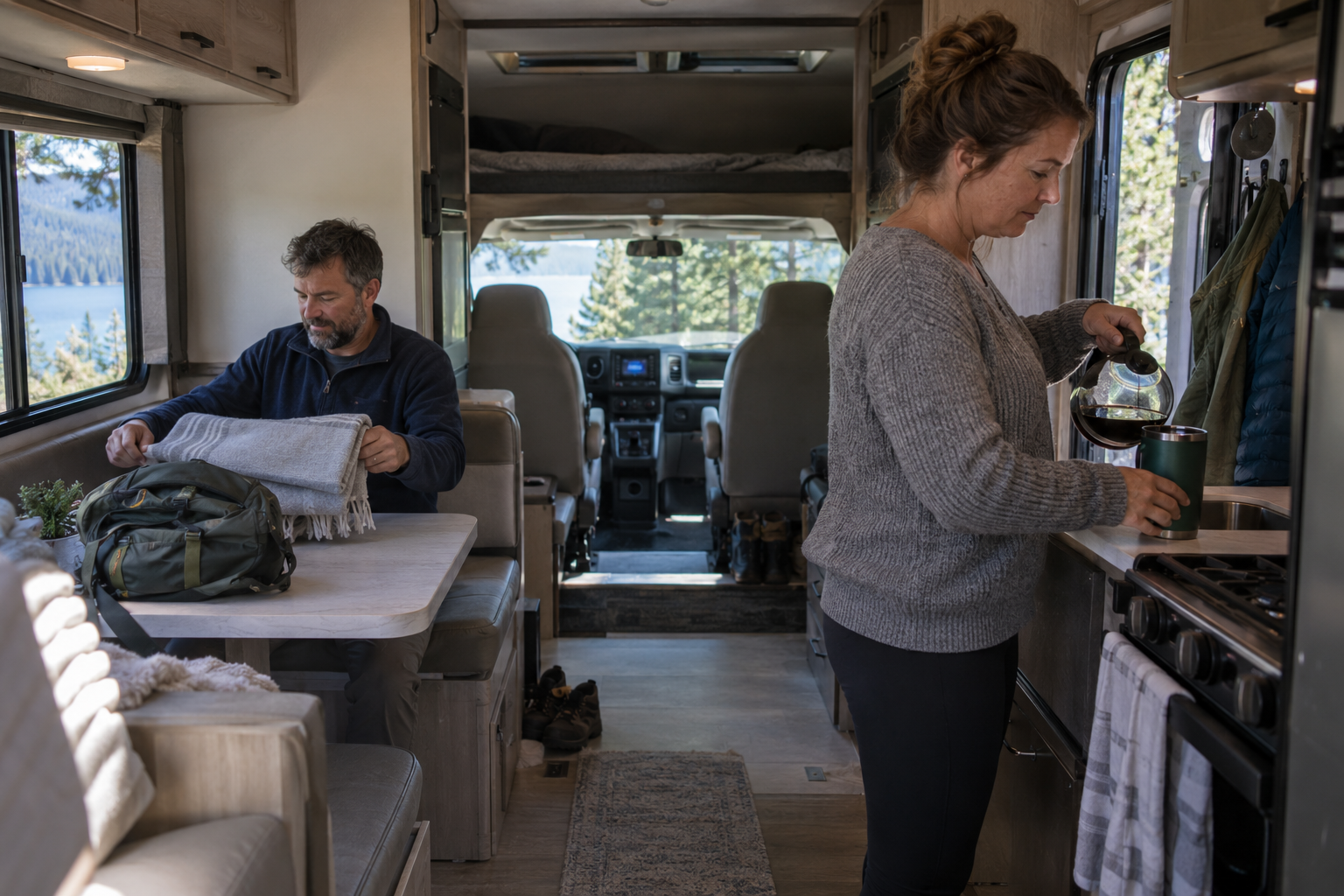
Get dressed. Make coffee. Put away bedding. Prepare lunch. Find a place for wet jackets. Set up for an evening indoors.
Then sit in the driver’s seat and consider the other half of ownership: driving, parking, fueling, and getting around after arrival.
You may discover that a camper van’s compromises feel manageable because its footprint suits your travel style. You may decide that a Class C’s extra space would make your trips more comfortable.
Choose the space you need and the vehicle you’ll be comfortable using. Both parts matter.
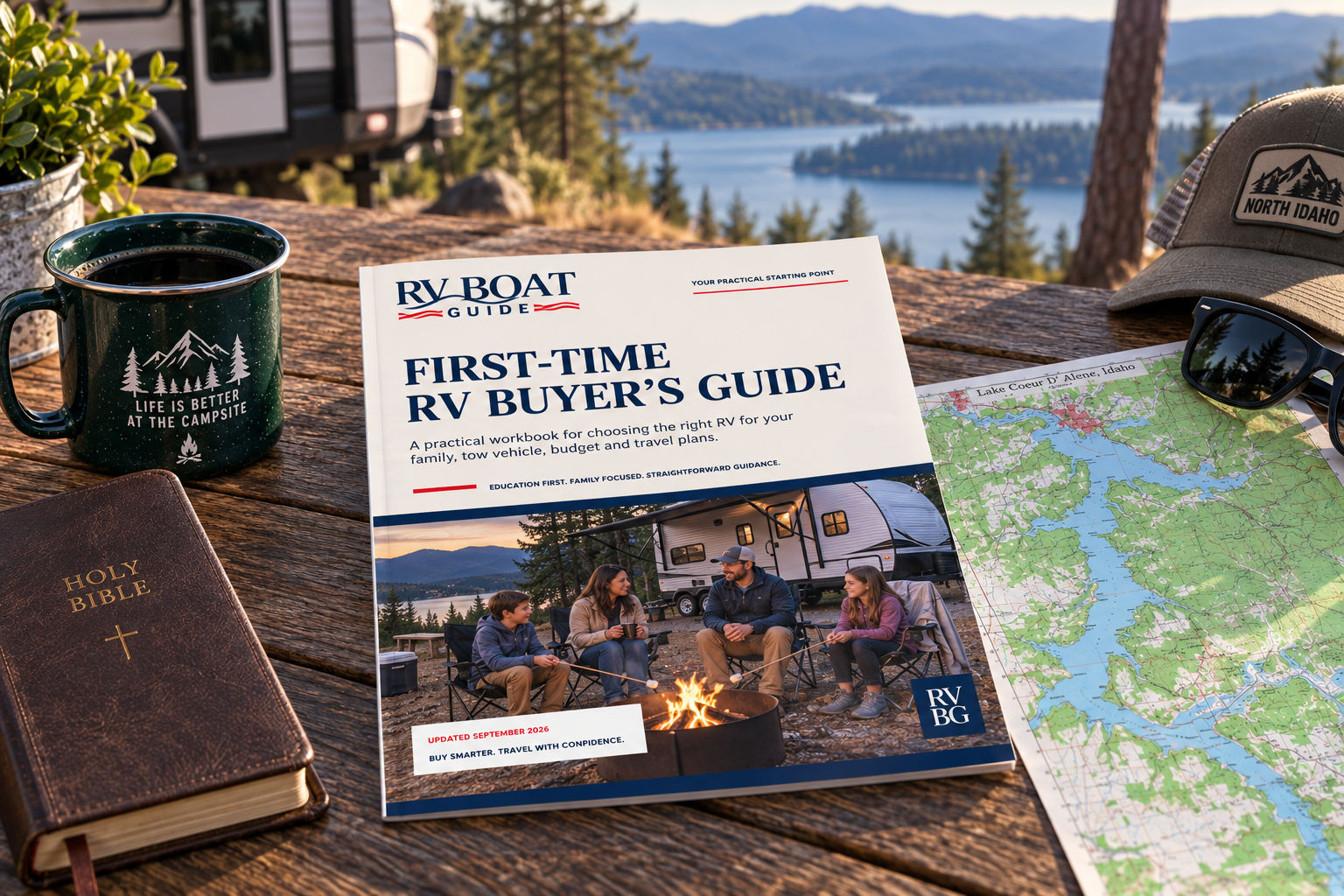
Get the free First-Time RV Buyer’s Guide
Comparing Class B and Class C motorhomes is a starting point. The First-Time RV Buyer’s Guide helps you turn your travel preferences into a practical plan for evaluating individual RVs.
Inside, you’ll find explanations of RV types, worksheets for your travel plans and budget, a walkthrough scorecard, and questions to help you prepare for delivery. There are also first-time buyer FAQs and a plain-English glossary.
Use the form below to request your free digital copy. Keep it with you as you compare layouts, check seating and carrying capacity, tour motorhomes, and build your shortlist.
Want to talk through your options?
I’m Si, founder of RV Boat Guide and an RV & Boat Outfitter. I help RV and boat buyers throughout the Pacific Northwest and can also help connect buyers elsewhere with a trusted outfitter in their area.
If you’re deciding between a camper van and a Class C; or wondering whether your needs point toward something larger. I’d welcome the opportunity to help.
Message me using the form below. Tell me who will be traveling with you, how you hope to use your motorhome, and where you’re willing to compromise on space or vehicle size.
You don’t need to have a class or model picked out to start the conversation.