Questions to Ask an RV Dealer

Know what to ask about the RV, the price, and the delivery process so you can make a more informed buying decision.
Walking into an RV dealership can be exciting—and a little overwhelming.
You may be seeing several floorplans for the first time, learning unfamiliar terms, and trying to remember which model had the bathroom you liked.
Then someone asks:
“What do you think?”
You might love the RV and still have no idea what questions to ask next.
That is completely normal.
A walkthrough helps you discover what you like. Good questions help you understand what you are buying.
As an RV & Boat Outfitter, I welcome those questions. They give us a chance to slow down, explain the tradeoffs, and figure out whether an RV fits your plans.
Here are the questions I would encourage a first-time buyer to bring along.
1. Why do you think this RV fits our needs?
Before discussing individual features, make sure the recommendation connects to your circumstances.
Tell the person helping you:
- Who will usually travel with you.
- How often you expect to camp.
- Where you hope to go.
- What vehicle you already own, if you plan to tow.
- What purchase and ownership budget feels comfortable.
- Which features matter most.
Then ask:
“Based on what we’ve told you, why would you recommend this one?”
The answer should connect the RV to your needs.
Perhaps the sleeping arrangements suit your children. Maybe the layout offers the access you need. Or it might meet your priorities while leaving more room in your budget for travel.
A useful follow-up is:
“What would we be giving up compared with another option?”
Every RV involves compromises. Understanding them early makes the comparison more useful.
2. Can you help us verify compatibility with our vehicle?
If you are shopping for a towable RV, bring your vehicle information into the conversation before narrowing your shortlist.
Ask:
“What information do you need to verify whether this RV works with our specific vehicle?”
Bring your VIN, photographs of the vehicle’s loading and certification labels, and details about the people and equipment you expect to carry.
Ask to review the proposed RV’s labels, too.
You should understand which ratings and equipment requirements need to be checked, what information is still missing, and how the loaded combination will be verified.
For a motorhome, ask about carrying capacity, designated travel seating, and any plans to tow another vehicle.
Leave this conversation with a clear verification plan, not simply a reassuring “you’ll be fine.”
3. Can we try the layout the way we would actually use it?
A quick walk from the entry door to the bedroom will only tell you so much.
Ask for time to:
- Sit in the dining and lounge areas.
- Check access around the bed.
- Stand in the shower.
- Open cabinets and storage compartments.
- See how convertible furniture works.
- Picture where everyday belongings will go.
If you are considering an RV with slides, ask:
“Can you show us what we can access with the slides in the travel position?”
For a family, another useful question is:
“What has to be rearranged between bedtime and breakfast?”
You may be perfectly comfortable converting a dinette. You may also decide dedicated beds are worth prioritizing. Seeing the process helps you make that choice.
4. What is included on this exact RV?
The unit on the lot may have different equipment from the model you saw online or in a video.
Ask:
“Can we review the equipment list for this specific unit?”
Clarify what is:
- Factory-installed.
- Added by the dealership.
- Included in the quoted price.
- Available at an additional cost.
Ask for an explanation of terms such as “prep,” “ready,” and “capable.”
A useful follow-up is:
“What is installed and usable today, and what would we still need to buy?”
Write down the equipment that matters to your decision and have its inclusion confirmed in the purchase paperwork.
5. What is the complete out-the-door price?
Ask for an itemized written quote before making a decision.
“What is the total purchase price, including every applicable charge?”
Have the dealership identify:
- The RV’s selling price.
- Taxes, title, and registration charges.
- Dealer fees.
- Preparation or delivery charges.
- Added equipment and installation.
- Optional products or services.
Then ask:
“Which charges are required for this purchase, and which items can I choose to decline?”
If a trade-in or financing arrangement is involved, ask for those figures to be shown separately so you can follow the transaction.
You should be able to explain the total in your own words before signing.
6. If we finance, can you walk us through the full offer?
A monthly payment is useful for budgeting, but ask to see the complete financing proposal.
Questions to bring include:
- What is the annual percentage rate, or APR?
- How much are we financing?
- How long is the loan?
- What down payment is assumed?
- What is the total of payments?
- Are optional products included in the financed amount?
- Are there any prepayment terms or conditions we should understand?
If the payment changes during the conversation, ask what changed in the proposal.
“Can you show us the revised figures together so we can compare them?”
Take enough time to understand the documents and compare financing options before making a commitment.
7. What does the deposit commit us to?
Before paying a deposit, ask for its terms in writing.
“Under what circumstances is this deposit refundable, and what exactly does it reserve?”
Clarify:
- The specific unit or order covered.
- How long it will be held.
- Any deadlines you need to meet.
- What happens if financing is not approved.
- What happens if an inspection identifies concerns.
- What happens if the agreed equipment or repairs are not completed.
- Any cancellation conditions.
Do not assume the terms are the same at every dealership.
If your decision depends on an inspection, financing, or another condition, ask how that condition will be documented before you pay.
8. What can you tell us about this RV’s condition and history?
For a used RV, ask what records are available.
Useful questions include:
- Is there documented maintenance or repair history?
- Has any water intrusion or structural damage been disclosed or found?
- Have major components been repaired or replaced?
- Are there modifications to the electrical, plumbing, or other systems?
- What inspection has the dealership completed?
- Can we review the findings and any completed repairs?
For either a new or used unit, ask:
“Are there any known issues, missing items, or outstanding repairs on this exact RV?”
Also ask how VIN, recall, and applicable chassis information will be checked before delivery.
If you want an independent inspection, discuss access, timing, and how findings will be handled before committing.
An unanswered question should remain on your list until it is resolved.
9. What warranty or service-contract coverage comes with it?
Ask for the actual documents describing any coverage offered with the purchase.
Questions worth asking include:
- Who provides the coverage?
- When does it begin and end?
- What is covered?
- What is excluded?
- Are there deductibles or approval requirements?
- What maintenance records will we need to keep?
- Where can covered work be performed?
If an optional service contract is offered, ask the person explaining it to identify how it differs from the warranty already included.
“Can you show us what additional coverage we would receive and what it costs?”
Keep copies of the documents you review.
10. How does service work after the sale?
Knowing who to contact later is part of understanding the purchase.
Ask:
- Who should we contact if something needs attention?
- How are service appointments scheduled?
- What are current scheduling lead times?
- How are warranty requests handled?
- What should we do if a problem occurs while traveling?
- What documentation or photographs would help the service team?
You can also ask:
“If we discover an issue shortly after delivery, what is the first step?”
A clear process will be more useful later than a general promise to “take care of everything.”
11. What will happen before and during delivery?
Ask the dealership to explain the delivery process before you schedule it.
“What will be inspected, demonstrated, and completed before we leave?”
Find out:
- Whether you will receive a written inspection checklist.
- Which systems will be demonstrated.
- How much time is set aside for orientation.
- Whether agreed accessories will be installed.
- Which documents, manuals, keys, and controls you will receive.
- How unresolved items will be recorded.
Ask whether you may take notes or record demonstrations for your own reference.
If something needs repair, ask for a written description of the work, who is responsible, and the expected completion arrangement.
Give yourself enough time to ask questions during delivery without feeling rushed to get on the road.
12. What will we need before our first trip?
Ask for a practical list based on your specific RV and camping plans.
“What do we need to use this RV as intended, and what can wait?”
Have the person helping you separate:
- Required equipment.
- Items included with the purchase.
- Useful first-trip supplies.
- Optional conveniences.
If a package is offered, ask to see its contents and individual purpose.
This is also a good time to identify what you still need to learn or practice before traveling.
An orientation can introduce the RV’s systems. Ask where to find the instructions and additional training relevant to your setup.
Pay attention to how your questions are answered
You do not need someone to know every answer immediately.
You do need a clear explanation—or a willingness to find the correct information.
“I need to check that for this unit” can be a helpful answer when it leads to documentation and a follow-up.
If an explanation is confusing, ask:
“Could you show me where that appears in the paperwork or demonstrate what you mean?”
You are making a significant purchase. It is reasonable to take notes, ask follow-up questions, and review information before deciding.
Bring a short list and leave with clear next steps
You do not have to ask every question in one conversation.
Start with fit, compatibility, condition, and budget. As the purchase becomes more concrete, work through the paperwork, coverage, and delivery details.
Before leaving, identify:
- What has been confirmed.
- What remains unanswered.
- Who will follow up.
- Which agreements need to appear in writing.
A good buying experience should leave you better informed about both the RV and the responsibilities that come with owning it.
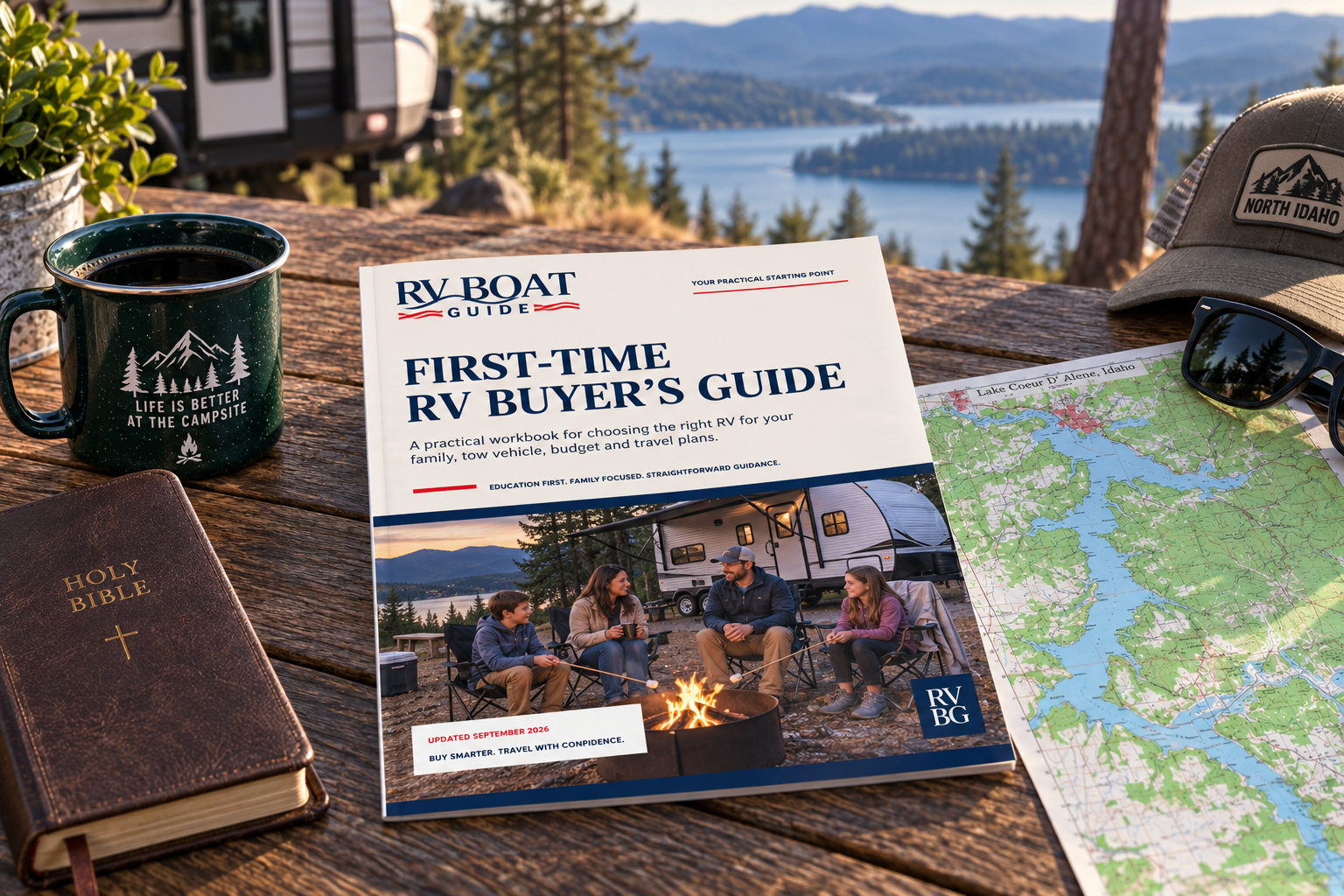
Get the free First-Time RV Buyer’s Guide
These questions are a starting point. The First-Time RV Buyer’s Guide helps you organize your priorities and prepare for more useful conversations throughout the buying process.
Inside, you’ll find explanations of RV types, worksheets for your travel plans and budget, a walkthrough scorecard, and questions to help you prepare for delivery. There are also first-time buyer FAQs and a plain-English glossary.
Use the form below to request your free digital copy. Keep it with you as you visit dealerships, compare written quotes, tour RVs, and build your shortlist.
Want to talk through your options?
I’m Si, founder of RV Boat Guide and an RV & Boat Outfitter. I help RV and boat buyers throughout the Pacific Northwest and can also help connect buyers elsewhere with a trusted outfitter in their area.
If you are preparing for your first dealership visit or trying to make sense of a few options, I’d welcome the opportunity to help.
Message me using the form below. Tell me who will be traveling with you, how you hope to use your RV, and which questions you are still working through.
You do not need to have a model picked out to start the conversation.