
RV Storage: What to Know Before You Park

Compare storage options, plan for the space you need, and understand how to care for your RV between trips.
When you picture owning an RV, you probably imagine the campground.
Morning coffee outside. A weekend by the lake. A road trip you have wanted to take for years.
Where the RV will sit between those trips may not be the first thing on your mind.
But storage deserves a place in the buying conversation.
Can you keep it at home? Will it fit through the gate? How easily can you pick it up on a Friday afternoon? What happens when freezing weather arrives?
A good storage plan makes owning—and using—your RV easier.
Think about storage before choosing an RV
Before committing to a particular size or layout, identify where the RV will stay.
You may have room beside the house, access to a storage facility, or plans to build a covered space. Whatever the arrangement, verify it before assuming it will work.
Ask yourself:
- Where will the RV stay between trips?
- Can we safely get it into and out of that space?
- Are there restrictions on storing it there?
- What will storage cost throughout the year?
- How often will we need access?
- Who will check on it during longer periods of storage?
An RV that fits your camping plans should also fit your ownership routine.
Compare the main storage options
Each option involves different costs, protection, and access.
| Storage option | What may appeal to you | What to investigate |
|---|---|---|
| At home | Convenient access for packing, cleaning, and checking the RV. | Local rules, property restrictions, clearance, surface, drainage, and household access. |
| Uncovered outdoor storage | A dedicated parking space without an enclosed building. | Weather exposure, security, access hours, and lot conditions. |
| Covered outdoor storage | An overhead roof provides some protection. | Open-side exposure, roof clearance, support posts, and maneuvering room. |
| Enclosed indoor storage | Greater shelter from outdoor conditions. | Door dimensions, retrieval arrangements, ventilation, and whether the building is heated. |
Go RVing outlines residential and facility storage options and emphasizes checking local and homeowners association restrictions before storing an RV at home. Go RVing storage overview
Choose based on the actual space and arrangement—not just the label “covered” or “indoor.”
Measure the approach as well as the parking space
A space can be long enough for an RV and still be difficult to use.
Check the RV’s actual overall dimensions, including roof equipment and any accessories extending beyond the body. Do not rely on the model number as a measurement.
Then evaluate the entire route into the space:
- Gate width.
- Overhead clearance.
- Turns and backing room.
- Driveway slope and transitions.
- Nearby trees, fences, and buildings.
- Room to open doors and storage compartments.
- Space to connect or disconnect a tow vehicle.
For indoor storage, confirm the usable door opening and interior clearance.
“It fits once it is parked” is only half the question. You also need a workable way to get it there.
If the approach looks tight, arrange a site visit and get help evaluating it before buying.
Check the rules for the location
For home storage, ask the appropriate local office and review any applicable HOA, lease, or property restrictions.
For a storage facility, read the agreement and ask about:
- Access hours and holiday access.
- Whether you park the RV or staff move it.
- Notice required before pickup.
- Rules for cleaning, maintenance, or repair work.
- Electrical connections and permitted use.
- Propane and battery requirements.
- Snow removal and access during bad weather.
- Whether anyone may stay inside the RV.
Do not assume a storage rental includes permission to camp, work on the RV, or plug it in.
Get the arrangements that matter to you confirmed before reserving a space.
Consider convenience alongside the monthly price
A lower storage bill may come with a longer drive or more limited access.
Think through an ordinary trip.
Will you collect the RV the night before departure? Bring it home to load? Return it on Sunday evening? Need access during the week to remove food or retrieve something you forgot?
As a father of five, I know that getting a family ready for a trip already takes coordination. Storage should be part of that plan.
A practical location can make it easier to use your RV regularly.
Ask for the complete cost, including any deposits, access charges, electrical fees, or seasonal changes. Compare that total with the convenience and protection you are receiving.
Prepare for the length of the stay
Parking for a week and putting the RV away for several months are different situations.
For short gaps between trips, establish a repeatable routine for cleaning, removing perishables, managing tanks, and checking the RV.
For extended storage, use the RV and equipment manufacturers’ instructions to create a more complete plan.
Topics to address include:
- Plumbing and holding tanks.
- Batteries and charging equipment.
- Appliances.
- Tires.
- Exterior seals and roof condition.
- Moisture and pests.
- Motorhome engine and chassis requirements.
- Generator storage requirements, if equipped.
Go RVing’s seasonal storage guide provides a general overview, but the procedures must suit your equipment and climate. RV winter storage overview
Understand when winterization is needed
Winterization protects vulnerable systems from freezing conditions. It is a separate question from whether the RV is parked under a roof.
Ask:
“Could this storage location expose any part of the RV’s water system to freezing?”
An enclosed building may be unheated. A heated facility may have conditions or limitations you need to understand.
Have a qualified service provider explain the winterization process for your RV, including any water heater, filters, appliances, or accessories connected to the plumbing.
Winnebago’s winterization guidance highlights equipment-specific considerations, which is why a generic checklist should not replace your manuals. Winnebago winterization guidance
In the Pacific Northwest, your storage conditions can be very different depending on where you live. Build the plan around the location and forecast conditions.
A cold-weather equipment package does not, by itself, establish how to store an unattended RV.
Use a battery plan that matches your equipment
Avoid assuming every RV battery should be stored or charged the same way.
Identify the installed battery type and model, then ask for its storage instructions. Confirm how the RV’s disconnect switches, charger, and solar system affect that plan.
Questions to ask include:
- What charge level is recommended for storage?
- Should the battery remain connected?
- What temperature limits apply?
- How often should it be checked?
- Is the installed charger suitable for this arrangement?
For example, Winnebago Industries publishes a specific storage process for Lithionics batteries. Those instructions should not be applied automatically to other batteries. Example of battery-specific storage guidance
Get instructions for the battery you have, rather than relying on a general rule to “leave it plugged in.”
Clean, dry, and check the interior
Before a longer stay, remove food, garbage, and items that could attract pests or be damaged during storage.
Clean and dry the refrigerator and freezer, then follow their storage instructions. Check cabinets and exterior compartments for forgotten supplies.
Ask about appropriate moisture control and pest prevention for your RV and location. Do not block required vents or safety openings.
Storage preparation should also include looking for existing leaks or damp areas. Address the cause rather than relying on a moisture absorber to solve it.
Put the RV away in a condition you can monitor, with concerns identified and a plan to address them.
Decide whether a cover fits your situation
If you are considering an RV cover, ask the RV manufacturer what it recommends.
Confirm that the cover suits the RV’s dimensions, exterior equipment, and storage conditions. Consider how you will install and remove it safely, especially on a tall vehicle.
A cover also needs attention during storage. Check for movement, rubbing, tears, and moisture concerns. Go RVing’s cover guidance emphasizes fit, ventilation, and periodic inspection. RV cover guidance
A cover is one part of a storage plan. It does not replace maintenance or periodic checks.
Clarify security and insurance
Ask the facility to explain its access controls, lighting, monitoring, and incident-reporting process.
Also ask who is responsible if the RV is damaged while parked or moved by staff.
Before changing insurance for a storage period, speak with your insurer—and your lender if the RV is financed. Confirm what protection remains for theft, weather damage, and other losses relevant to your arrangement.
Remove valuables and keep current photographs of the RV’s condition.
Understand what the facility provides and what remains your responsibility.
Check on the RV while it is stored
Putting the RV away should not mean forgetting about it until spring.
Set a reminder to check it according to its manuals and storage conditions. Revisit the plan after significant weather.
Look for visible changes such as moisture, pest activity, cover damage, or other concerns. Have qualified personnel handle roof access, snow-load concerns, and technical work.
Before the next trip, schedule enough time to bring the RV back into service and resolve anything that needs attention. Winnebago’s return-to-use guidance includes checks of tires, seals, batteries, and appliances, along with the maintenance schedule in the operator’s manual. Preparing an RV for use after winter storage
Make storage part of choosing the right RV
Before buying, try completing this sentence:
“Between trips, our RV will stay at ______, and our plan for access, cost, and seasonal care is ______.”
If part of that answer is still uncertain, investigate it while you are shopping.
The goal is to choose an RV you can enjoy on the road and care for when you are home.
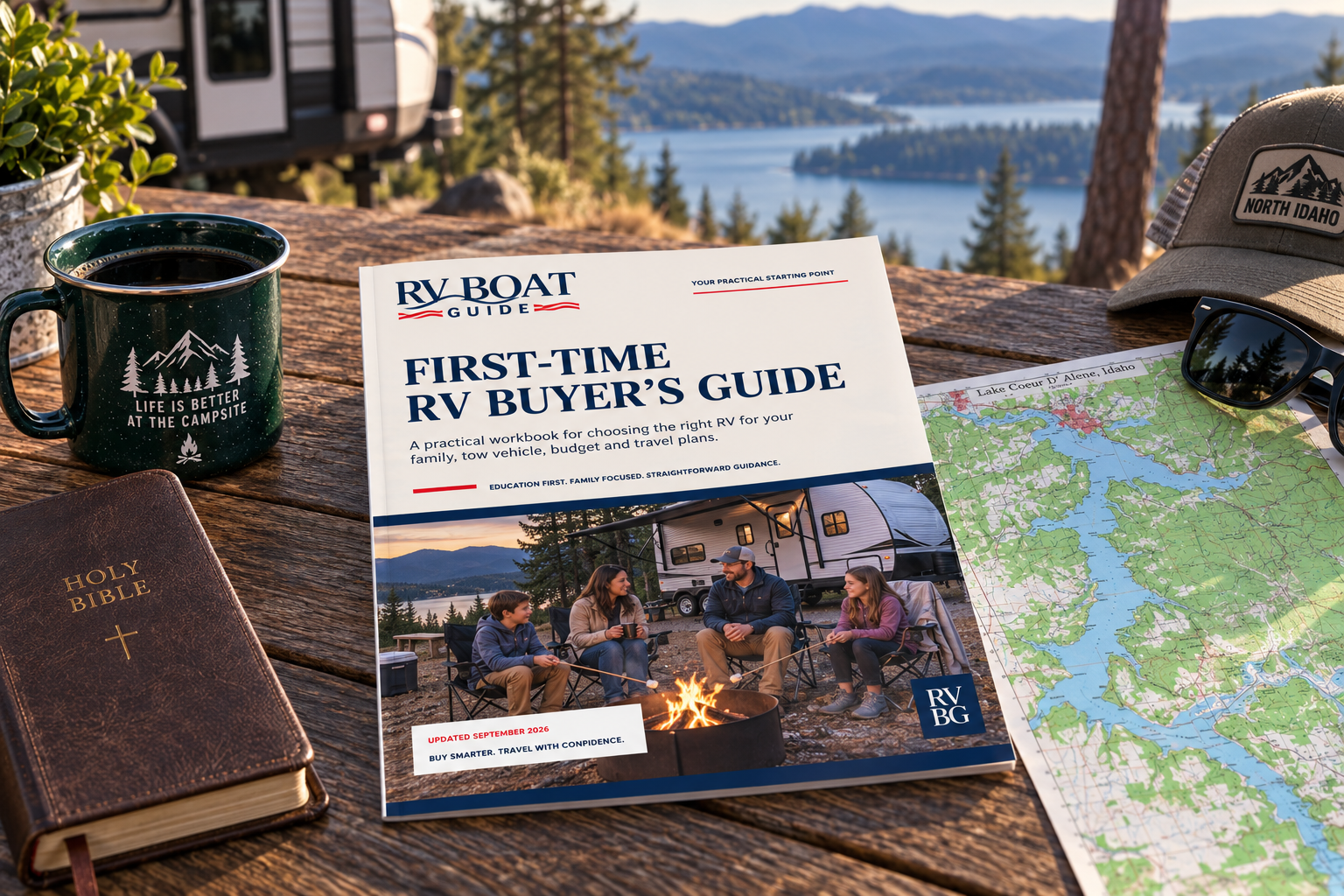
Get the free First-Time RV Buyer’s Guide
Planning for storage is a starting point. The First-Time RV Buyer’s Guide helps you connect your travel plans, available space, and ownership budget to a practical RV shopping process.
Inside, you’ll find explanations of RV types, worksheets for your travel plans and budget, a walkthrough scorecard, and questions to help you prepare for delivery. There are also first-time buyer FAQs and a plain-English glossary.
Use the form below to request your free digital copy. Keep it with you as you evaluate storage arrangements, compare RV sizes, tour models, and build your shortlist.
Want to talk through your options?
I’m Si, founder of RV Boat Guide and an RV & Boat Outfitter. I help RV and boat buyers throughout the Pacific Northwest and can also help connect buyers elsewhere with a trusted outfitter in their area.
If you are trying to choose an RV that fits both your camping plans and your available storage space, I’d welcome the opportunity to help.
Message me using the form below. Tell me who will be traveling with you, how you hope to use your RV, and where you plan to keep it between trips.
You do not need to have a model picked out to start the conversation.