
Types of RVs Explained
Explore the main types of RVs, from travel trailers and fifth wheels to motorhomes and truck campers. Learn what sets them apart and which tradeoffs to consider for your travel plans.

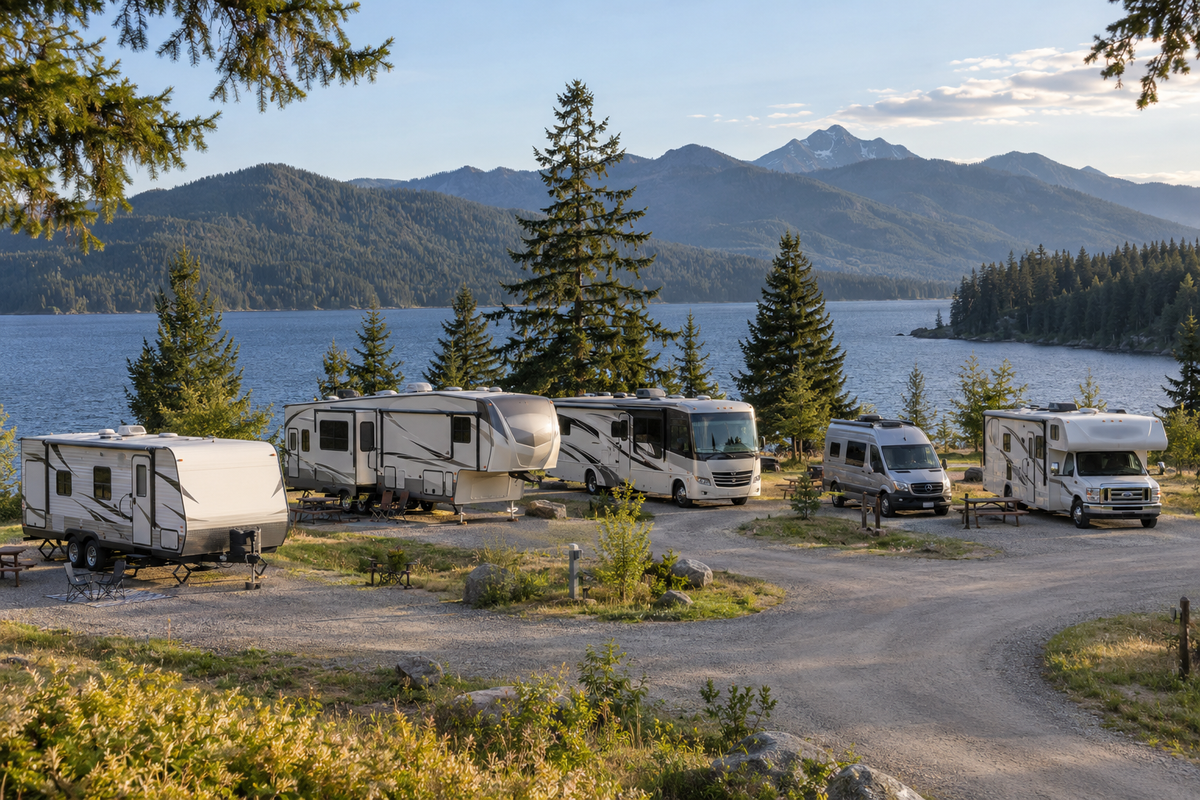
Learn the basic differences between travel trailers, fifth wheels, motorhomes, toy haulers, and more.
If you’re starting to shop for an RV, the names alone can feel confusing.
What makes a fifth wheel different from a travel trailer? Why is a Class B smaller than a Class C, but a Class A is larger than both? And is a toy hauler its own type of RV?
Understanding these categories gives you a useful starting point. Each offers a different balance of living space, transportation, setup, storage, and ownership responsibilities.
The goal is to find the type that fits the trips you’ll actually take.
Start with how the RV travels
Most RVs fall into two broad groups:
- Towable RVs are pulled by a separate vehicle. Travel trailers and fifth wheels belong here.
- Motorhomes combine the driving area and living space in one vehicle. Class A, Class B, and Class C belong here.
Truck campers are another option: they ride in a pickup’s bed rather than being towed behind it. Explore the RV categories at Go RVing.
These distinctions affect your whole trip. After setting up a towable, you can use the tow vehicle for errands and exploring. With a motorhome, consider whether you’ll drive it around your destination, bring another vehicle, or use other transportation.

Travel Trailers
Travel trailers connect to a hitch at the rear of a properly equipped tow vehicle. They range from compact campers to larger layouts with separate bedrooms, bunk beds, and slide-outs.
That variety makes them a useful place to begin comparing floorplans. You can explore different sleeping arrangements and living spaces without committing to a motorhome.
What people appreciate: A wide selection of layouts and the ability to leave the trailer at camp while using the tow vehicle.
What to think through: Hitching, backing, storage, and whether your specific vehicle can handle the trailer when loaded for a trip.
A trailer described as “lightweight” still needs to be matched to the actual vehicle towing it. More about travel trailers.

Fifth Wheels
A fifth wheel has a raised front section that extends over the pickup bed and connects to a hitch mounted in the bed.
Many offer tall ceilings, substantial storage, and distinct living areas. The raised section also creates interior steps, which are worth experiencing during a walkthrough.
What people appreciate: Spacious layouts and a comfortable place to settle in for longer stays.
What to think through: Truck compatibility, hitch weight carried by the truck, overall height, and the steps inside.
Don’t choose the fifth wheel first and assume the truck will work. Evaluate them as a combination, including passengers, cargo, and hitch equipment. Compare RV types.

Class A Motorhomes
Class A motorhomes have the familiar bus-style appearance, a broad windshield, and an integrated driving and living area. Both gas and diesel versions are available.
Layouts vary, but many emphasize living space and storage.
What people appreciate: An open interior, a broad view from the front seats, and room to get comfortable at the destination.
What to think through: Vehicle size, service arrangements, storage, and how you’ll get around after setting up camp.
During a walkthrough, sit in the driver’s seat as well as the living room. Both need to work for you. More about Class A motorhomes.

Class B Motorhomes
Class B motorhomes are commonly called camper vans. Their living space is fitted into a van body, with compact arrangements for sleeping, cooking, and storage. Bathroom configurations vary.
They often appeal to people who prioritize mobility and are comfortable doing more with less space.
What people appreciate: A smaller vehicle footprint and an efficient layout for traveling.
What to think through: Limited storage, bathroom space, and whether seats or beds need to be converted during the day.
Try the everyday tasks. Where will you put your shoes? Can someone prepare a meal while another person moves through the van? Where does the bedding go?
A smaller RV still deserves a full walkthrough. More about Class B motorhomes.

Class C Motorhomes
Class C motorhomes typically retain a recognizable vehicle cab, with a wider living body built behind it. Many have an extension over the cab that provides sleeping space or storage.
They offer a variety of arrangements, including family-oriented layouts.
What people appreciate: A defined cab area and multiple options for sleeping and living space.
What to think through: Storage capacity, usable seating, and how the layout functions when beds are occupied or slide-outs are closed.
For family travel, ask about designated passenger seating and child-restraint compatibility early. A sleeping-capacity number doesn’t answer those questions. More about Class C motorhomes.

Super C Motorhomes
Super C motorhomes use a heavier-duty truck platform while retaining a recognizable truck cab. Diesel engines are common.
The name can sound like a simple upgrade from a Class C, but the meaningful differences are in the chassis, capabilities, dimensions, and specific equipment.
What people appreciate: The truck-based configuration and, depending on the model, greater towing capability.
What to think through: Purchase and operating costs, height, access, and where chassis service is available.
Check the actual ratings and loaded configuration before planning to tow a vehicle or trailer behind one. The category name doesn’t establish its capacity. An example of Super C construction.

Toy Haulers
A toy hauler includes space designed to carry equipment, often with a rear ramp leading into a garage area.
“Toy hauler” describes a function. You’ll find travel-trailer and fifth-wheel toy haulers, along with some motorized versions.
Some garages also have seating or beds that can be used after unloading.
What people appreciate: Space for larger recreational equipment and a room that may serve more than one purpose.
What to think through: Garage dimensions, cargo capacity, tie-down arrangements, and how loading affects weight distribution.
Measure what you plan to bring. Also consider how the garage will function when the equipment is still inside. More about toy haulers, also called sport utility RVs.

Pop-Up Campers
Pop-up campers fold down for travel and expand at camp. Many use fabric-sided sleeping areas, although designs vary.
What people appreciate: A compact travel configuration and an experience that feels closer to tent camping.
What to think through: Setup, weather exposure, sound, privacy, and drying fabric before storage.
Ask to see the entire setup and takedown process. That routine will be part of each trip. More about pop-up campers.

Expandable or Hybrid Trailers
Hybrid trailers generally combine a hard-sided travel-trailer body with fold-out sleeping areas, often with fabric sides.
They differ from conventional pop-ups because the main living body stays upright during travel.
What people appreciate: Additional sleeping space without dedicating as much of the main interior to permanent beds.
What to think through: Bed setup, condensation, temperature control, and care of the fabric sections. More about expandable trailers.

Teardrop and Small Camping Trailers
Teardrop trailers are recognizable by their compact, curved shape. Many focus on sleeping space and an outdoor kitchen. Other small camping trailers offer different shapes and amenities.
What people appreciate: A simpler camping setup with less interior space to manage.
What to think through: Bathroom arrangements, changing clothes, cooking in poor weather, and storing gear.
Imagine spending a rainy afternoon at camp. Would you still enjoy the setup? Compare compact trailer categories.

Truck Campers
Truck campers sit in a pickup’s bed and are available in both hard-sided and pop-up designs.
What people appreciate: Bringing living accommodations along without towing a camping trailer.
What to think through: Loaded weight, bed fit, center of gravity, tie-down equipment, and the climb into the camper.
An empty truck bed doesn’t establish compatibility. Check the truck manufacturer’s camper-loading guidance and the specific camper’s requirements. More about truck campers.

Destination Trailers and Park Model RVs
These categories deserve attention if your plan involves spending extended periods at one location.
Destination trailers emphasize residential-style space and amenities for longer stays. Frequent moves may be less convenient than with a more travel-oriented setup. More about destination trailers.
Park model RVs often resemble small cottages and are intended for recreational or seasonal accommodation. They are a separate category, so don’t assume the same transportation, placement, or site requirements apply. More about park model RVs.
Before choosing either, confirm that your intended property or campground accepts the exact unit and understand how delivery, utilities, and future relocation will work.

Which type should you start with?
Use these questions to narrow your first few walkthroughs:
- How often will we move? Picture frequent stops versus longer stays.
- Who usually comes along? Consider travel seating, sleeping, privacy, and belongings.
- What will we drive? Evaluate your existing vehicle or the cost of another one.
- Where will it go? Think about campsites, roads, parking, and storage.
- What routine are we comfortable with? Include setup, packing, maintenance, and errands.
Then tour a few different categories with those same questions in mind.
As a father of five, I know how different a space can feel once everyone and their belongings are inside. A layout that looks impressive while empty still needs to work during an ordinary family trip.
Start with your trips. Compare the tradeoffs. Then narrow down the models.
Get the free First-Time RV Buyer’s Guide
Understanding the different types of RVs is a starting point. The First-Time RV Buyer’s Guide helps you narrow your options and build a practical plan for comparing the ones that fit your life.
Inside, you’ll find explanations of RV types, worksheets for your travel plans and budget, a walkthrough scorecard, and questions to help you prepare for delivery. There are also first-time buyer FAQs and a plain-English glossary.
Use the form below to request your free digital copy. Keep it with you as you compare layouts, tour RVs, and build your shortlist.

Want to talk through your options?
I’m Si, founder of RV Boat Guide and an RV & Boat Outfitter. I help RV and boat buyers throughout the Pacific Northwest and can also help connect buyers elsewhere with a trusted outfitter in their area.
If you’re deciding between a travel trailer and a fifth wheel, considering a motorhome, or still figuring out where to begin, I’d welcome the opportunity to help.
Message me using the form below. Tell me who will be traveling with you, what your usual trips might look like, and which RV types you’re considering. You don’t need to have a category or model picked out to start the conversation.