
Understanding RV Warranties

Learn what RV warranty coverage means, how it differs from a service contract, and what to ask before you buy.
“It comes with a warranty.”
That is reassuring to hear when you are shopping for an RV.
But it naturally leads to another question:
“What does that warranty actually cover?”
The answer may involve several documents, different coverage periods, and more than one company. The RV manufacturer, chassis manufacturer, and equipment suppliers may each have a role.
Understanding those details before you buy can make ownership less confusing later.
You do not need to memorize every paragraph. You do need to know who provides the coverage, what it includes, and how to request help.
Start with the written warranty
A warranty describes the provider’s obligations for certain defects or failures, subject to its terms.
The length advertised on a brochure is only part of the story.
Ask for the warranty documents that apply to the specific RV and model year you are considering. Read the coverage, exclusions, owner responsibilities, and claim instructions.
A useful question is:
“Can you show me where that coverage is explained in writing?”
That keeps the conversation grounded in something you can review and keep.
Your RV may have several layers of coverage
An RV combines living space, appliances, electrical equipment, plumbing, and—in a motorhome—a vehicle chassis and drivetrain.
Those parts may not all fall under one warranty.
| Coverage category | What to clarify |
|---|---|
| RV manufacturer’s limited warranty | Which defects in the RV’s materials or workmanship are included. |
| Structural warranty | Which specific structural components qualify and what conditions apply. |
| Component warranties | Whether appliances or equipment have separate supplier coverage. |
| Motorhome chassis and drivetrain coverage | Who handles vehicle-related repairs and which time or mileage limits apply. |
| Optional service contract | What additional repairs or services a separately purchased contract provides. |
Manufacturer warranty guides can contain multiple supplier warranties with different terms. For example, Brinkley’s Model G guide includes separate component coverage information. That is an illustration of why the documents matter, not a statement that every RV has the same coverage. Example manufacturer warranty guide
Ask who you contact first when a particular item needs attention.
A structural warranty is not coverage for everything
A longer structural warranty can sound like the entire RV remains covered for that period.
Ask which components the warranty defines as structural. Do not assume appliances, furniture, finishes, seals, or every water-related repair fall within that definition.
Also ask whether different coverage periods overlap.
For example:
“Does the structural coverage begin on the same date as the general warranty, or afterward?”
The word “structural” and the advertised number of years are starting points. The written definitions explain what you are receiving.
Know when the coverage begins
Before delivery, ask the dealership to confirm:
- The warranty start date.
- Any applicable mileage limits.
- Whether different components have different coverage periods.
- Whether the unit has previously been placed into service.
- What registration or ownership information needs to be submitted.
This is especially useful when considering a demonstrator, previously titled unit, or used RV.
Do not assume your purchase date starts every warranty over again.
For a used RV, request written confirmation of any remaining transferable coverage, including deadlines, fees, and restrictions. Transfer terms can differ between the RV manufacturer and component suppliers.
A warranty and a service contract are different
A separately purchased service contract is often described in conversation as an “extended warranty.”
It may provide useful coverage, but it is a separate agreement. It does not necessarily extend every part of the original manufacturer’s warranty.
The FTC recommends comparing a service contract with the coverage already included in the purchase. Check the provider, exclusions, deductibles, reimbursement limits, and claim process. FTC guidance on warranties and service contracts
Before purchasing one, ask:
- Who is responsible for approving and paying claims?
- What additional coverage am I receiving?
- When does it begin?
- What repairs or situations are excluded?
- What costs could remain my responsibility?
- What happens if I sell the RV or cancel the contract?
Evaluate the written benefits and total price before deciding whether it fits your needs.
Ask about maintenance responsibilities
Warranty coverage does not mean an RV can go without routine care.
Ask the dealership to walk you through the maintenance schedule for the RV and its installed equipment. Find out what inspections, servicing, and records are expected.
Keep a simple maintenance file with dates, receipts, photographs, and descriptions of completed work.
A useful entry might be:
“October 12: Roof and exterior seals inspected by service provider. Report and invoice saved.”
You do not need an elaborate system. You need records you can find when someone asks what was done and when.
The FTC also recommends retaining maintenance and repair records. Its vehicle-warranty guidance explains that using an independent provider for routine maintenance does not, by itself, invalidate a manufacturer’s warranty; coverage for repairs paid under warranty can involve designated facilities. Confirm the process applicable to your RV. FTC vehicle-warranty guidance
Discuss how you plan to use the RV
Tell the seller if you intend to live in the RV full time, rent it to others, use it commercially, or make substantial modifications.
Ask:
“Does this intended use affect any of the coverage?”
Get the answer for the specific RV and any optional contract you are considering.
Similarly, before adding equipment, ask about installation requirements and responsibility for any resulting damage. Avoid accepting a blanket claim that any modification automatically cancels all coverage—or that every modification is harmless.
Under the FTC’s vehicle-warranty guidance, an aftermarket part does not automatically eliminate coverage, but damage caused by a defective part or improper installation can be excluded. FTC explanation of aftermarket parts
Understand the repair process before you need it
Ask the dealership and warranty provider how a claim moves from reporting a problem to completing a repair.
Questions worth asking include:
- Who should I contact first?
- What information will they need?
- Does diagnosis or repair require prior authorization?
- Which service facilities can perform covered work?
- Can an approved mobile technician help?
- Who pays diagnostic charges if the problem is not covered?
- What should I do if the RV is not safe to move?
If you expect to travel far from the selling dealership, ask how service is arranged away from home.
A clear contact and authorization process is more useful than a general promise to “take care of it.”
Coverage does not answer every scheduling or expense question
Even when a repair qualifies, you still need to understand the practical arrangements.
Ask about current appointment availability, parts ordering, and how you will receive updates.
Also clarify whether any coverage applies to expenses such as towing, mobile-service travel charges, lodging, or interrupted travel. Do not assume they are included because the underlying repair is covered.
Before approving work, ask for an explanation of any charges that could fall to you.
As an RV & Boat Outfitter, I want buyers to understand both the coverage and the process of using it. Those are related questions, and both deserve attention.
Document problems promptly
If something stops working, make a clear record.
Include:
- The date you noticed it.
- What happened.
- Any displayed error message.
- Relevant photographs or a short video.
- Your VIN and the equipment’s model or serial number, when requested.
- Previous repair information for the same issue.
Describe what you observed rather than guessing at the diagnosis.
For example:
“The slide stopped halfway during extension, and the control displayed this message” gives a service team more useful information than “the slide is broken.”
Follow reporting instructions promptly and ask how deadlines apply if the next available appointment is after the coverage period ends. Keep the case number and written correspondence.
For a suspected safety issue, stop using the affected equipment and seek appropriate assistance.
If a claim is denied, ask for the explanation
Request the reason in writing and ask which warranty or contract provision applies.
Then review whether the provider has the correct facts, maintenance records, and diagnostic information.
Ask about the review or dispute process in the relevant documents. A clear record of the issue and previous conversations can help everyone understand what remains unresolved.
Consumer rights and remedies depend on the circumstances and applicable law. For a legal dispute, seek guidance from your state consumer protection office or a qualified attorney.
A warranty should support a careful purchase
Warranty coverage is one part of evaluating an RV.
Continue to inspect the specific unit, ask about its condition, and document agreed repairs before delivery.
If something is already wrong, ask how it will be addressed. Do not let a vague promise of future warranty service replace a clear plan.
Buy with an understanding of the RV’s condition today and the coverage available if a qualifying problem develops later.
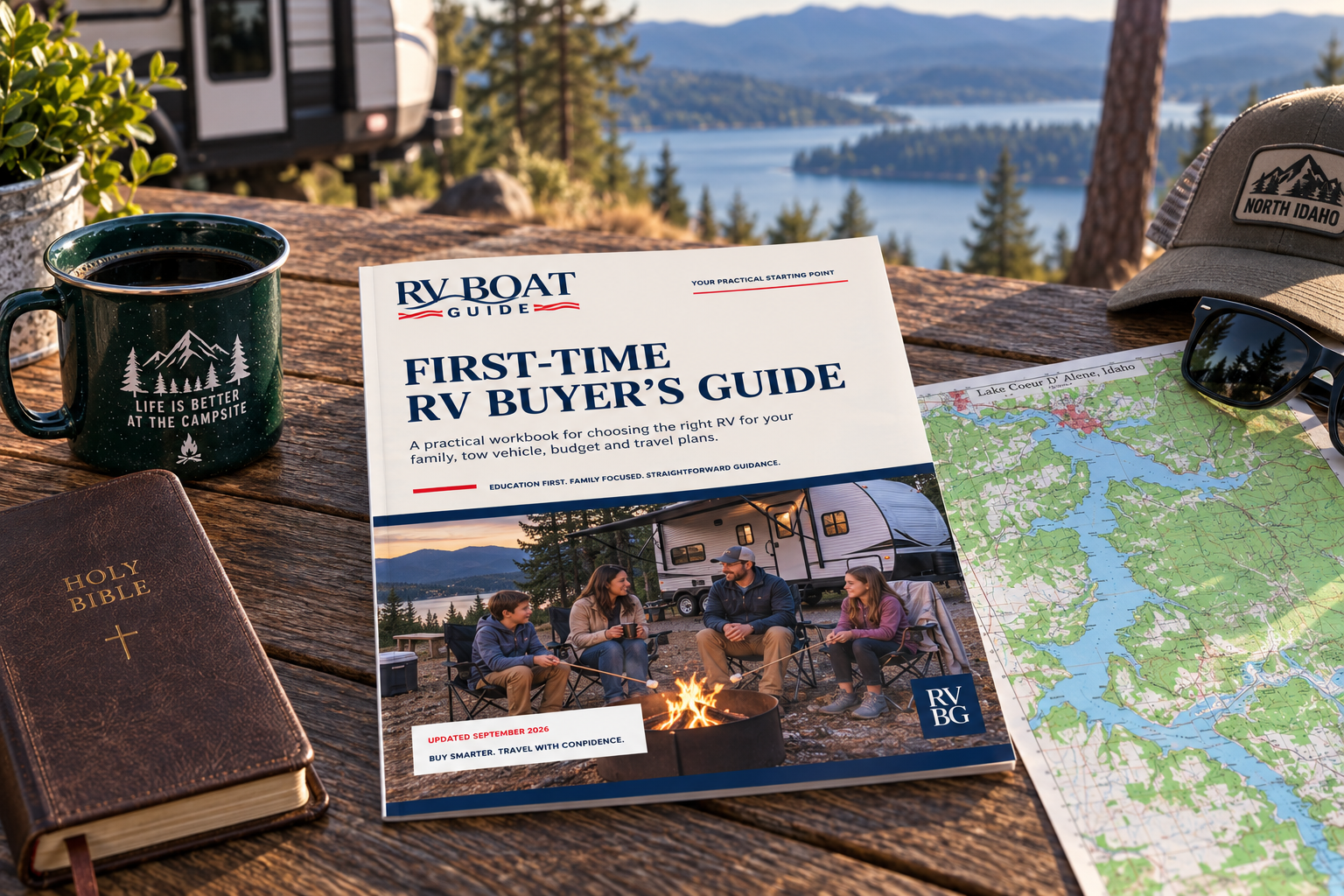
Get the free First-Time RV Buyer’s Guide
Understanding warranties is a starting point. The First-Time RV Buyer’s Guide helps you organize the questions and documents that matter throughout the buying process.
Inside, you’ll find explanations of RV types, worksheets for your travel plans and budget, a walkthrough scorecard, and questions to help you prepare for delivery. There are also first-time buyer FAQs and a plain-English glossary.
Use the form below to request your free digital copy. Keep it with you as you compare RVs, review coverage, ask about service, and prepare for delivery.
Want to talk through your options?
I’m Si, founder of RV Boat Guide and an RV & Boat Outfitter. I help RV and boat buyers throughout the Pacific Northwest and can also help connect buyers elsewhere with a trusted outfitter in their area.
If you are comparing RVs or trying to understand which warranty and ownership questions to ask, I’d welcome the opportunity to help.
Message me using the form below. Tell me what type of RV you are considering, how you hope to use it, and which questions you are still working through.
You do not need to have a model picked out to start the conversation.