
Winterizing an RV

Understand what winterizing protects, when to plan for it, and why your RV’s equipment determines the right process.
The camping season does not always end with an obvious final trip.
Sometimes you return home expecting to go out again in a few weeks. Then schedules change, the nights get colder, and suddenly freezing temperatures are in the forecast.
That is why winterizing deserves a plan before cold weather arrives.
For a first-time owner, the process can sound complicated. There are tanks to drain, valves to locate, and questions about antifreeze, water heaters, and appliances.
You do not need to figure it out through trial and error.
Start by understanding what needs protection and getting the correct instructions for your RV.
What does winterizing mean?
Winterizing usually refers to preparing an RV’s plumbing and water-connected equipment for freezing conditions.
Water left inside vulnerable components can freeze, expand, and cause damage. Emptying the freshwater tank alone does not necessarily remove water from the rest of the system. Jayco winterizing overview
People also use “winterizing” to describe broader seasonal storage preparation, including battery care, cleaning, and exterior checks.
When scheduling service, ask:
“Does this include the plumbing only, or the complete storage preparation?”
Knowing the scope helps you avoid leaving something important unfinished.
When should you winterize?
Plan before your RV will be exposed to freezing conditions without reliable protection.
The timing depends on where it is stored, the weather, the equipment installed, and whether you are actively using it.
In the Pacific Northwest, that can look very different from one location to another. A storage arrangement near the coast and one in the Inland Northwest may need different planning.
Ask yourself:
- Could freezing weather arrive before our next trip?
- Will the RV be unattended?
- Is the storage building actually heated?
- What happens if electricity or heat is interrupted?
- Can we arrange service before the forecast changes?
Do not wait until the first freezing night to find out how your RV should be prepared.
Start with the RV and equipment manuals
Winterizing procedures vary.
Your RV may have a tank-style water heater, a tankless system, a water-management panel, a winterizing inlet, or additional appliances connected to the plumbing.
Find the instructions for the exact equipment installed.
Before beginning, identify:
- The approved winterizing method.
- Required valve positions.
- Drain locations.
- Filter instructions.
- Water-heater requirements.
- Procedures for every water-connected appliance.
- Supplies and tools needed.
Winnebago’s winterizing guide discusses both general procedures and equipment-specific considerations. Use an overview to understand the work, then follow your own manuals. Winnebago winterizing guide
A video showing a similar RV can be helpful, but it does not establish that your plumbing is arranged the same way.
Understand the two common approaches
You will commonly hear about using RV antifreeze, compressed air, or a manufacturer-approved combination.
| Approach | What it involves | What to verify |
|---|---|---|
| RV antifreeze | Introducing an approved product into designated parts of the plumbing after the required preparation. | Product compatibility, bypass settings, filters, appliances, and all required outlets. |
| Compressed air | Using regulated air to remove water from plumbing according to an approved procedure. | Permitted pressure, correct connections, and components needing separate draining or protection. |
An air blowout does not automatically protect every part of an RV. For example, Keystone’s compressed-air procedure also calls for RV antifreeze in specified drains, traps, and the toilet. Follow the instructions applicable to your unit. Keystone compressed-air winterizing guidance
Use only antifreeze intended and approved for the RV’s potable-water-system winterization. Never use automotive engine antifreeze in the freshwater plumbing.
Do not choose a method solely because someone says it is faster. Confirm that it addresses your complete system.
Give the water heater its own attention
This is one of the most important places to avoid assumptions.
Different water heaters have different draining, bypass, and freeze-protection requirements.
For example, Truma provides a specific drain procedure for its AquaGo system. That process should not be applied automatically to another water heater. Truma AquaGo winterizing instructions
Before draining or servicing a water heater, follow its shutdown, cooling, and pressure-release instructions. Do not remove a plug or open a pressurized system while it is hot.
Ask a technician:
“Can you show me the winterizing procedure for this exact water heater?”
Record the model number and keep the instructions with your RV documents.
Remember the less obvious water connections
The kitchen faucet and bathroom sink are easy to remember. Other parts of the system can be overlooked.
Use your equipment list to ask about:
- Outside showers and spray ports.
- Toilets and handheld sprayers.
- Water filters and filter housings.
- Refrigerator water dispensers and ice makers.
- Washing machines and dishwashers.
- Water pumps and strainers.
- Black-tank flush plumbing.
- Recirculation lines and specialized water systems.
- Sink and shower traps.
These items may require separate procedures. Pink antifreeze appearing at one faucet does not confirm that everything else has been protected.
Work from a complete checklist for your RV, including equipment added after purchase.
What if the RV has a cold-weather package?
Ask what the package actually protects and under what conditions.
Some freeze-protection features depend on power, heat, or other operating conditions. They may protect particular components rather than the entire plumbing system.
A useful question is:
“What protection remains when the RV is parked, unattended, and the heat is off?”
Get that answer from the manufacturer’s instructions.
Cold-weather camping and winter storage are different uses. Equipment that supports one does not automatically replace the preparation required for the other.
Should you do it yourself or schedule service?
Some owners are comfortable winterizing after learning their system. Others prefer having a qualified service provider handle it.
Either approach should begin with clear instructions and a complete equipment list.
Professional help is particularly useful when:
- You cannot identify the valves or drains.
- The manuals are missing or unclear.
- The RV has unfamiliar appliances or modifications.
- You are unsure whether the entire system has been protected.
- You cannot safely access required components.
For your first winterization, ask whether a technician can walk you through the process.
Understanding the work matters even if you choose to have someone else perform it.
Ask what the winterizing service includes
Before booking, describe your RV and its installed equipment.
Then ask:
- Are all water-connected appliances included?
- Is tank draining or cleaning included?
- Are there additional charges for particular systems?
- Does the service include any inspection or storage preparation?
- What do I need to do before dropping it off?
- What remains my responsibility afterward?
Keep the invoice and any checklist provided.
Ask for a note identifying what was completed, any limitations, and the configuration in which the RV was left. That record will be useful when you return it to service.
Prepare the rest of the RV for storage
Plumbing protection is only one part of putting an RV away.
Create a separate storage plan for cleaning, food removal, moisture monitoring, batteries, tires, and exterior maintenance. Motorhomes and generators also have their own storage requirements.
Avoid assuming a plumbing-winterization appointment covers those tasks.
Before leaving the RV, know what has been done and what still needs attention.
What if you want another trip after winterizing?
You may still be able to enjoy another outing, but plan how you will use the RV.
If you return the plumbing to service and introduce water, reassess freeze protection before putting it away again. The earlier winterization no longer establishes that the system is protected.
If you plan to keep the plumbing winterized during a trip, ask how to use the RV without compromising that protection. Include the toilet and holding tanks in that conversation.
A little planning is better than assuming one winterizing appointment lasts through every later use.
Plan for returning the RV to service
De-winterizing involves more than turning on the water pump.
Follow the manuals to restore valves, drains, filters, and equipment to their operating configuration. Complete the prescribed flushing and sanitizing procedures, check for leaks, and verify operation.
Do not energize a drained tank-style water heater before restoring its water supply and confirming it is full.
Winnebago’s return-to-use guidance also includes checks of tires, seals, batteries, and appliances. Preparing an RV after winter storage
Allow time for this before your departure day so you can address anything that needs attention.
Make winterizing part of your ownership routine
Before your first cold season, aim to have three things ready:
- The instructions for your RV and installed equipment.
- A complete checklist or scheduled service appointment.
- A plan for monitoring the RV during storage.
As an RV & Boat Outfitter, I want buyers to understand these responsibilities early. Knowing how you will care for the RV between trips is part of choosing one that fits your life.
The best time to learn your winterizing process is while you still have time to ask questions.
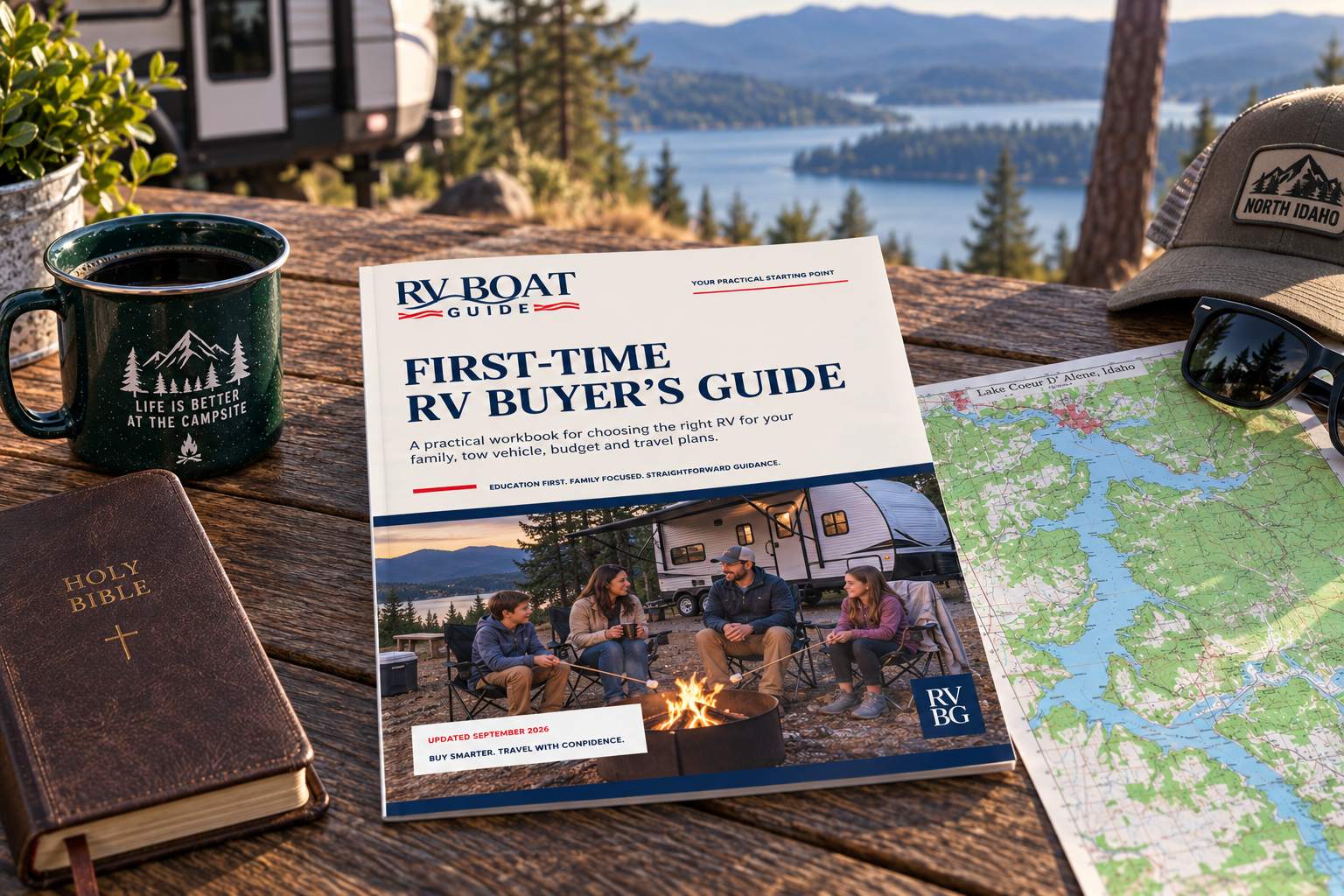
Get the free First-Time RV Buyer’s Guide
Understanding winterization is a starting point. The First-Time RV Buyer’s Guide helps you consider ownership responsibilities alongside your travel plans, preferred features, and budget.
Inside, you’ll find explanations of RV types, worksheets for your travel plans and budget, a walkthrough scorecard, and questions to help you prepare for delivery. There are also first-time buyer FAQs and a plain-English glossary.
Use the form below to request your free digital copy. Keep it with you as you compare RVs, ask about seasonal care, and prepare for ownership.
Want to talk through your options?
I’m Si, founder of RV Boat Guide and an RV & Boat Outfitter. I help RV and boat buyers throughout the Pacific Northwest and can also help connect buyers elsewhere with a trusted outfitter in their area.
If you are shopping for an RV and want to understand how your camping season and storage plans affect ownership, I’d welcome the opportunity to help.
Message me using the form below. Tell me what type of RV you are considering, where you hope to travel, and where you plan to keep it between trips.
You do not need to have a model picked out to start the conversation.